


Why Are American Mahjong Tiles So Expensive? Materials and Craft
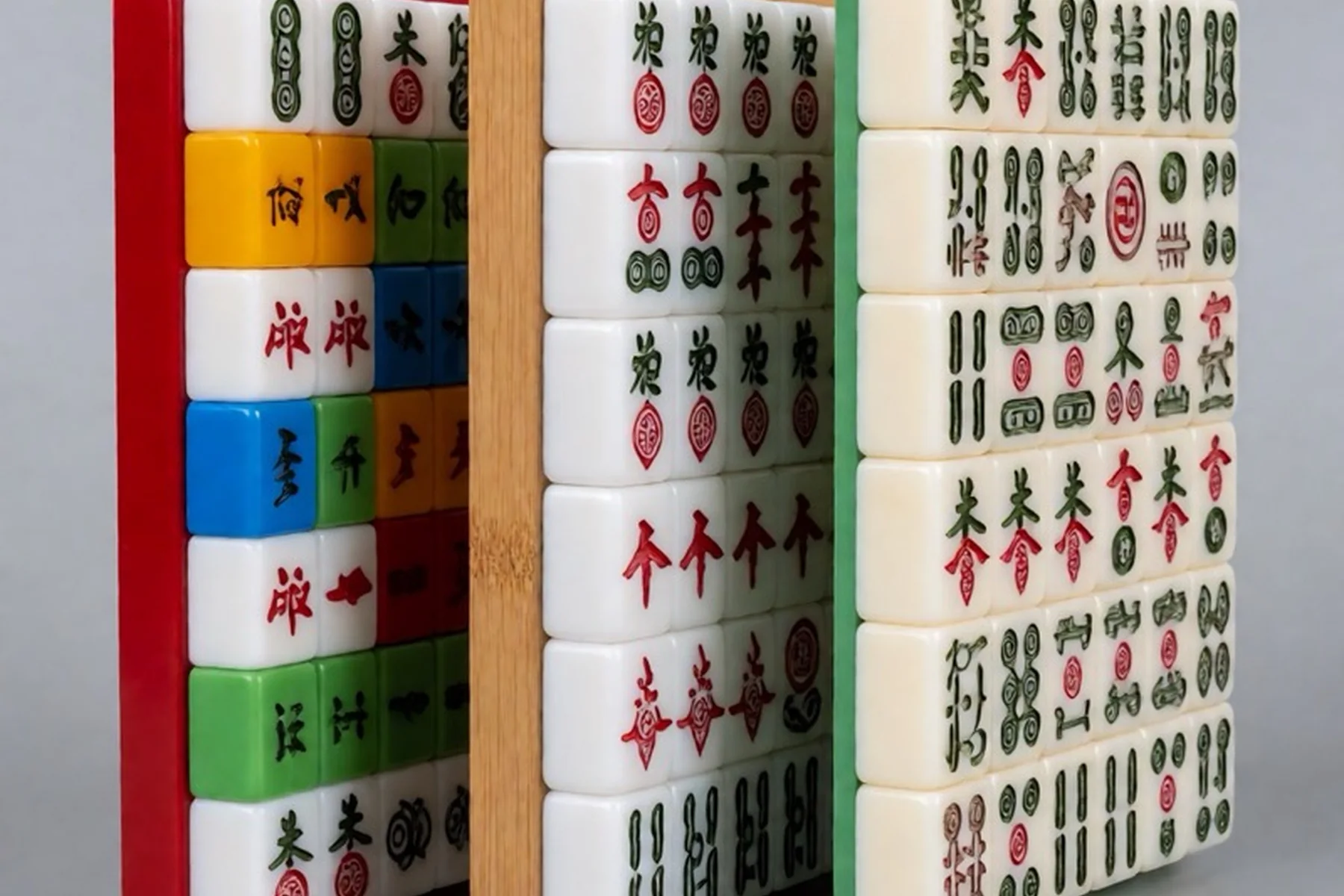
Two American mahjong sets can look similar in a photograph and differ by hundreds of dollars. The expensive set is not necessarily a better game, and the cheaper set is not automatically poor value. The difference usually comes from a small number of visible and invisible choices: material, layer construction, artwork, printing or engraving, quality control, packaging and the number of sets produced.
Understanding those costs makes the price easier to judge. It also makes it possible to decide which details matter for your table and which are simply decorative. This guide breaks down why American mahjong tiles can be expensive, what a higher price does and does not guarantee, and how to compare sets without relying on a single luxury label.
The tile is not one material
A mahjong tile can be a single moulded piece, a two-layer construction or a multi-layer acrylic stack with a printed or engraved face. Each extra layer adds material, alignment work and failure points. A thick tile with crisp side colours may look simple from above, but the manufacturer has to keep every layer square and clean before the face is completed.
Melamine and acrylic behave differently. Melamine can feel dense and produce a lower, warmer sound; acrylic can be clearer, more reflective and available in brighter colour effects. Neither is automatically better. The right question is whether the material suits the way you play, the racks you own and the weight you want in your hand. Melamine vs Acrylic Mahjong Tiles explains the practical differences, while How to Choose Mahjong Tiles starts with the wider material decision.
Artwork takes more time than a standard tile face
A conventional tile face follows a familiar pattern. A themed set may require a complete illustration system: every suit, wind, dragon, flower and joker drawn in a consistent style. The artist has to keep the symbols readable at tile size while making the imagery feel like a coherent world rather than a collection of unrelated pictures.
Jokers are especially important. They can become the most memorable part of an American set because they are visually distinct and appear often in play. A hand-drawn joker may require several revisions before it reads clearly on a small surface. The final file then has to be prepared for printing or engraving without losing line quality.
This is one reason a themed set can cost more than a plain one. The price is not only for ink. It is for hours of drawing, colour separation, proofing and checking that the green dragon still reads as a green dragon after the artwork has been reduced to a tile.

Engraving and UV printing are different processes
An engraved or etched face removes or marks a shallow layer of material. A printed face adds ink to the surface and may be protected by a coating. Both can look excellent. Both can also be done well or poorly.
Engraving can create a tactile face that remains legible over time, but the process requires consistent depth and clean edges. UV printing can reproduce fine colour and complex illustration, but the quality depends on the ink, surface preparation and protective finish. A glossy print may show glare; a matte surface may feel easier to read under warm lamps.
Ask not just “printed or engraved?” but “how is the face protected?” A beautiful image that wears away at the centre of the dots is not a good value. Engraved Melamine vs UV-Printed Acrylic covers the trade-offs. A white porcelain-style face may also command a premium for its visual effect, but it still needs the same inspection; see White Porcelain-Style Mahjong Sets.
Layer alignment and edge quality
Multi-layer tiles are judged from the side as much as the front. The coloured edges should line up, the layers should not trap air or dirt, and the tile should sit flat in the rack. A set with inconsistent edges can feel rough even when the artwork is beautiful.
Good manufacturers reject tiles with bubbles, cloudy edges, uneven colour or a face that is not centred. Those rejected pieces cost money. A cheaper set may accept a wider range of variation, which is not necessarily wrong, but it explains part of the difference in price.
Small batches and inventory risk
American mahjong is a niche product compared with mass-market board games. A manufacturer may produce a few hundred or a few thousand sets of one design rather than millions of identical pieces. The artwork, samples, packaging and storage all have to be paid for across that smaller run.
Seasonal and themed designs add another risk: if a set does not sell through, the remaining inventory still has to be stored. A high price may reflect that uncertainty rather than a superior tile. This is why a limited edition is not automatically better. It is simply a different production decision.
What a higher price can include
| Detail | Why it can add cost | What to check |
|---|---|---|
| Multi-layer acrylic | More material and alignment work | Clean edges, no bubbles, consistent thickness |
| Original illustration | Artist time and proofing | Coherent artwork, readable suits and jokers |
| Engraved face | Additional manufacturing and quality control | Even depth, crisp symbols, no sharp residue |
| Small-batch production | Fixed costs spread over fewer sets | Useful design and replaceable components |
| Strong packaging | Cases, inserts and protective materials | Case actually protects the set in storage and travel |
What a higher price does not guarantee
An expensive set can still have a face that is hard to read, a rack that feels crowded or a joker illustration that is beautiful but confusing during play. Price does not replace a clear return policy, replacement support or a size that matches your table.
Nor does a lower price always mean poor quality. A simple printed set with a standard face, consistent thickness and a sturdy case may be exactly right for a casual group. The best value depends on how often you play and which details affect your experience.
How to compare two sets
Start with size and weight. Put both tiles on the same rack if possible. Look at the back and side under normal room lighting rather than a product photo. Check whether the suits remain distinguishable when several tiles are lying face-up together. Read the joker and flower illustrations at the size you will actually see them.
Then look for structural issues: cloudy edges, uneven thickness, scratches, loose packaging and sleeves that shed fibres. A set that arrives with small defects may become difficult to repair after the return window closes.
Finally, check replacement support. A special set becomes expensive if one missing tile cannot be matched. The guides to mahjong tile sizes and tile backs explain what to record before ordering.
Where to spend and where to save
Spend on the parts you use every game: readability, a comfortable tile size, a level rack fit and a case that protects the set. Spend more on artwork if the set will be displayed or given as a gift. Save on elaborate packaging if it will sit in a cupboard, and save on decorative extras that do not improve the game.
A mat can change the sound and feel of an expensive set for far less than another set. The Blue Lotus & Bamboo Mahjong Mat and Blue & Yellow Floral Mahjong Mat are examples of how surface and thickness affect the playing experience without changing the tiles themselves. For the complete buying context, start with the American Mahjong Set Checklist.
Care changes the value over time
Clean tiles with a soft cloth and mild soap only when needed. Keep the set away from heat, direct sun and heavy objects. Store jokers and blanks in their compartments and keep the case dry. A set that is looked after can remain pleasant for years, while a neglected expensive set quickly loses its advantage.
Read Mahjong Tile Storage and Care for a practical routine. If you display the set, keep it out of strong light and protect the faces from dust. If you travel with it, use a case that keeps the racks from pressing against the tiles.
Price is a design decision
The price of American mahjong tiles reflects materials, artwork and the labour of making a niche object well. It also reflects choices that may not matter to you. A calm comparison separates the two.
Choose the set whose size, face, back and case support the way you actually play. Pay for the details you can feel and see on the table, then care for them. That is a better measure of value than the number on the box alone.
Frequently asked questions
Why are American mahjong sets more expensive than Chinese sets?
American sets often include a larger tile count, jokers, racks, pushers, a card and themed artwork. Production runs are also smaller than mass-market Chinese sets, so fixed costs are spread across fewer units.
Are acrylic tiles better than melamine?
Neither is universally better. Acrylic can be clearer and brighter; melamine can feel denser and warmer. Choose based on weight, sound, care and the face finish you prefer.
Do engraved tiles last longer?
A well-made engraved or etched face can be durable, but the result depends on material and finishing. A protected UV print can also last well. Inspect the edge and ask how the face is protected.
Is a limited-edition set worth the price?
Only if the artwork or collectability matters to you and the set still meets basic play requirements. A limited edition does not guarantee better readability, replacement support or structural quality.
Buy for the game you actually host
A beautiful set should also be a good set to use. Look at the tile in the rack, listen to it on the mat, read the face across the table and imagine replacing a missing piece in three years. If the answers are clear, the price is easier to understand.