


American Mahjong Tile Backs: Color, Glare and Matching
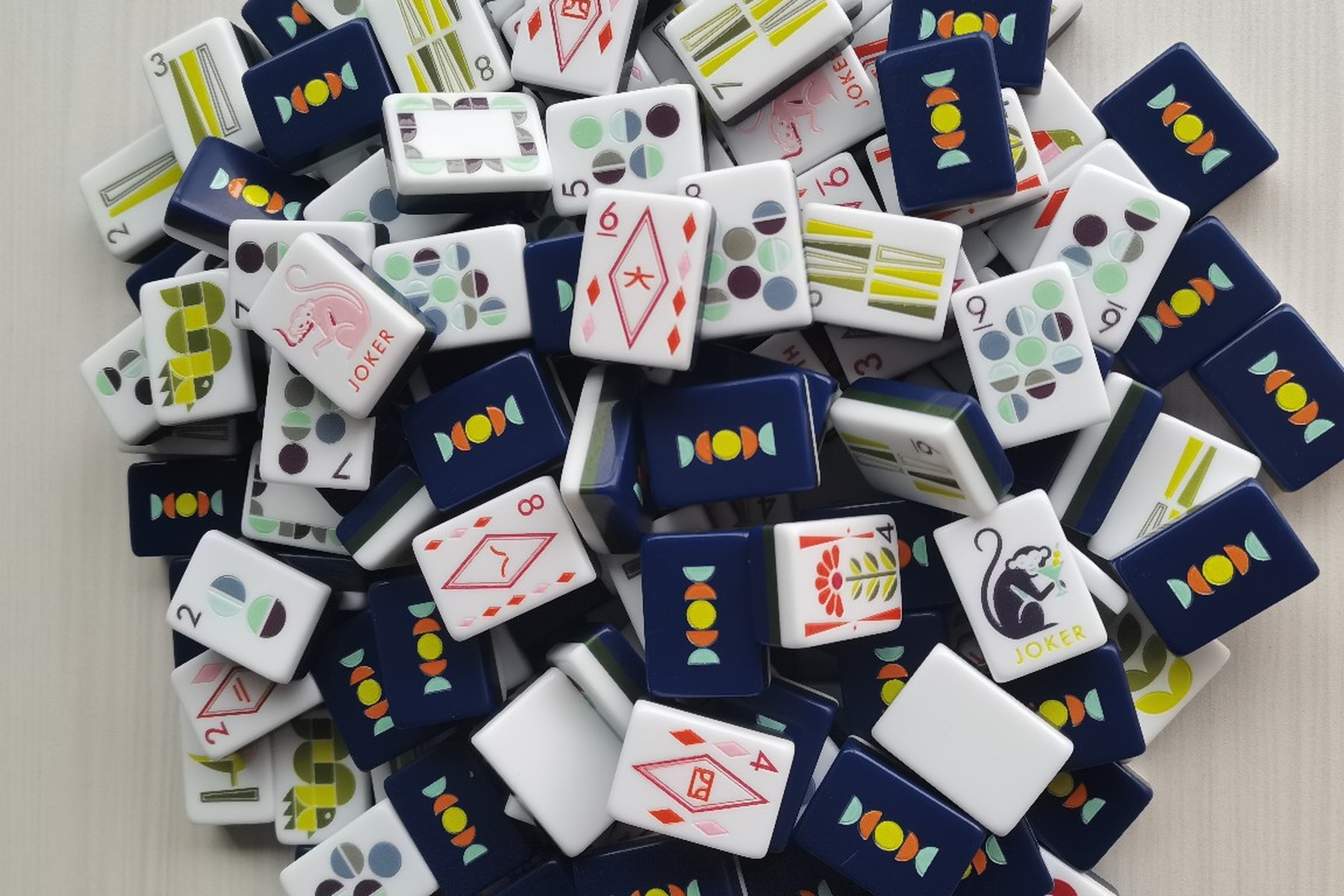
American mahjong tile backs do more than hide the face. They affect privacy, visual consistency, replacement matching and the overall quality of a set. A strong back is opaque, evenly colored and finished cleanly through the edges, so one tile does not stand out from the rest.
Dark navy, coral, orange and green backs are common, but color alone is not a quality standard. The important questions are whether the back is uniform, whether the core or printed layer shows through and how the tile looks under bright overhead light.
Key takeaways
- A good tile back should conceal the face evenly.
- Compare backs under daylight and room lighting.
- Layered edges should be clean, not chipped or cloudy.
- Replacement tiles must match color, gloss and thickness.
- Matte and glossy finishes change glare and grip.
What the tile back reveals about construction
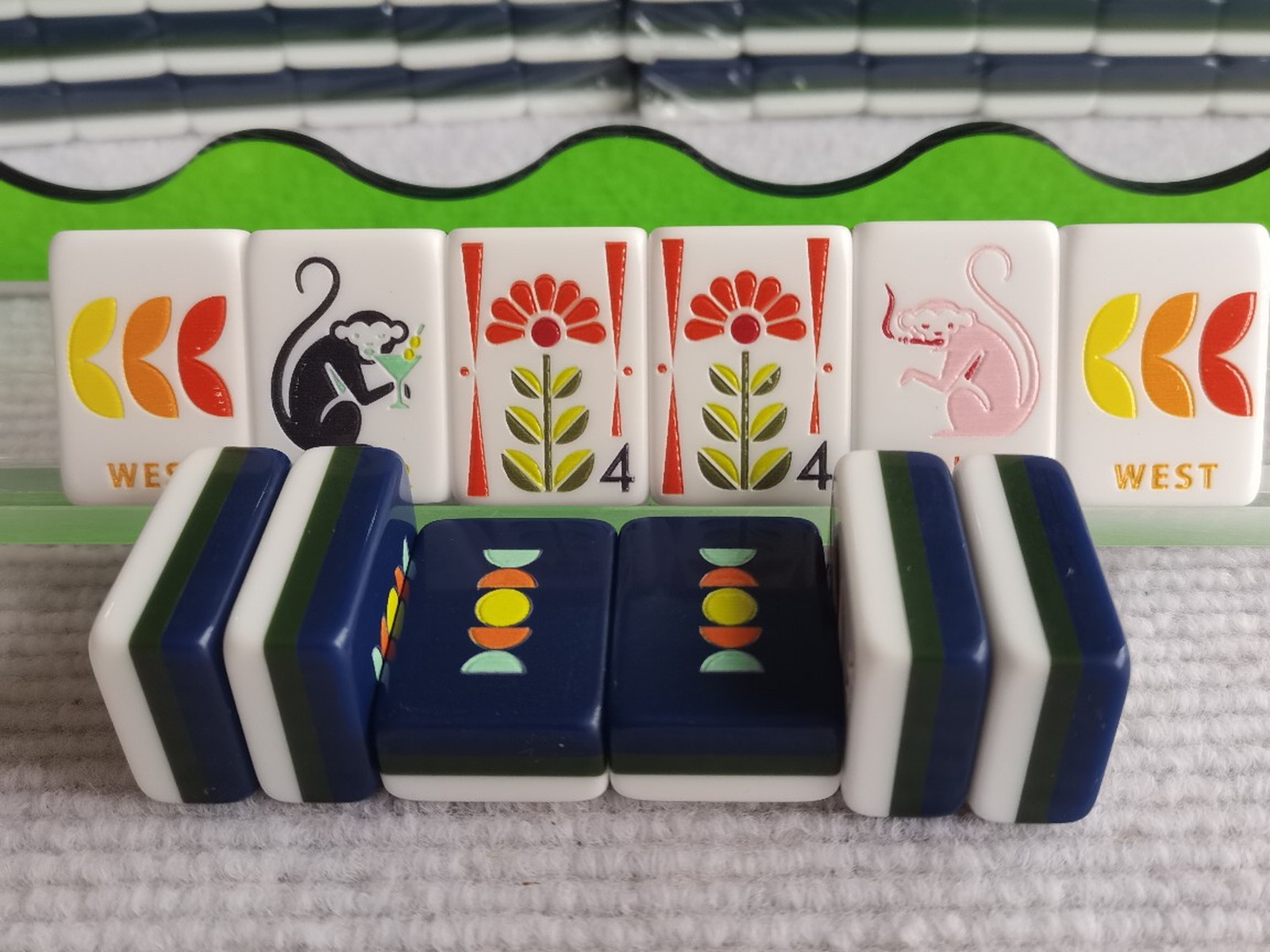
The back is often the easiest place to judge material consistency. Look for streaks, patchy color, bubbles, polishing marks or a translucent area that hints at the face underneath. On a layered acrylic tile, the side edge shows how the layers bond. Uneven layers are not just cosmetic; they can affect how the tile sits in a rack.
Why opaque backs matter
A player should not be able to identify a tile from the back. The back must resist strong light and avoid visible shadow patterns from the face. When comparing a set, turn several tiles face-down on the table, fan them and look from a low angle. Differences that disappear in dim light may become obvious under a bright dining-room fixture.
Color consistency within a set
Small manufacturing variations are normal, especially in small-batch sets. The goal is consistency within the set, not comparison with an unrelated brand. A single replacement tile may look close in daylight and noticeably different at night. Ask for the production batch or order a spare tile at the same time if the design is important to you.
Gloss, matte and glare
Glossy backs feel smooth and look rich, but overhead lights can create reflections. A satin or lightly textured back may show fewer fingerprints and glare. The right finish depends on your lighting and how you hold the tiles. Either finish can be durable when the surface and edges are properly polished.
What to check along the edge
Hold the tile at eye level and rotate it. The edge should feel smooth, with no sharp flash or chipped corners. On a multilayer tile, the colored back layer should align with the core. Small differences in edge thickness can make one tile rock in a rack or catch on a mat.
Matching replacement tiles
If you may need replacements later, record the product name, tile size, color name and approximate purchase date. A phone photo taken in daylight beside a ruler is useful, but it cannot guarantee a perfect match. Color, gloss, font and edge construction can change between batches.
Display, gifting and care
When tiles are displayed face-up, the backs still contribute to the visual impression. A consistent back makes the set look intentional rather than assembled from mismatched pieces. Keep backs away from abrasive cleaners and store heavy tiles so the corners do not rub against each other.
Frequently asked questions
Should all mahjong tile backs be the same color?
Within one playable set, yes—the backs should be consistent enough that no tile is identifiable from behind.
Are glossy backs better?
Not inherently. Gloss affects feel and reflections; quality depends on material, polishing and edge finish.
Can I mix two similar tile sets?
Only if the tiles match closely in size, thickness, color and opacity. Even a small difference can be felt in a rack or seen at the table.
Bottom line
Judge tile backs with the same attention you give the printed faces: opacity, color consistency, edge quality and glare. Browse American mahjong tiles and compare the full construction, not only the artwork.
A 60-second inspection routine
Stand the set on a neutral table and look across all the backs at once. Check for a tile that is noticeably brighter, darker or more reflective than the others. Turn two or three tiles on their sides and compare the edge layers. Then look at the faces under the same light and verify that the close-up photographs match what you will see at table distance. Finally, confirm the replacement details before the return window closes.
This routine does not require specialist equipment. It simply asks you to judge the whole set, the side and the face together. If a detail matters to your existing collection, photograph one of your own tiles beside the new one and send the image to the seller before ordering a second batch.