


How to Choose Mahjong Tiles: Plastic, Bamboo, and Ivory-Style Materials
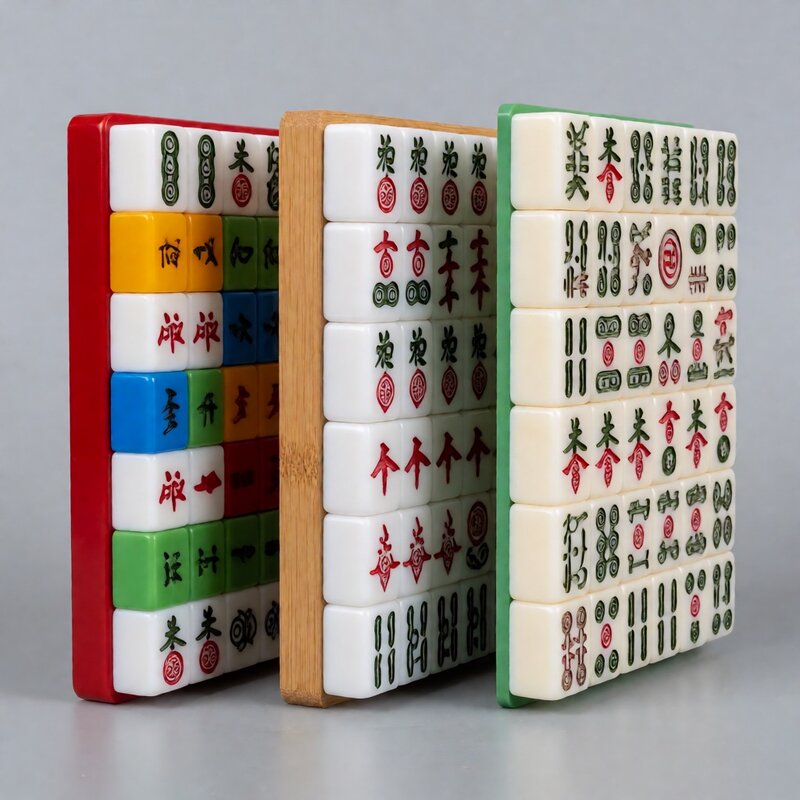
The material of your mahjong tiles decides almost everything about how the game feels: how they sit in the rack, how they sound when they hit the table, how they age, and how much you pay. It is the single most important choice when buying a set, and the one most often made by accident.
The materials you will actually see
Acrylic and ABS plastic
The default for modern American sets. Acrylic takes colour and engraving well, which is why it dominates illustrated designs. It is light, durable and easy to clean, and it clicks satisfyingly against a mat. Cheaper sets print the face rather than engraving it, and printed faces wear visibly at the edges within a few years of regular play.
Melamine
Denser and heavier than acrylic, with a slightly matte surface. Many layered sets use melamine for the body because it machines cleanly and holds crisp edges. In the hand it feels more substantial, and it tends to knock rather than clack against the table.
Bamboo and bone
The historical combination: a bamboo back dovetailed to a bone or ivory-substitute face. Genuine vintage sets are collectible and expensive, and they need care, because bamboo moves with humidity. Modern reproductions copy the look with resin faces on a bamboo or wood core.
What to check before you buy
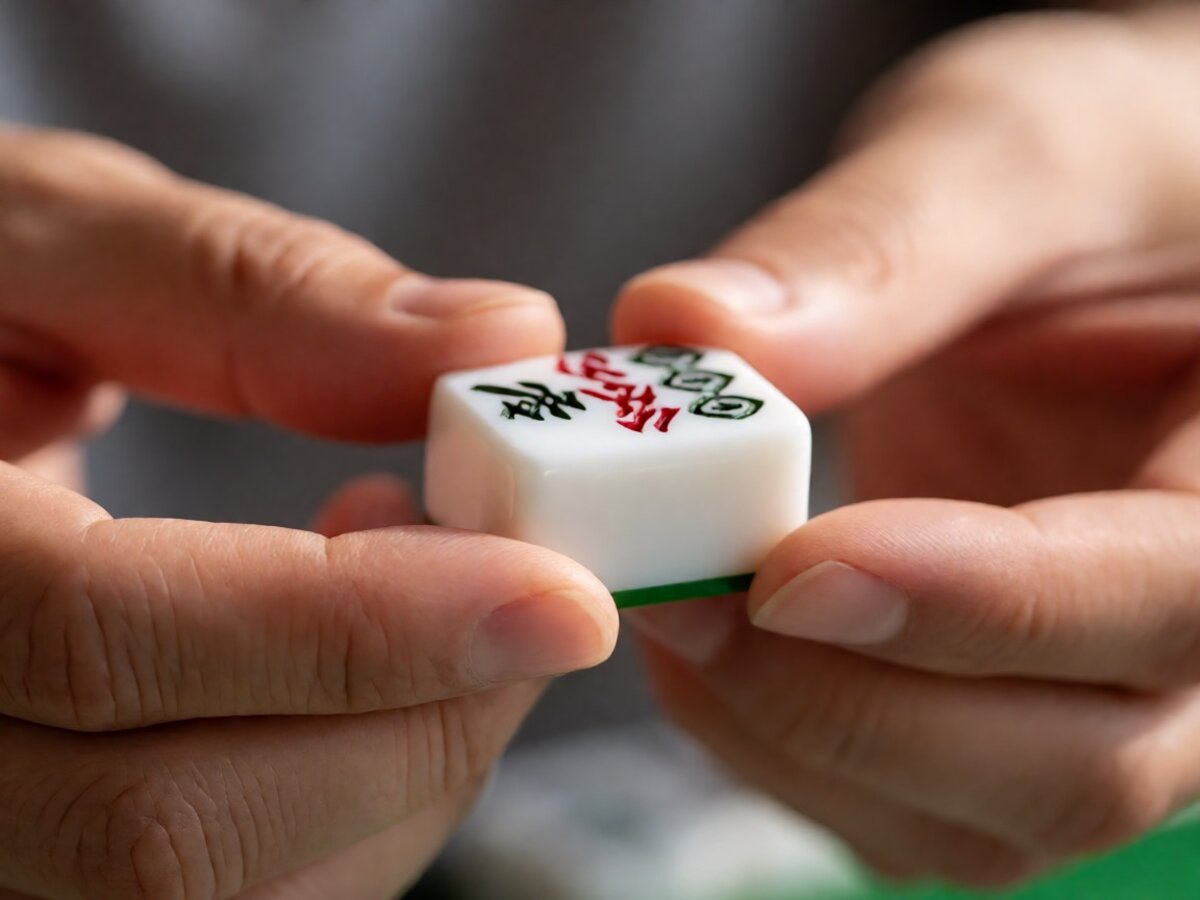
- Weight in the hand. A tile that feels hollow will feel cheap every game for years.
- Edge quality. Sharp, even edges mean the tile was machined properly; rough edges catch on racks.
- Face depth. Engraved or inlaid faces last far longer than printed ones.
- Colour fastness. Ask whether the colour runs through the material or sits on the surface.
- Consistency. Lay four tiles from the same set on a table and check that thickness and size match.
Size, weight and the size of your hands
Tiles are sold in a range of heights, and the difference matters more than it sounds. Larger tiles are easier to read across the table and harder to knock over; smaller tiles fit smaller racks and are easier to shuffle. If you play with people who wear rings, or who have limited grip strength, larger tiles are usually the kinder choice.
Weight and thickness also change how a rack behaves. Heavy, thick tiles sit more stably; thin acrylic tiles can slip when the rack is tilted.
Jokers and counts
An American set needs 152 tiles, including eight jokers. A set sold as a "mahjong set" without that count is usually a Chinese set and will not support the American game. Check the count on the listing rather than the photograph.
Looking after a set
Keep tiles out of direct sun, which dulls printed surfaces and can warp thin acrylic. Wipe them with a dry or barely damp cloth; avoid alcohol on printed faces. Store the set with the racks so nothing presses on tile faces, and keep the jokers together — losing one changes the game more than losing an ordinary tile.
Compare the material to the way you play
A display set and a weekly playing set do not have the same priorities. If the tiles stay on a shelf, colour and presentation may lead. If they are shuffled, stacked and handled for hours, edge construction, surface feel and replacement availability matter more. Ask whether the listing describes a solid body, a layered body or a printed surface, then think about how those visible details will wear in your routine.
| Priority | What to inspect | Why it matters |
|---|---|---|
| Frequent play | Edge finish, face clarity and consistency across the set | Small differences become noticeable when tiles move constantly. |
| Display | Back colour, gloss and artwork at a distance | The set is seen as a whole more often than it is handled. |
| Travel | Weight, storage and resistance to loose knocking | A beautiful set is less useful if it is difficult to carry safely. |
| Replacement planning | Published construction and photographs of the side | Future tiles need to look like they belong with the original set. |
For a used or vintage set, inspect the signs that matter more than a single scratch: inconsistent backs, repairs, missing tiles, damaged edges and a strong odour from storage. Ask for a full list of what is included and a clear photograph of the jokers. A set with honest wear can be a good purchase; a set with unclear completeness is a different risk.
Judge the set as a complete object
Do not compare materials from a single close-up. View the face, back and edge together, then ask how the set will be stored and how often it will be handled. A display tile and a weekly playing tile have different priorities. For an existing collection, photograph one of your own tiles beside a replacement candidate and compare colour and thickness before ordering.
Use the tile size and materials guide alongside the product listing, and confirm every material claim with the seller rather than inferring it from a product name.