


Melamine vs Acrylic Mahjong Tiles: Weight, Feel and Care
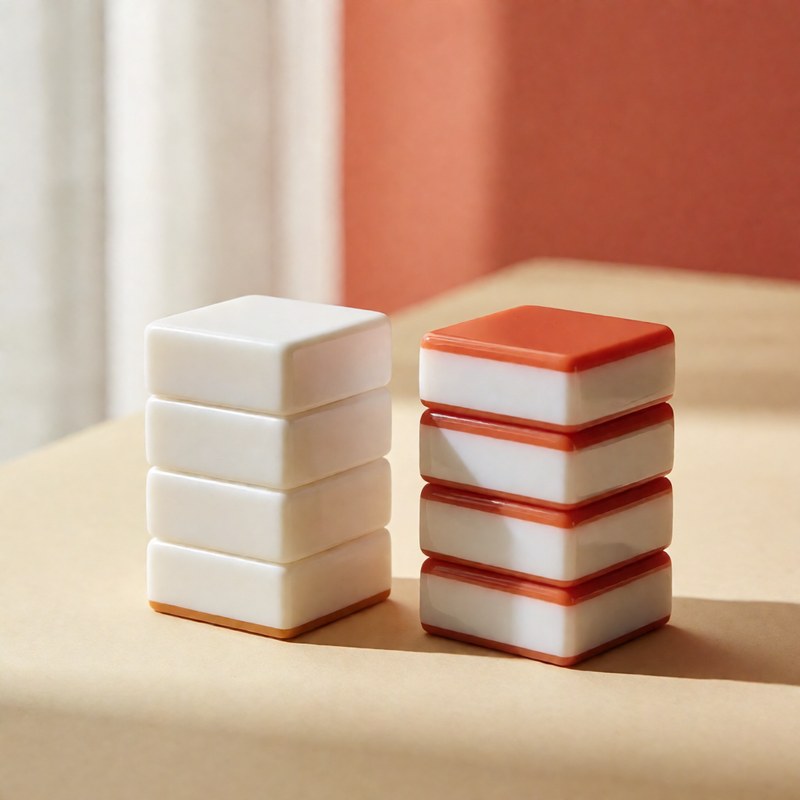
Most American mahjong tiles sold today are either melamine or acrylic. The choice sounds technical, but it shows up in two places you notice every single hand: how heavy a tile feels when you pull it from the rack, and how it looks after a year of weekly games.
Melamine is the workhorse
Melamine tiles are dense, matte, and slightly heavier than most acrylic sets. That weight is a feature. Tiles settle into the rack and stay where you put them, which matters when the Charleston is moving fast and everyone is reaching across the table. The surface is engraved rather than printed, so the design sits in the tile instead of on top of it. Engraving resists water, oil and constant handling far better than a printed layer.
Acrylic is the bright one
Acrylic tiles are lighter and take color differently. Because the design is usually UV-printed on the face, acrylic can carry sharper gradients, finer lines and more saturated color than melamine. The trade-off is the surface. Acrylic shows scratches and scuffs sooner, especially along the edges where tiles knock into each other inside a case. If you love bright, modern color and treat the set gently, acrylic rewards you with the cleanest-looking wall on the table.
Weight changes the rhythm
Heavier melamine tiles feel deliberate; lighter acrylic tiles feel quicker. Neither is better, but your group will notice the difference. Players who learned on dense tiles often find acrylic too floaty, while players who prefer a fast game like the lighter hand feel. If you are buying for a club or a shared table, melamine is the safer default because it holds up to more people and more handling.
Think about how you store them
Both materials scratch, just in different ways. Melamine tolerates casual stacking well. Acrylic needs a little more care: a soft divider in the case, or a cloth between layers, keeps the faces from rubbing. If the set travels, look for a case with individual tile wells or at least a padded interior. See the Mahjong Sets & Tiles category for current melamine and acrylic sets, with travel and storage options.
A fair comparison of melamine and acrylic
Melamine and acrylic are broad material labels, not quality grades. Two sets using the same label can differ in body construction, engraving, print method, edge finish and weight. Compare the specific product rather than assuming that one material is always quieter, stronger or more premium.
| What to compare | Why it matters |
|---|---|
| Face method | Engraved and printed faces can look and wear differently; ask how the artwork is produced. |
| Edge layers | The side view helps you judge construction and match replacements. |
| Weight and balance | A tile should be comfortable to hold and stable in the rack. |
| Surface gloss | Glare can affect readability under room lighting. |
| Care instructions | Use the seller's guidance for the exact material and finish. |
Ask for a photograph of the back and edge, and compare it with your existing tiles if matching is important. Read How to Choose Mahjong Tiles and Engraved Melamine vs UV-Printed Acrylic before making a decision based on the material name alone.
Questions that reveal more than the material label
Ask how the face artwork is applied, whether the body is single-layer or layered, how the edge is finished and what cleaning method the seller recommends. Ask for a side-view photograph and a picture of several backs in the same light. These questions produce evidence that a one-word material label cannot provide.
If you are matching an existing set, compare thickness and back colour before assuming a material name is enough. Keep one of your own tiles beside the candidate photographs while shopping. For further checks, use the tile materials guide and storage and care guide.
Ask for a side view before deciding
The side of a tile can show whether the body is layered and how the edge is finished. Request a clear side photograph when the listing only shows the face. Then compare the information with the care instructions and the way you plan to store the set.
Do not buy from a material name alone. Confirm the exact construction wording and check whether replacement pieces are available.
Create a material comparison note
For each candidate set, write down the construction wording, face method, edge appearance, published dimensions and care instructions. Leave a blank if a fact is missing. The blank is useful information because it tells you what to ask the seller before checkout.
Compare the completed notes rather than relying on the material name. A set with clear documentation is easier to maintain and match than one with a premium-sounding description but no concrete details.
Compare the same details every time
Use the same checklist for each candidate: construction, face method, edge, dimensions and care. The comparable notes are more useful than a single material label.