


Mahjong Tile Storage and Care: Keeping Acrylic and Melamine Sets Playable
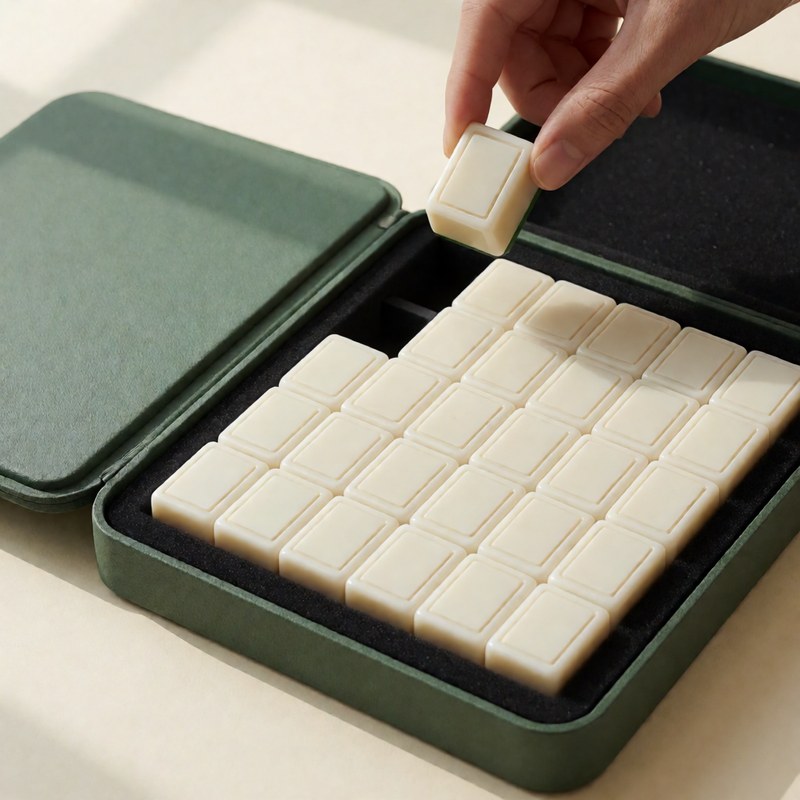
A mahjong set spends far more time in storage than on the table. How it is stored decides whether the tiles still click cleanly after five years or arrive at the next game with cloudy faces, chipped corners and a faint chemical smell.
What actually damages tiles
Most damage is not from playing. It comes from three things: tiles rubbing against each other loose in a bag, heat building up in a car or closet, and cleaning with the wrong product.
Acrylic is harder than melamine but more brittle. It scratches visibly and can craze around drilled holes if it is dropped. Melamine is softer and more forgiving on impact, but its printed or engraved surface dulls faster when it is wiped with abrasive cloths.
Loose tiles in a bag are the main problem
A canvas tote is convenient and a poor long-term home. Every time the bag is set down, tiles grind against each other. The damage shows up first on the corners and on the engraved faces.
If a soft bag is the only option, keep each suit in its own small cotton pouch, then put the pouches in the bag. Separation matters more than padding.
Hard cases: what to look for
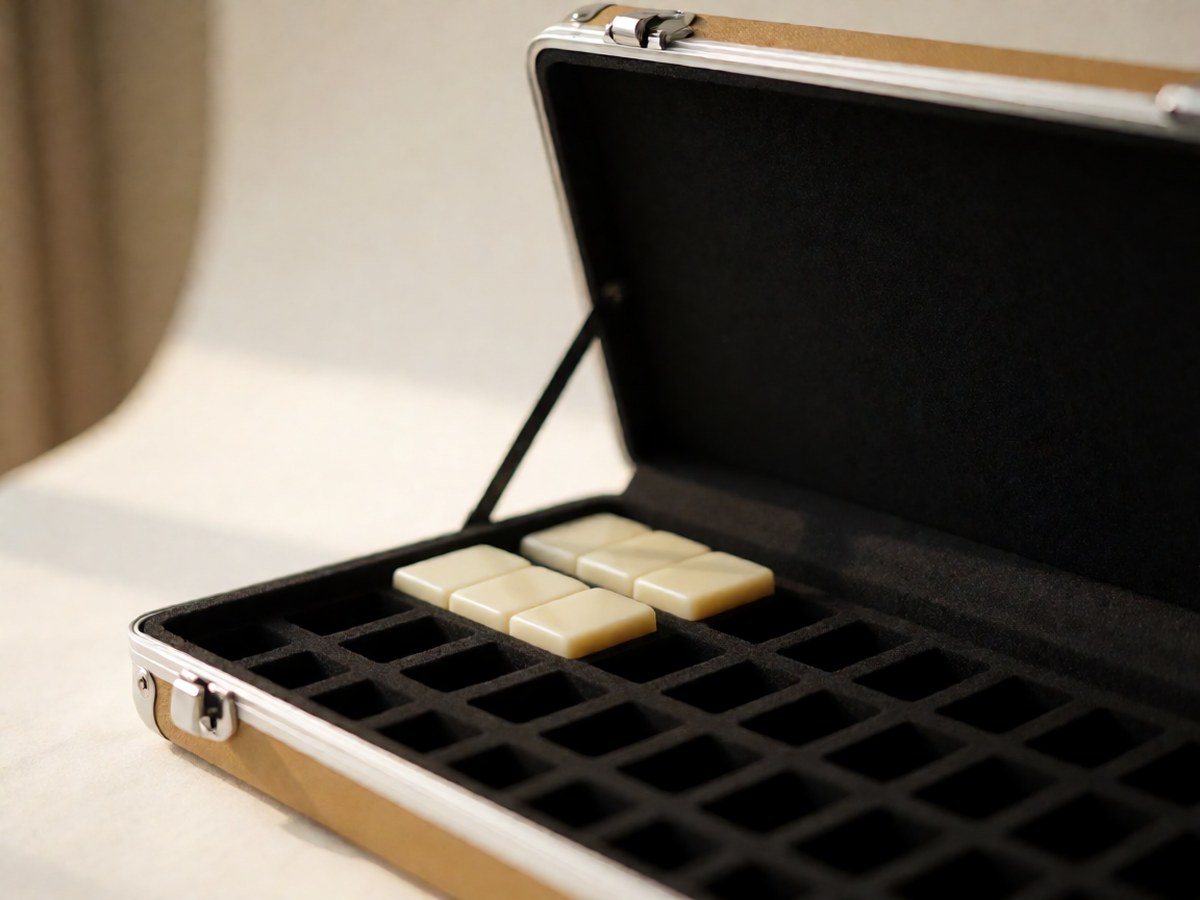
A good case holds tiles flat and stops them sliding. Look for individual slots or a foam insert that compresses slightly, a lid that closes without force, and a handle attached to the shell rather than the lining.
Wooden cases look right on a shelf but move with humidity. If the case is wood, check the latch seasonally and keep a silica packet inside during humid months.
Heat and sunlight
Acrylic softens at temperatures well below what a closed car reaches in summer. A set left in a trunk for an afternoon can warp permanently. Store tiles in a closet or cabinet, away from radiators and windows.
Sunlight is the second issue. UV exposure yellows cream tiles and fades printed colours, even through a case lid.
Humidity
Melamine and acrylic themselves tolerate humidity. The problem is what grows on them: mildew in the lining of a soft bag, and rust from metal latches or hinges touching the tiles.
Keep a small silica packet in the case and replace it when the indicator changes. Do not store a set in a basement or an unventilated bathroom.
Cleaning without dulling the surface
Dust and finger oils come off with a barely damp microfibre cloth and a drop of mild dish soap in warm water. Wipe, then dry immediately with a second cloth.
Do not use alcohol, acetone, bleach or scouring pads. Alcohol clouds acrylic; acetone attacks it outright; abrasive pads remove the polished face and leave a matte patch that collects dirt.
Drying and airing
Never put tiles back in a closed case damp. Spread them face down on a towel in a shaded room for a few hours, then let the case air open overnight.
Long-term storage
For a set that will sit for months, take the tiles out of the bag, wipe them, and store them flat in the case with the lid slightly open. Add a silica packet, and keep the case off the floor.
Check once a season. A two-minute inspection catches mildew, rust and warping before they become permanent.
What to check before you store a set away
Count the tiles against the set list, look for chipped corners, and note any tile that has started to yellow. Sorting the set once makes the next game faster and shows missing pieces while they can still be replaced.
Storage should reduce handling, not add it
A good storage system keeps the tiles together and makes the next game easy to start. Keep the joker group identifiable, store the card separately and use a case with enough room that the faces do not press against sharp hardware. If the set travels, add a soft layer or divided pouch rather than filling every gap with loose pieces.
Storage material matters. A damp or dusty cupboard can affect the set even when the tiles are not being played. Choose a dry location away from prolonged sun and check the case occasionally for grit or damaged lining.
Material-specific care
Acrylic and melamine should be cleaned according to the product's own care guidance rather than a universal household recipe. Avoid abrasive pads on printed or engraved faces. If a spill occurs, blot it gently and confirm whether the surface should be wiped with a damp cloth or cleaned another way.
For a mat, follow the separate instructions for the printed surface and backing. For tiles, keep the case closed and inspect the group before travel. Read Engraved Melamine vs UV-Printed Acrylic, How to Clean a Mahjong Mat and Traveling With American Mahjong.