


Small-Space Mahjong: How to Set Up a Game in an Apartment
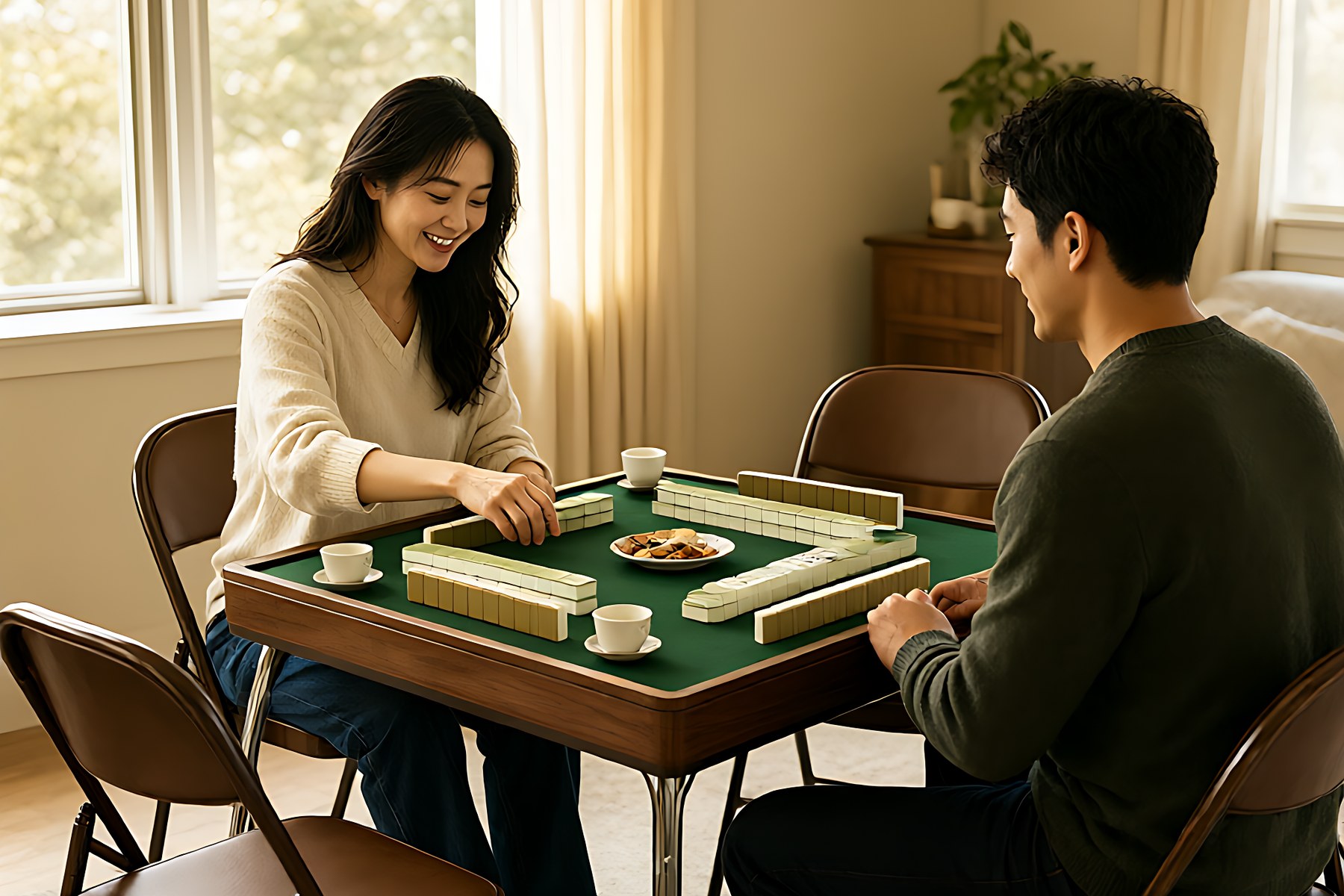
American mahjong is often described as a game for a big table, but the game itself is more adaptable than that description suggests. Many players live in apartments, condos, townhouses or homes where the dining table has to do several jobs. The useful question is not whether you have a permanent game room. It is whether four people can sit comfortably, see their racks, reach the center and keep the tiles contained without turning the room into an obstacle course.
A small-space mahjong setup works when the table, lighting, seating and storage are planned together. Buy one item at a time and the result can feel cramped even when each object is attractive. Start with the space you actually have, then decide which pieces need to be on the table and which pieces should live within arm's reach.
The real constraint is the play footprint
A mahjong table is not only the rectangle in the middle. Each player needs a place for a rack, a pusher and a hand of tiles. Chairs need enough room to pull out. Someone has to reach the dice, the card and the center of the table without leaning across another player's rack.
Measure the room from the outside edges of the chairs, not only from the tabletop. A setup can look small from above and still feel tight in use because players cannot move their elbows, stand up or slide a chair back. Leave a clear walking path behind at least the main seating side if possible.
Measure the table before buying a mat
Use a tape measure on the actual table you plan to use. Record the length, width and usable flat surface. Then measure the distance from the table edge to the nearest wall, sofa, cabinet or doorway. A mat that fits the top but not the room still creates a problem.
It also helps to measure one rack and one pusher if you already own them. Set them on the table at four positions and pretend to build a wall. This simple test shows whether the center has enough room for tiles, dice and discards. If you are still choosing equipment, compare the mat dimensions with the rack footprint rather than relying on product photos alone. Our guide to choosing a mahjong mat explains size, grip and noise in more detail.
What actually needs to fit on the table
A four-player American mahjong setup generally needs four rack positions, a central play area and a small place for the dice, card and discards. Sets and accessories vary, so count the pieces you own instead of assuming every set is identical. The standard game is commonly associated with 160 tiles, but the physical size of those tiles differs by material and design.
The tile walls do not need to be built in the same spot for every game. What matters is that the center remains open enough to move tiles and that no one has to place a cup on top of a rack. Tea, snacks and phones should sit outside the immediate tile area or on a separate side table.
Use the table you already own
A dining table, kitchen table or sturdy card table can work well. Check that the top is stable and that the legs do not wobble when four people lean forward. Protect wood and glass with a mat or a clean tablecloth, but avoid using a loose cloth that catches tile edges and makes walls collapse.
If the table is also used for meals, choose equipment that can be moved as a group. A mat that rolls or folds, a small tray for racks and a storage bag for tiles make the change from dinner to game night quicker. The point is not to hide the game; it is to reduce the number of separate objects you have to carry through the room.
Choose a mat that fits the room
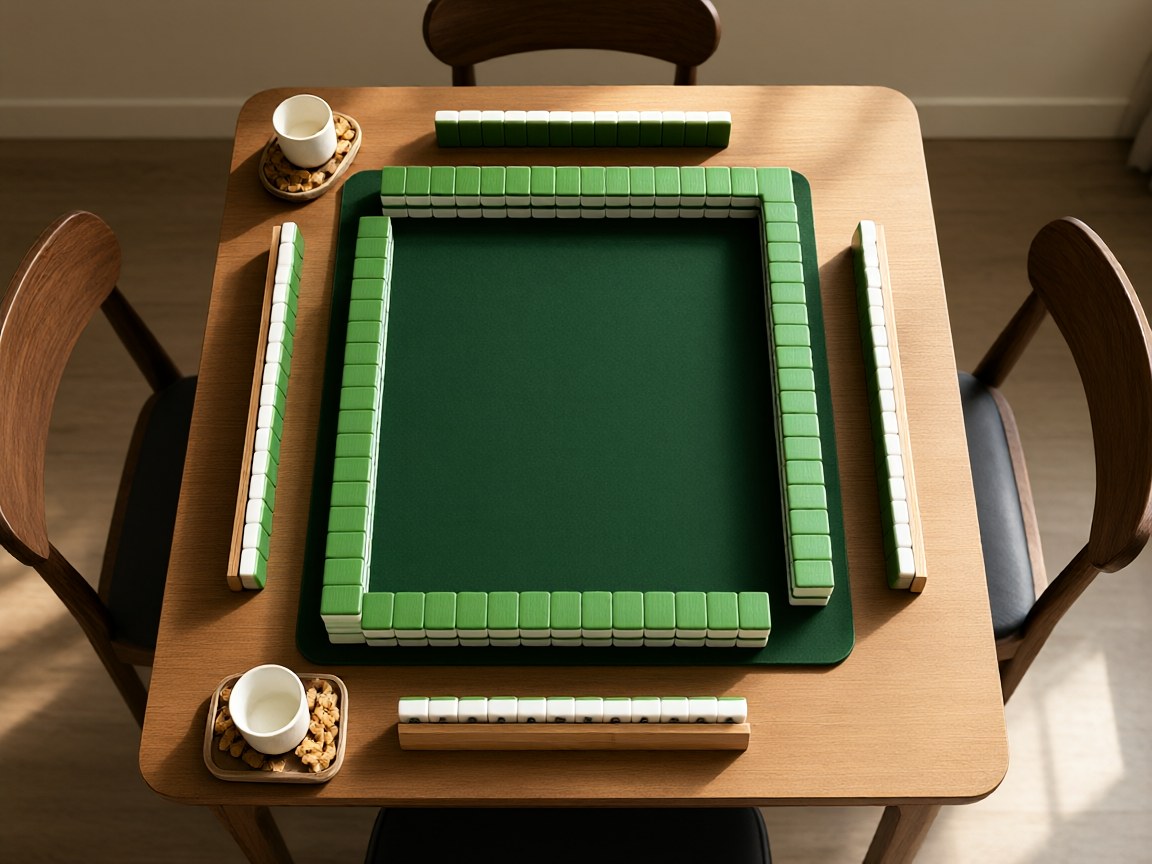
A tight table needs a mat with enough grip to stay put and enough border to keep tiles from sliding off. Thicker is not automatically better. A mat that is too thick can soften the wall, while a very thin mat may slide on a polished surface. Read the actual dimensions and test the fold or roll before storing it.
For a compact apartment, a mat that can be rolled around a core or folded along a soft crease is easier to store than a rigid board. If the table doubles as a workspace, a mat also makes the transition faster because the playing surface is already defined. See our comparison of mat thickness and the difference between a mahjong mat and tablecloth.
Seating around a small table
Four people do not need four large armchairs. Simple dining chairs, folding chairs or a mix of chair and bench can work if everyone has enough knee room. Avoid seating anyone against a wall so tightly that they cannot push back. A player who cannot reach the tile wall comfortably will change the rhythm of the whole table.
For guests with limited mobility, keep one side open for a chair that is easy to enter and leave. Put the card and dice within reach of more than one player. If the table is high, a footstool can make a long game more comfortable; if it is low, a firm cushion may change the angle of the racks.
Lighting and sight lines
Mahjong is a visual game. Tile markings need to be readable without glare, especially when players use white tiles or detailed designs. Use a warm overhead light or floor lamp that illuminates the center without shining into anyone's eyes. A window behind the players can leave the table in shadow at the wrong time of day.
Try the setup at the hour when you normally play. Move a lamp before you move the table if the shadow is the problem. Keep cords out of walkways and away from cups. If the room has a television, turn it off during the first game or angle it away from the table so it does not compete with the tile wall.
Keep racks, pushers and tiles contained
A small table makes every loose object more noticeable. Racks and pushers should stay within their player's area. A shallow tray can hold dice, the card and a few small accessories, but it should not become a second pile of clutter in the center. Use the storage category for mahjong bags and storage when you want a place for the set after play.
If tiles are likely to slide, check the mat first. If the racks are unstable, check their length and fit. A rack that is too long for the table may overhang the mat, and a loose pusher can fall between the table and chair. Our guide to mahjong rack guide explains what to measure before ordering.
Make storage part of the room
The easiest small-space storage is a single landing place for the whole table kit: mat, racks, pushers, tiles, dice and card. A basket on a shelf, a sturdy bag beside a cabinet or a tray that fits into a closet all work if the contents have a fixed home. Avoid storing tiles loose in a drawer where they can scratch against keys, tools or loose dice.
Keep the set dry and away from direct sunlight. Before putting everything away, count the pieces you expect to see and separate anything that belongs to another game. A quick inventory takes less time than discovering a missing tile on the next game night.
Control noise without losing the table
Tiles on a hard table are loud. A mat with grip reduces the sharp click and keeps walls from spreading. Felt pads under chair legs can reduce scraping, and a rug under the table can soften the room without changing the play surface itself. Do not put a thick rug under a wobbly table without checking stability first.
Noise is also a social issue in apartments. Start with the mat and chairs rather than asking players to be quieter. If the floor transmits sound, a rug and furniture pads are simple improvements. Talk to neighbors before a late game if the building has quiet hours; hospitality includes the people who are not at the table.
Set up for two, three or four players
A small space can support a two-player practice game with fewer occupied seats, but do not remove the rules that make the game work. Keep a clear wall and discard area between the two players. For three or four players, use the full rack arrangement so the turning order and center remain understandable.
If you often play with a mixed group, set the room for the largest number you expect and remove a chair for smaller games. That is easier than adding a chair into a tight corner after guests arrive. Our guide to playing mahjong without a dedicated table can help you decide whether your table is the right height and size.
A five-minute reset before guests arrive
Clear the table completely, wipe the surface and lay the mat. Put four racks and pushers in place, then place cups and snacks off the playing area. Check the light, turn chairs outward and remove trip hazards from the floor. Finally, count the tile set and place the card, dice and a small cloth where they can be reached.
This reset is also a chance to notice whether the room has become too full. If the table is covered before the game starts, remove something. A clean setup feels generous even when the room is small.
When a dedicated table makes sense
A dedicated mahjong table is worthwhile if you play often, if the table needs to stay out between sessions or if a household member needs a stable, accessible surface. It is not required for a good game. A sturdy dining table with a mat can produce the same social experience, especially when the room is arranged around the players rather than around storage.
If you do buy a dedicated table, measure the full chair footprint and the path around it. A table that fits the room but blocks a closet or doorway will soon become inconvenient. The best table is the one that makes the next game easier to start.
Small-space checklist
- Measure the tabletop, chair pull-out space and walking paths.
- Test four rack positions with the actual tiles before buying a mat.
- Keep tea, snacks and phones outside the central tile area.
- Choose a stable mat with a grippy back and manageable storage.
- Give the whole set one landing place.
- Use lighting that shows the tile faces without glare.
- Leave one side accessible and keep cords out of the floor path.
Frequently asked questions
Can you play mahjong on a coffee table?
A low coffee table can work for a short practice game, but four adults may find the height uncomfortable and the surface too small. Measure the racks and test the knee space before inviting a full group.
Do you need a special mat?
No, but a mat improves grip, reduces noise and protects the table. A clean, stable surface can be enough for a first game.
How much room do four players need?
There is no universal number because tables, chairs and tile sizes vary. Measure the outside chair footprint and leave room for players to stand up and move behind their seats.
Bottom line
Small-space mahjong is mostly a design problem: measure the real footprint, choose a stable surface, keep the center clear and give the set one storage home. When those basics are handled, the room does not need to look like a game room. It only needs to make the next game easy to begin and comfortable to finish.