


Choosing a Mahjong Mat: Size, Grip and Noise
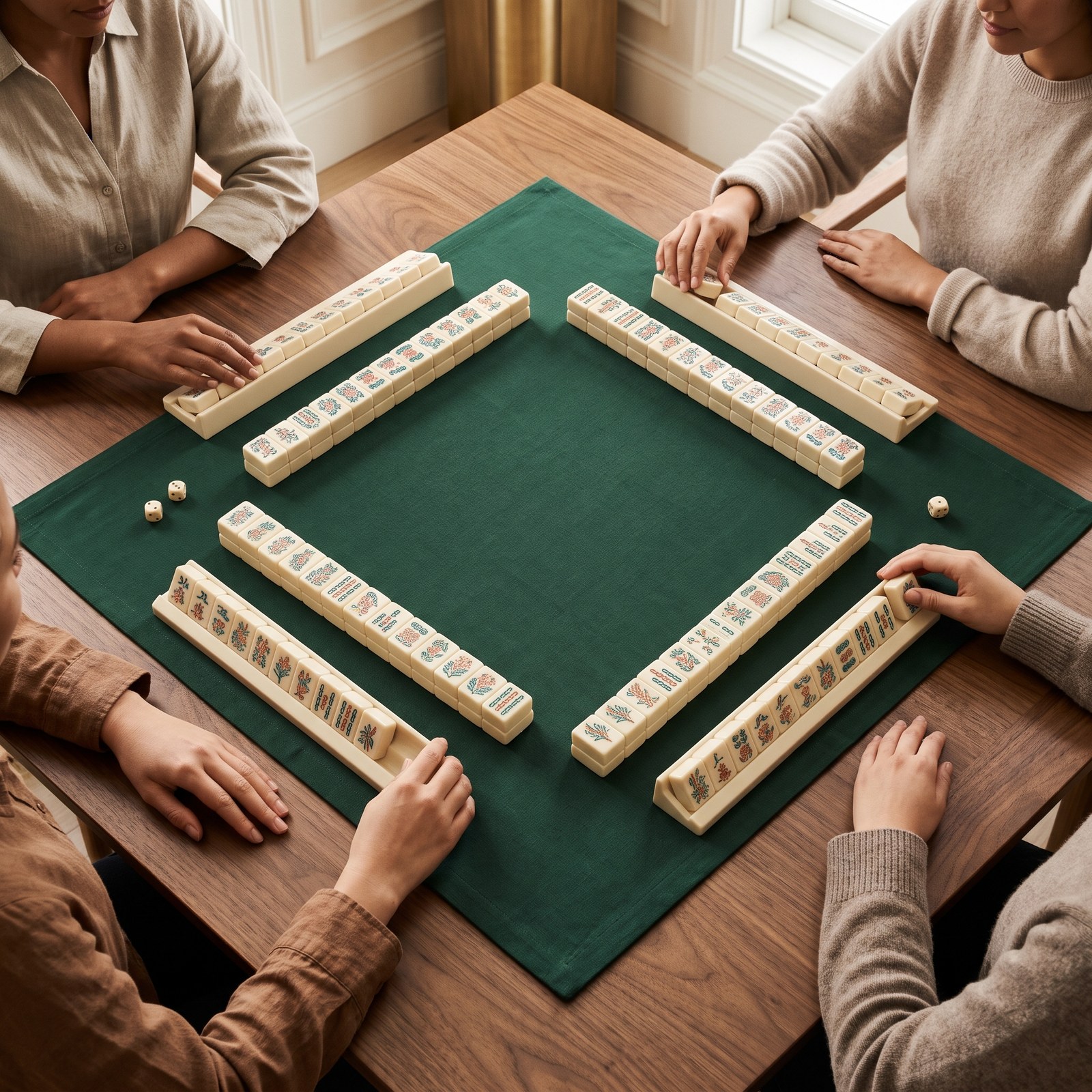
Of everything you can add to a mahjong table, a mat is the cheapest thing that changes the most. It protects the table, quietens the tiles, and stops the wall from sliding apart mid-hand.
Square or rectangular
Square mats sized around 80 cm, or roughly 31 to 32 inches, suit a four-player mahjong table. Every player gets a side, and the square shape keeps the walls evenly spaced from the centre.
Rectangular mats are usually meant for board games and card games rather than mahjong. They work, but on a full mahjong table the short sides leave players reaching.
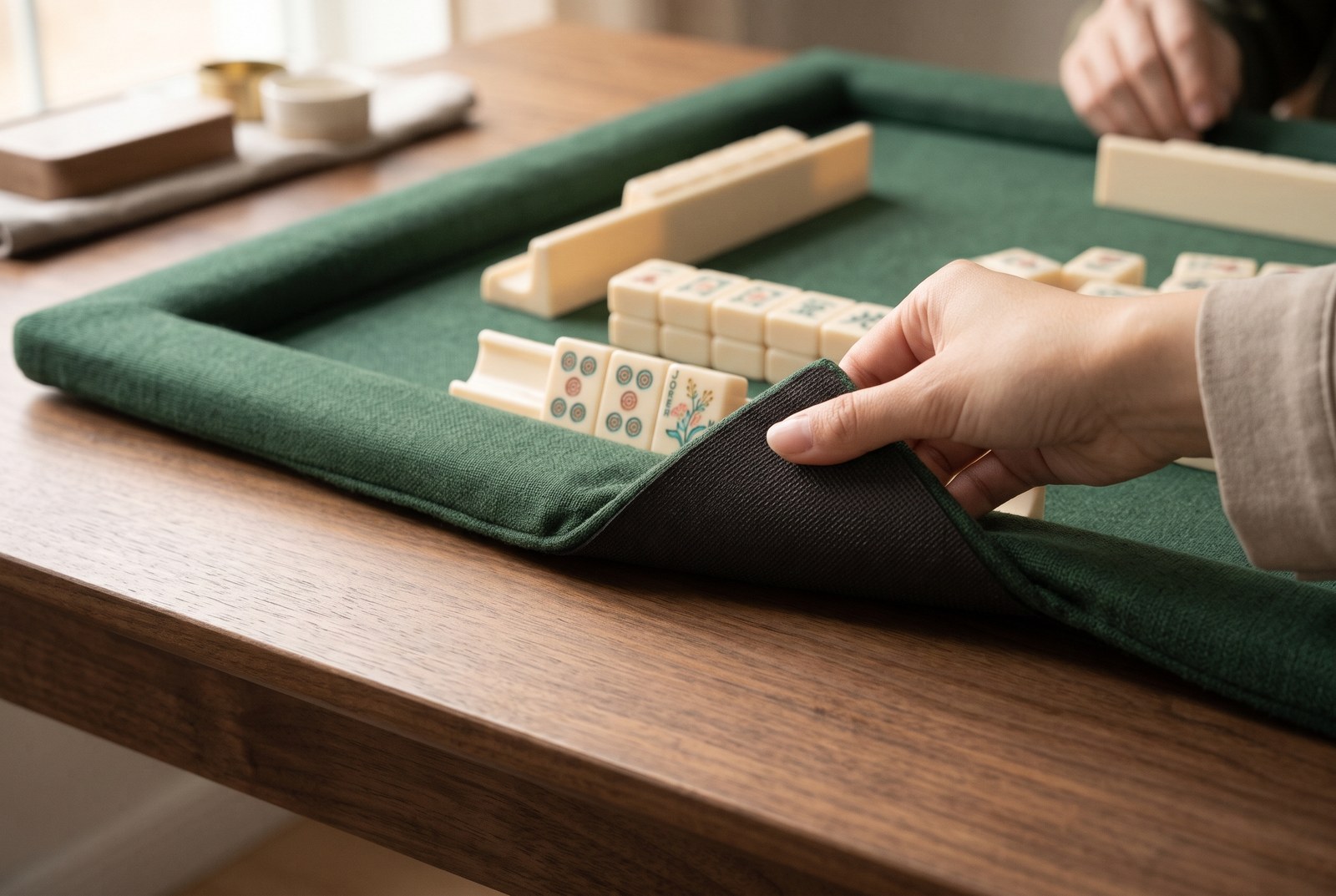
Grip is the whole point
Two surfaces matter: the underside, which keeps the mat on the table, and the top, which keeps the tiles from sliding.
Rubber or neoprene undersides hold well on wood, glass and plastic. On a bare polished table a smooth mat will drift once players start leaning on it, and by the fourth hand the whole layout has crept.
Noise
Acrylic and melamine tiles are loud on bare wood. The clatter carries through a house, which matters if you play in the evening.
A fabric-topped mat with a foam or rubber base does most of the work here. Thicker is not automatically better. Past a certain point the mat stops absorbing more noise and just becomes harder to store.
Thickness and storage
Around 2 to 3 mm is a common working range. Thin enough to roll or fold, thick enough to deaden the tile noise and cushion a rack.
If the mat will live on a dining table that gets used for meals, a foldable or rollable mat is the practical choice. If it stays on a dedicated game table, a flat mat that never creases is easier to live with.
Cleaning
Fabric tops wipe down with a damp cloth and mild soap. Avoid soaking the mat and avoid harsh solvents on printed designs, which will dull the print over time.
Roll rather than fold if the mat is going to sit for months. Fold lines in a thick base tend to become permanent, and a mat with a permanent crease never sits flat again.
A simple table layout test
Before buying a mat, mark its published dimensions on a large sheet of paper or use removable tape on the table. Place four racks around the outline and spread a few representative tiles in the centre. Check whether every player can reach the wall and discard area without leaning across another hand. Check too that a drink can sit outside the mat rather than beside the tiles.
If the outline fits with little room to spare, consider a smaller mat or a tablecloth that follows the table shape. If the surface extends beyond the usable area, the extra material may be difficult to store or may hang over an edge.
Mat, tablecloth or both?
A mat is the more practical choice when you want a defined surface for the wall and tiles. A tablecloth is better when the whole table should look dressed and the playing area can remain generous. Some players use a cloth for the room and a mat for the central play zone. That combination can work, but check that the mat does not slide on the cloth and that the layers remain comfortable underfoot or at the table edge.
Care before the first game
Read the cleaning instructions before the first use, especially if the mat has a rubber backing or a printed surface. Keep sharp objects and hot dishes away from the play area. Dust the surface before folding or rolling it, and store it in the format the manufacturer recommends. A mat that is folded against its instructions may develop creases that affect the wall.
These checks take only a few minutes, but they prevent the most common mismatch: a mat that looks right in a photograph and is awkward on the actual table.
Test the mat with the whole table
Measure the mat, then place four racks around its outline. The centre needs room for the wall and discards, while each player needs a comfortable hand position. A mat that leaves no space for a drink outside the play area may feel crowded even when the dimensions look generous online. If the table is also used for meals, choose a format you can clear and store without damaging the surface.
Check whether the mat will sit directly on wood, glass or a tablecloth. Layers can slide against one another, and a soft cloth under a mat may change the playing feel. Read the product care instructions before combining surfaces. For thickness comparisons, see Mahjong Mat Thickness Guide.
Check the layers before you play
If you place a mat over a tablecloth, test whether the layers slide during the wall build. If the mat has a rubber backing, read its care instructions before using heat or moisture nearby. A stable surface is more useful than an extra decorative layer that moves under the tiles.