


Mahjong Mat Thickness Guide: How Thick Should a Mahjong Mat Be?
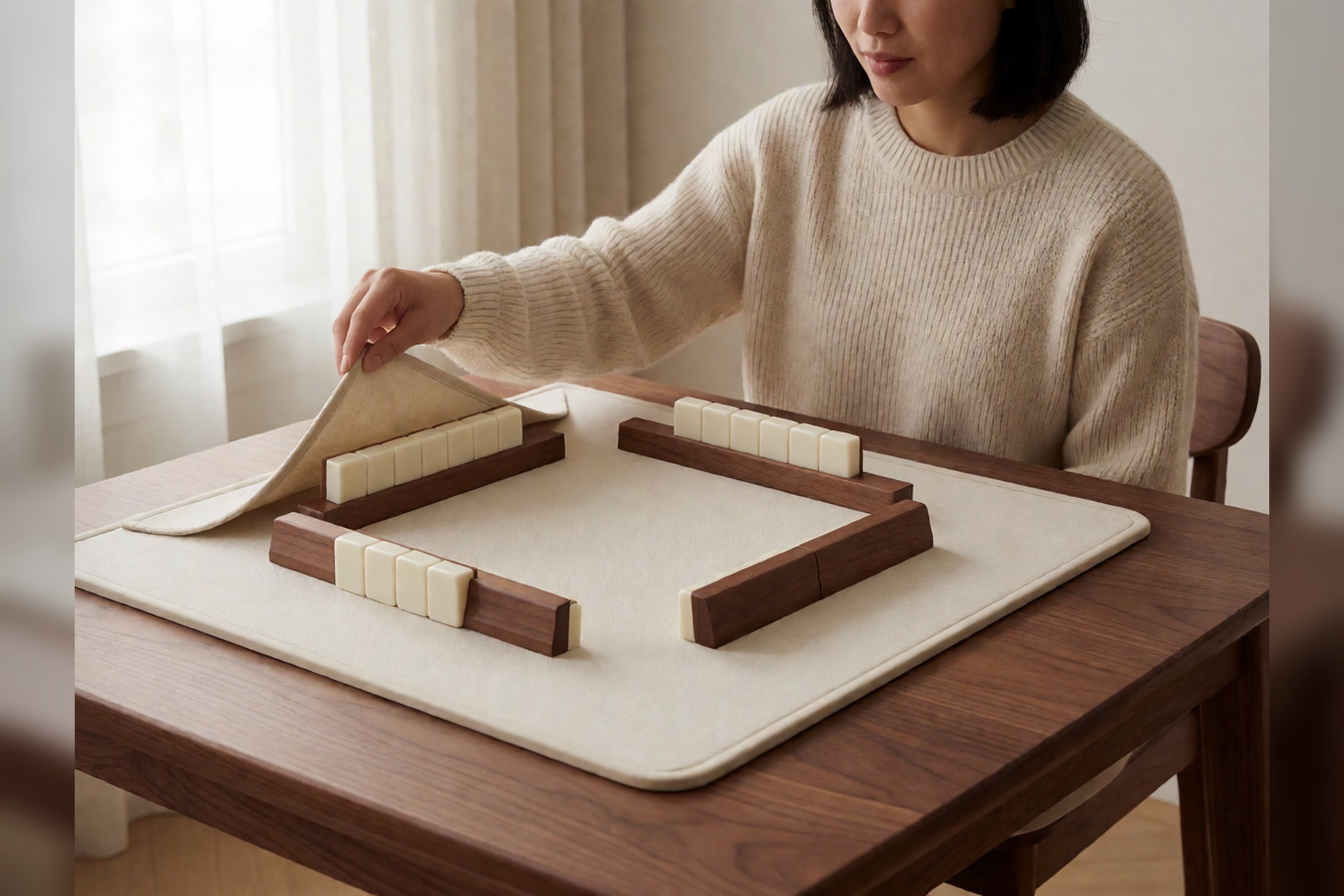
Mahjong mat thickness is usually measured across the full material stack, including the fabric surface, foam core and backing. For most home players, a finished thickness around 2–3 mm is the practical middle ground: it cushions the tiles, reduces noise and still feels stable under four racks.
Thicker is not automatically better. A 5 mm mat can quiet a hard table, but a very soft surface may let tile walls shift or make a folding mat harder to store. The right choice depends on your table, how often you play and whether the mat travels.
Key takeaways
- Use 2–3 mm for a balanced feel on most dining tables.
- Choose 3–5 mm when noise and table protection matter most.
- Measure the finished edge, not only the foam layer.
- Match the mat to the full footprint of four racks.
- Check grip, stitching and fold lines before thickness alone.
What mat thickness actually means
Product listings use “thickness” in different ways. Some quote the neoprene sheet, some quote the foam core and others measure the finished edge with fabric and backing. Ask for the finished measurement if the listing is unclear. A 3 mm neoprene mat with a bonded backing can feel very different from a 3 mm mat with a loose, stretchy cover.
The top surface also matters. A smooth, tight knit lets tiles slide predictably without becoming slippery. A soft pile may feel plush, yet it can resist rack alignment and collect dust. The backing should grip the table without leaving sticky residue.
Why thickness matters at an American mahjong table
Thickness affects four things: noise, table protection, wall stability and comfort. A little cushion takes the sharp edge off acrylic or melamine tiles and protects wood, glass and stone from scratches. It also absorbs some of the clack that makes a hard table sound louder. Too much softness can do the opposite—tile walls may sink slightly and racks may rock.
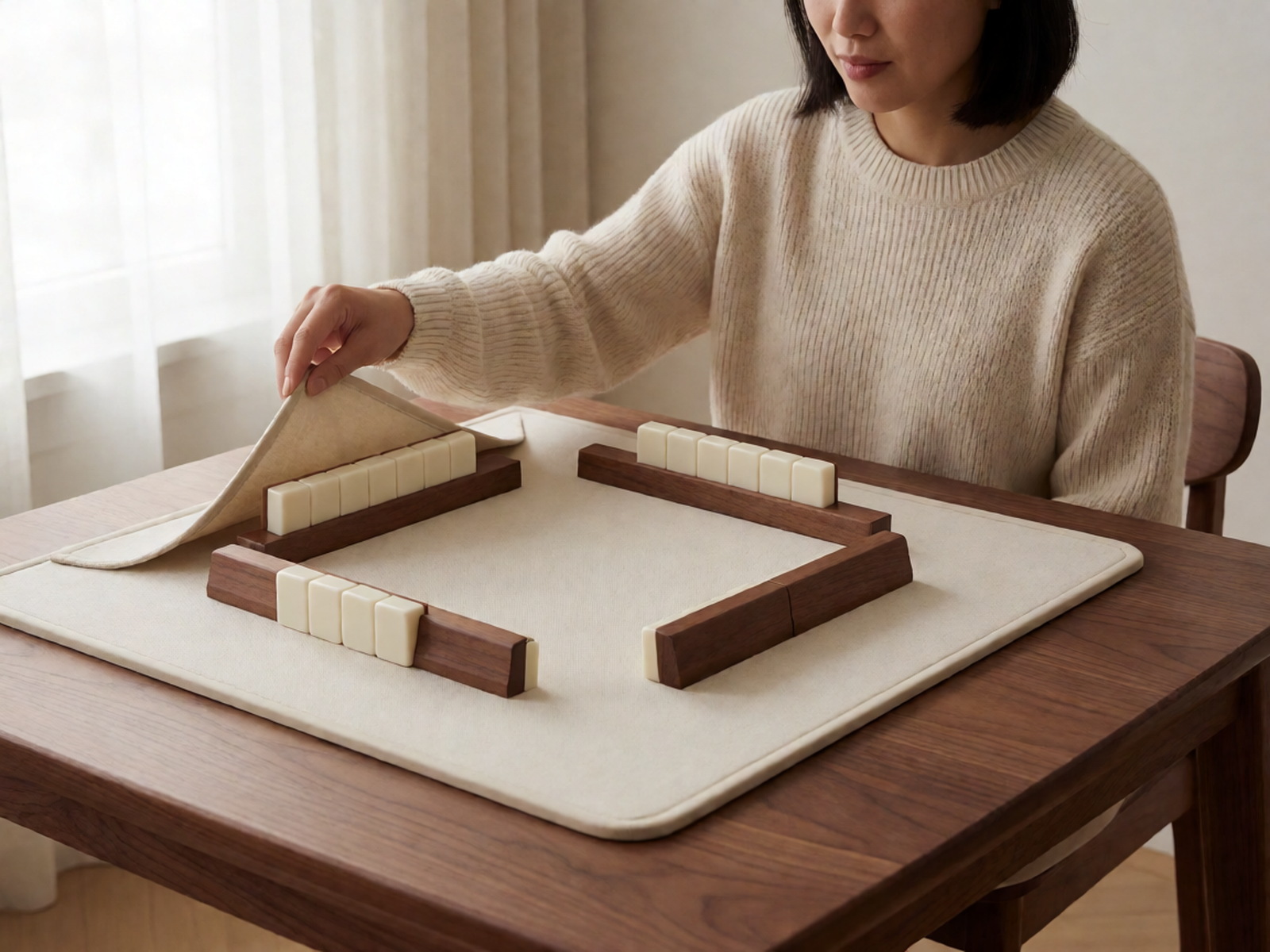
2 mm, 3 mm or 5 mm?
About 2 mm
A thin mat is easy to fold, pack and use on a table that is already smooth. It gives a crisp playing feel and takes up little storage space. The tradeoff is less cushioning and less noise reduction. This is a good choice for travel or a mat that will be moved after every game.
About 3 mm
Three millimeters is the most versatile range for regular home play. It is thick enough to soften tile contact but firm enough to keep racks and walls steady. On a dining table that is also used for meals, this is usually the easiest thickness to live with.
About 5 mm
Five millimeters and above can make a dramatic difference on a hard or noisy table. The extra depth may help with table protection and comfort during a long session. Check that the mat lies flat, that fold lines do not create ramps and that the rack feet do not sink into the surface.
Match the mat to the table
On polished wood, a grippy backing matters as much as padding. On glass, choose a mat that lies completely flat and will not trap grit underneath. On a padded dining table, a very thick mat can feel unstable. For a table shared with meals, choose a mat that folds cleanly and can be wiped without soaking the core.
Do not buy by thickness alone
Measure the playing area and check the mat dimensions. Four racks need a center area, four player edges and a little room around the outside. A mat that is labeled 31.5 or 33 inches should be compared with your actual table and rack setup. Check the stitched edge, fold direction and whether the mat can lie flat after storage.
Care and storage
Wipe spills quickly with a damp cloth and mild soap, then dry the mat fully before folding. Avoid soaking the core, harsh cleaners and hot objects. Store the mat flat or in a loose roll according to the manufacturer’s instructions. Repeated tight folds can create permanent ridges.
Frequently asked questions
Is a thicker mahjong mat always quieter?
Usually, yes, but fabric, backing and table hardness matter too. A firm 3 mm mat can outperform a soft 5 mm mat if it lies flatter and absorbs contact better.
Can I use a yoga mat?
A yoga mat may work temporarily, but it is often too soft and too large. A dedicated mahjong mat is designed for a square playing area, rack placement and cleaner storage.
What size mat fits four players?
Measure the full rack footprint and leave room for each player’s hand. Many home tables work with a mat around 31.5–35 inches, but the table and rack dimensions are the real guide.
Bottom line
For most American mahjong players, a finished 2–3 mm mat is the safest balance of grip, stability, noise and storage. Choose more cushion only when your table is hard or noisy and the mat still lies flat. Browse our mahjong mats and compare the finished edge, backing and dimensions.