


How to Choose a Mahjong Rack: Length, Material and Fit
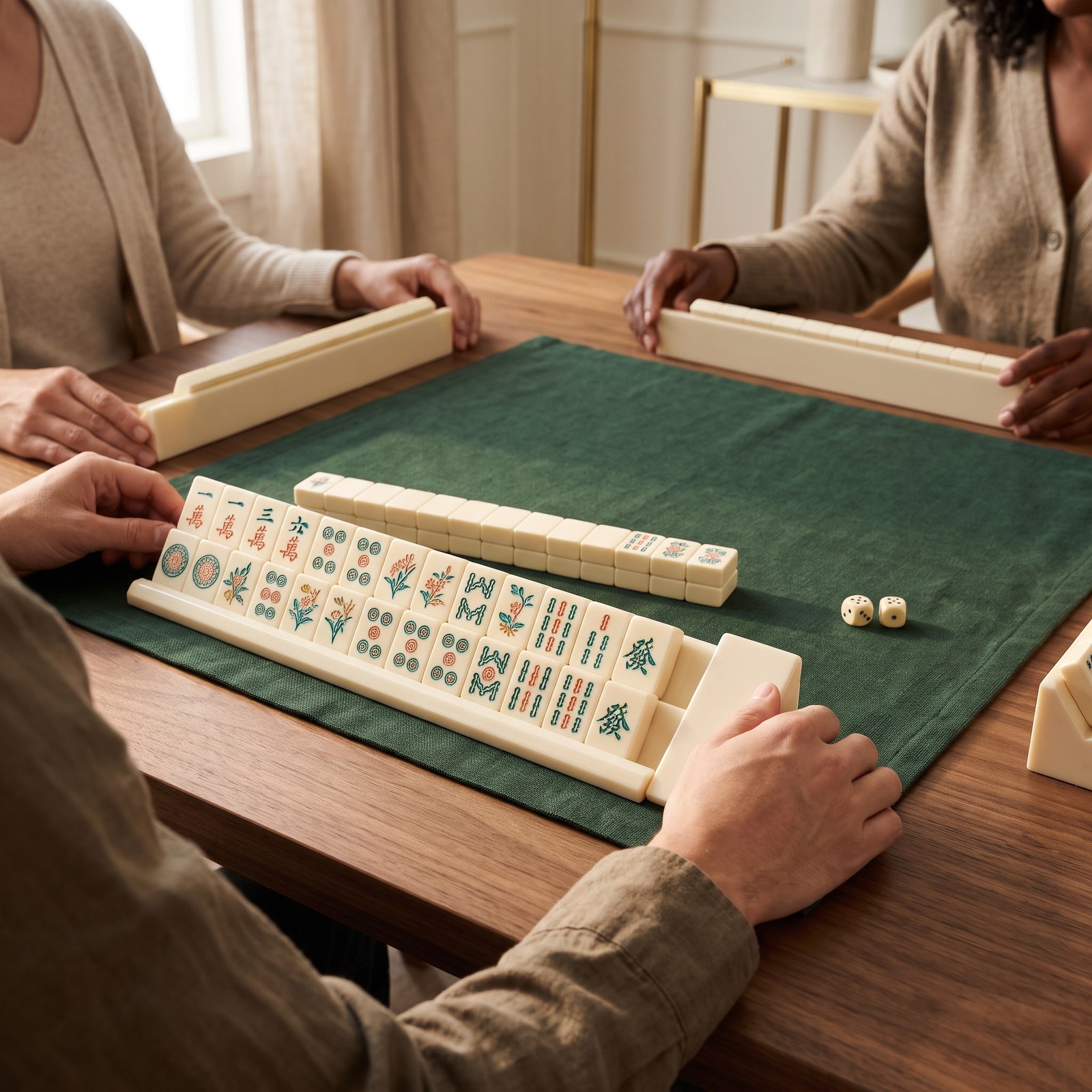
Racks sit at the base of every move you make. Pick the wrong one and you spend the whole game fighting equipment instead of playing. This guide covers the three things that actually decide whether a rack works: length, material, and how it sits with your tiles and pusher.
Length is the first decision
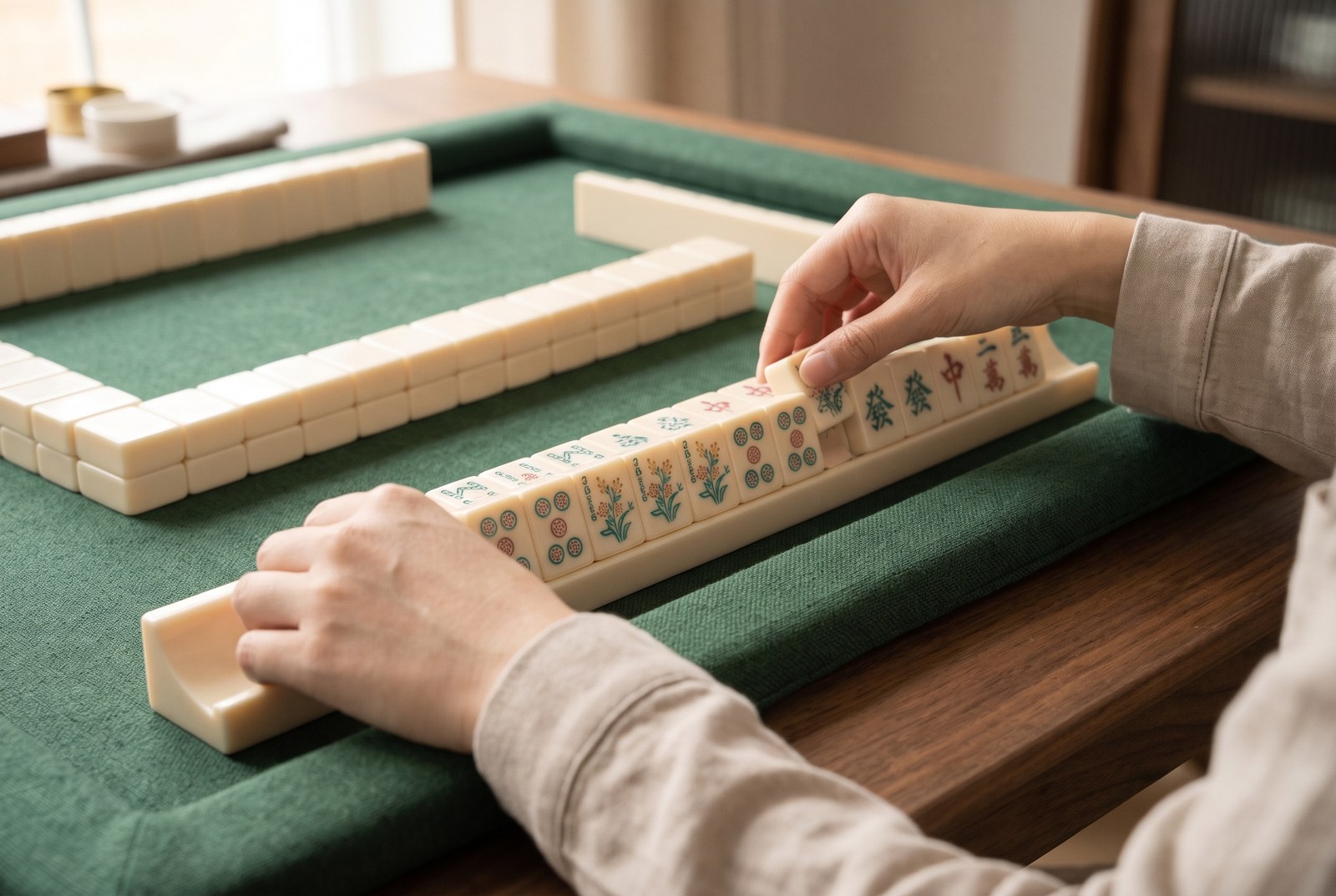
A rack must hold your full hand with room to spread tiles so you can read them at a glance. Most American hands run to 13 to 14 tiles, and racks built for that hold well over 20 tiles, so you can sort by suit or colour without juggling. If a rack is close to the maximum you hold, you will constantly be re-stacking and losing your grip on the table. When in doubt between two sizes, take the longer one.
Material changes how the rack behaves
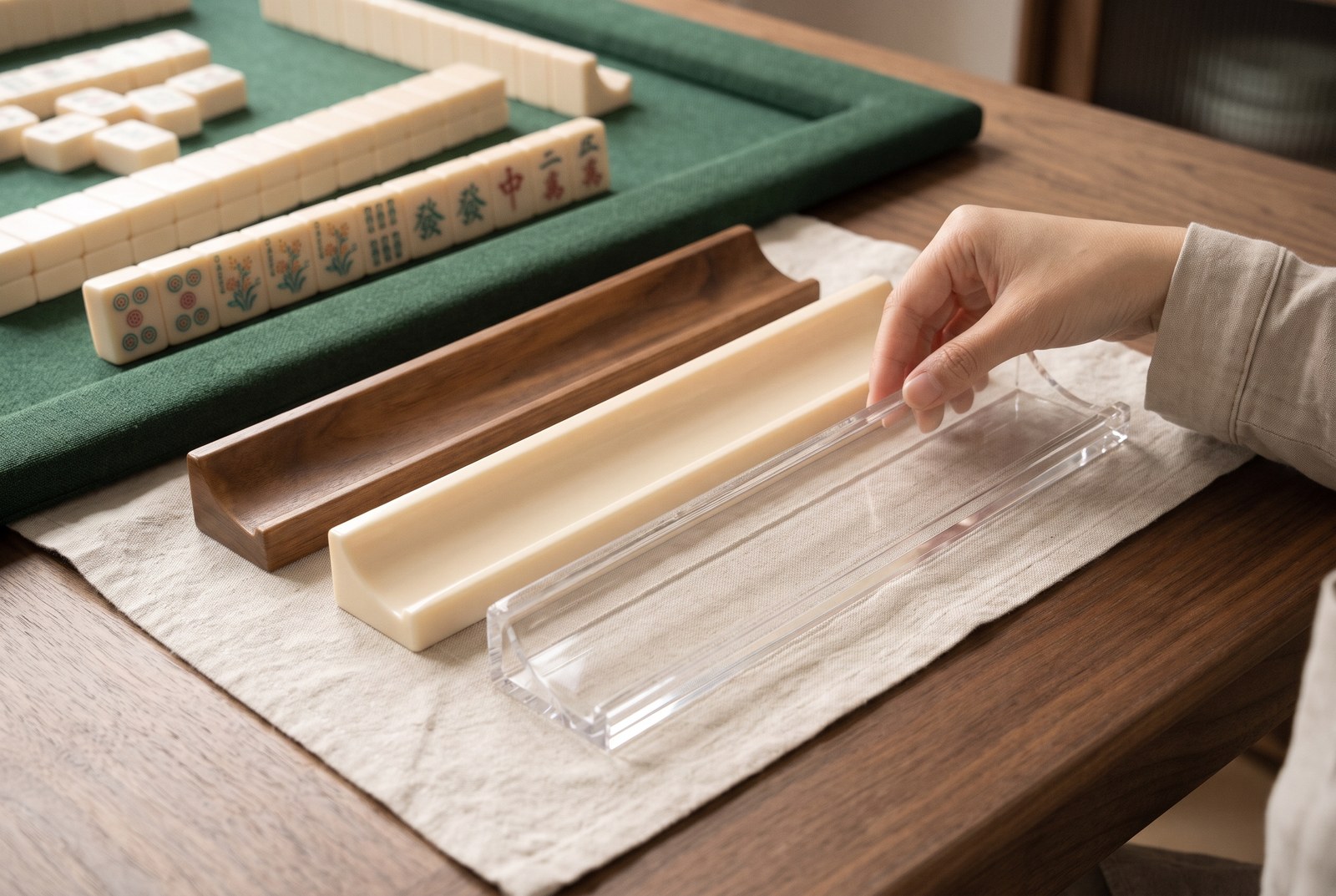
Acrylic racks are light, easy to wipe clean, and hold a consistent edge. They are the default for home tables and travel. Melamine and resin racks are heavier, which some players like because the rack does not slide across the mat. The trade-off is cleaning: melamine picks up dust and can look dingy faster than acrylic. Heavier racks also wear table surfaces more over time, so pair one with a protective mat.
Fit it to your tiles
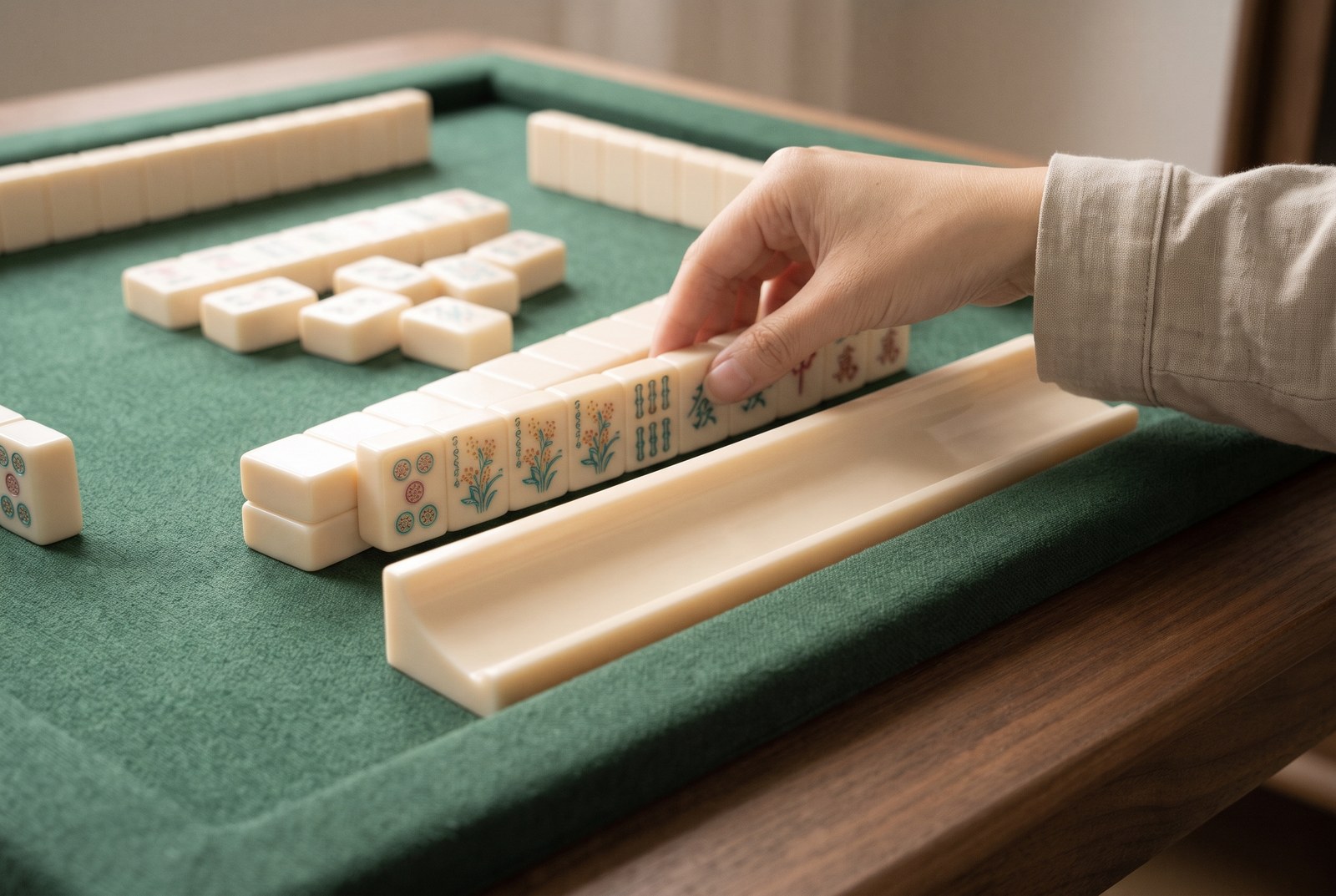
A rack is only as good as its contact with your tile height. If the wall of tiles the rack holds is much lower than the rim of the rack, tiles slide forward when you reach for the wall. Check the listed rack width and compare it to your tile size before buying, and confirm the mix of new and existing tiles you intend to run on the table.
Rack and pusher as a pair
A pusher slides between your hand and the rack and lets you move several tiles at once. Pusher length should match rack length: a short pusher in front of a long rack leaves the far end of the hand uncontrolled. Buying the rack and pusher as a matched set, in the same material and colour, is the simplest way to avoid a mismatch that shows up mid-game.
Before you order
Check the listed rack dimensions, the tile size each rack is built for, and the number of pushers included in the set. If you mix racks between two sets of tiles, confirm both will run on the same table before checkout. See the the Mahjong Sets & Tiles category for the current rack and pusher sets, with length and material options.
Measure a rack in four steps
First measure the inside floor of the rack from end to end. Second measure the height of the lip that holds the tiles. Third measure the width between the sidewalls. Fourth compare those numbers with the height and thickness of your tiles. Keep the result beside the product listing so you can check the wording of the rack description without relying on memory.
If the listing describes a pair or a full set, add the quantity to the note. A rack that fits is only useful if you receive the number you expected. Also check whether a pusher is included and whether its width matches the rack.
Common mismatch scenarios
- A rack that is long enough but has a lip that is too shallow for the tile height.
- A pair of racks purchased when the table needs four.
- A decorative finish that looks different from the photographs under room lighting.
- A rack that fits the tiles but not the storage case.
When one of these points is missing from a listing, ask before ordering. A short message can prevent a return and preserve the visual consistency of the whole set.
Check the rack with the tile in place
A measurement sheet can show that a tile fits, but it cannot show whether the rack feels stable. Put several tiles in the channel and check the reading angle, the front lip and the balance when the hand is nearly empty. If you are ordering online, ask for a side-view photograph when the listing only shows the rack from the front.
Also compare the rack with the storage case and the pusher. A matching finish is less useful if the set no longer closes or if the pieces do not work together. Read Matching Your Mahjong Rack to Your Tile Size before checkout.