


Mahjong Tile Storage: Organizers, Bags and Cases That Protect a Set
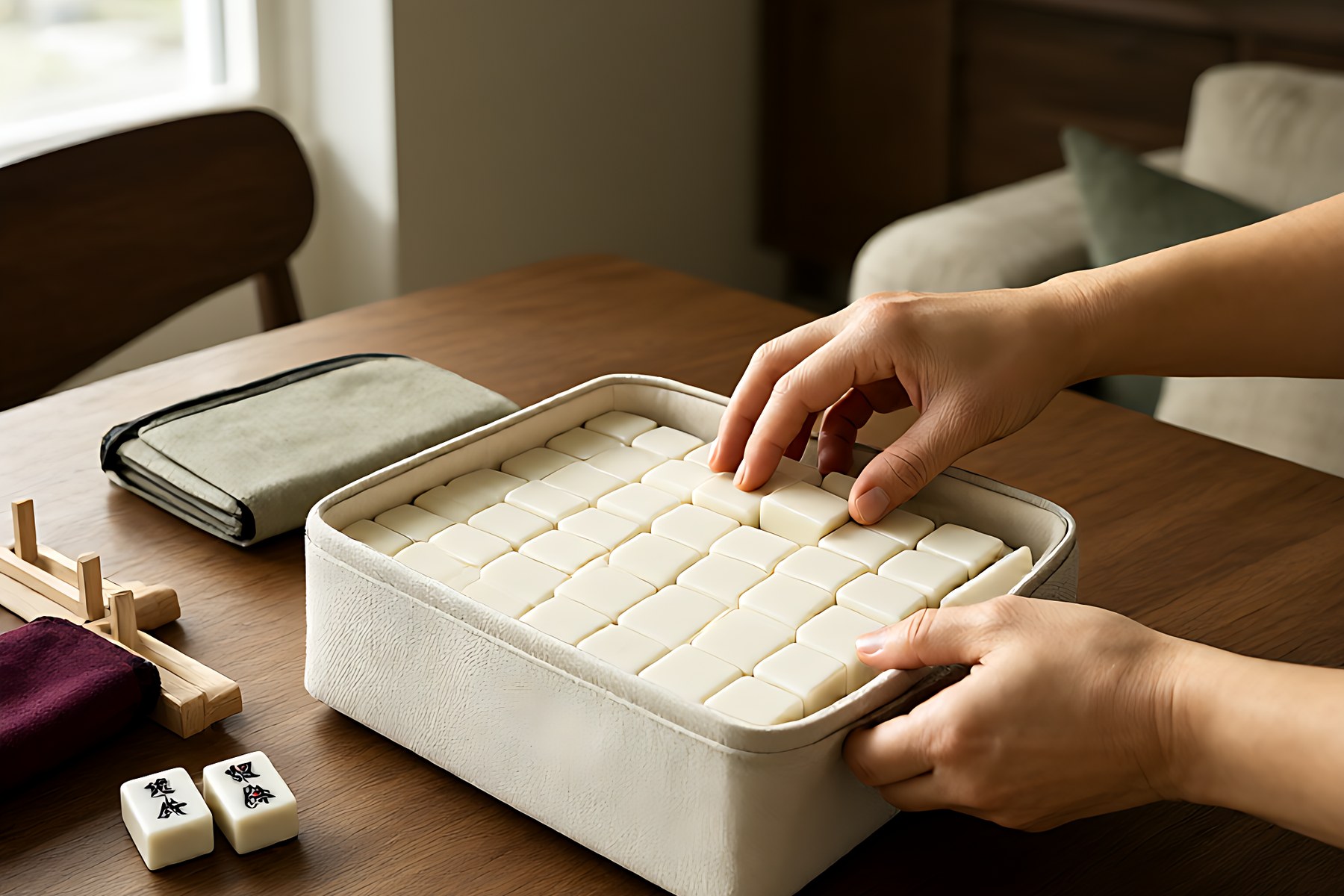
American mahjong tiles are not inexpensive, and they are easy to damage through small habits: tossing them loose into a drawer, stacking heavy racks on top of a bag, leaving dice and keys in the same container, or storing the set where sunlight can fade printed backs. A good storage system does not need to look like industrial equipment. It needs to keep the set together, reduce movement and make the next game easy to start.
The right organizer also changes how a set lives in the home. When tiles, racks, pushers, dice, the card and a mat have a known place, the table clears faster and fewer pieces go missing. The system should fit your playing routine and the space you actually have.
Start with an inventory
Count what belongs to the set before buying a container. A typical American mahjong set includes a large tile count, four racks, four pushers, dice and usually a wind indicator or other small accessories. The National Mah Jongg League card is often kept separately and should not be assumed to be part of a tile purchase. Exact contents vary, so use your own set as the source of truth.
Separate the pieces into four groups: tiles, racks and pushers, small accessories, and the playing card or printed materials. Measure the largest item first. A bag that fits the tiles but not the racks will lead to a second bag, which is exactly the kind of clutter storage is meant to prevent.
Match storage to the way you play
A set that stays at home needs different protection from a set that travels weekly. At home, a lidded tray or divided bag inside a cupboard may be enough. For travel, the container needs a closure, a handle and enough structure to keep racks from pressing against tile faces. For a set that is also displayed, dust and light matter as much as impact.
Do not buy the largest case automatically. Empty space lets tiles slide and hit one another. A snug but not tight fit is better. If you can shake the closed container and hear a hard rhythm of tiles knocking together, add a soft divider or choose a different arrangement.
Understand the material before choosing a liner
American mahjong tiles are commonly made from melamine, acrylic or layered acrylic, although materials and finishes vary by maker. These surfaces can look durable while still being vulnerable to grit, hard edges and repeated rubbing. A soft fabric lining helps, but it must not shed fibers that stick to engraved or printed faces.
Avoid loose metal keys, coins, tools or loose dice in the tile compartment. If the set uses a printed or engraved design, protect the face side from rubbing against a hard rack. A thin cloth between layers is simple and effective. Follow the maker’s care guidance if the set has a special finish.
Bags, cases and trays: what each does well
A fabric bag is flexible, light and easy to put on a shelf. It works best when the tiles are already grouped in a smaller pouch or when the bag has internal dividers. A bag provides less crush protection than a rigid case, so it is not the best choice for a set that rides in a packed car.
A hard case protects edges and keeps racks from bending, but it can be heavier and may have fixed compartments that do not match your tile size. Check the internal dimensions, not only the outside. A stackable tray is excellent for a home shelf because it makes sorting and inventory visible.
You can browse the mahjong storage guide by format, then compare the measurements with your own set. A storage listing should tell you what it is designed to hold; do not assume that a tile bag includes racks or a card unless the listing says so.
Give racks and pushers their own space

Racks are longer and thinner than most tile compartments, so they are often the item that gets forced into the wrong place. Keep them flat or on edge according to their design, not under a heavy tile bag. Pushers should not press against rack ends. If the set has a fitted case, use the designated channel rather than stacking everything in the middle.
For a home setup, a shallow drawer insert or a labeled tray can hold four racks and four pushers together. That way a game can be prepared without searching through the tile bag. Our guide to mahjong rack guide explains how length and material affect storage.
Keep the card, dice and small parts visible
Small parts disappear when they are buried under tiles. Use a small zip pouch or a shallow lidded box for dice, the wind marker and any loose accessories. Keep the current playing card separate from old cards if you save them. If the card belongs to a particular year or league edition, label it clearly.
A piece of masking tape with a handwritten inventory is enough for home storage. You do not need a permanent label on a beautiful box. Put a removable note inside the lid: set name, tile count, date checked and any missing piece. That note is more useful than trying to remember at the start of a game.
Control light, heat and moisture
Sunlight can fade printed colors and make some plastics less predictable over time. Store the set away from a bright window or use an opaque container. Avoid a hot car, a radiator, a damp basement shelf and a bathroom. A normal interior cupboard is usually better than an attic or garage with wide temperature swings.
Humidity can affect packaging, fabric and printed paper. If the room feels damp, add a small moisture absorber nearby rather than placing a damp cloth inside the case. Let a cloth that has been used to wipe the table dry completely before it goes back into storage.
Clean before packing, not after
Remove crumbs, tea residue and dust before the set goes away. Use a soft dry cloth for routine dust and follow the maker’s instructions for anything stronger. Do not soak printed or layered tiles. Racks and pushers may need a different cleaning method from the tiles, so keep the materials separate and avoid a wet cloth that leaves moisture in a closed bag.
If the mat is part of the same kit, roll or fold it only when clean and fully dry. A mat stored against a damp tile bag can create odor and marks. Our guides to mahjong tile storage and care and cleaning a mahjong mat go deeper into material-specific care.
Use dividers instead of a loose pile
Small fabric pouches, shallow trays or removable box inserts can separate tiles from racks and accessories. Dividers reduce movement without requiring a custom case. If you use plastic bags, choose smooth, clean food-grade bags and check that no print or ink touches the tile faces.
For patterned tile sets, consider a thin cloth layer between rows. Avoid rubber bands directly around tiles or racks; rubber can leave marks and degrade over time. A removable strap around the outside of a pouch is safer.
Make sorting part of the ritual
Sorting every tile after each game can be relaxing when it has a clear place to happen. Use a tray or the open lid of the case. Group by suit, winds, dragons and jokers, or use the grouping that fits your set and storage. Do not invent a numbering system that makes the next inventory confusing.
A quick count at the end of the night catches a fallen tile before it is lost in the floor or sofa. Keep a small checklist inside the storage box. If a piece is missing, note it immediately rather than relying on memory.
Store a travel set differently
A travel set spends more time being lifted, packed and moved, so the closure and outer shell matter more than display. Use a case with a reliable zipper or latch and a handle that will not pull out. Put the tile bag inside a larger bag if the outer case is not water resistant. Keep the card protected in a rigid sleeve.
For road trips, place the set on the floor or in a secured cargo area rather than on a seat where it can fall. If the car is hot, bring the set inside instead of leaving it overnight. Our traveling with American mahjong guide covers packing order and lost-piece prevention.
Display storage without exposing the set
A set can be displayed without leaving every piece open to dust. Use a closed cabinet, a lidded tray or a shelf where the tiles are supported from below. Rotate the display if sunlight reaches it. If you use open shelves, keep racks and pushers in a closed pouch rather than leaning them against a wall where they can warp.
Displaying a few tiles is different from storing the whole set. Keep the full set in one protected place and use only a small representative group as decor. Our mahjong tile display guide explains how to avoid glare and unnecessary handling.
A small-space storage plan
In an apartment, the best system is often vertical: a labeled tray on a closet shelf, a stackable box in a cabinet or a bag that hangs inside a wardrobe. Keep the playing card and dice in a small pouch on top so they do not settle to the bottom. Do not store the set under a bed where dust and pressure are common.
If the dining table is also the game table, a single “game box” can move from shelf to table in one trip. The box should hold the mat, racks, pushers, tiles, card and dice in a repeatable order. A child or guest can then help set up without guessing where each piece goes.
When to replace a storage container
Replace a bag or case when the zipper no longer holds, the lining sheds, the corners crush inward or the compartments no longer match the set. A loose closure is a lost-piece risk, not just an aesthetic flaw. If the container has held moisture or developed a permanent odor, replace it rather than storing clean tiles inside.
Before buying a replacement, sort and measure again. Sets change, accessories accumulate and a case that was perfect for the original purchase may no longer fit the card, mat and spare racks.
Storage checklist
- Count tiles and list every accessory before choosing a container.
- Keep racks and pushers flat and separated from tile faces.
- Use soft dividers that do not shed fibers.
- Keep dice, card and small pieces in one visible pouch.
- Avoid sunlight, heat, damp basements and hot cars.
- Clean and dry everything before closing the case.
- Add a removable inventory note inside the lid.
Frequently asked questions
Can mahjong tiles be stored in plastic bags?
Smooth, clean bags can work for short-term separation, but check that no printed ink touches the tile faces. A fabric pouch or divided tray is usually gentler for long-term storage.
Should racks stay in the same case as the tiles?
Yes, if the case has enough room and the racks do not press against tile faces. One container makes setup easier, but separate protected compartments matter.
How do I stop tiles from scratching?
Reduce movement with dividers, keep hard objects out of the tile compartment and avoid stacking heavy racks directly on the set.
Bottom line
Good mahjong tile storage is about controlled movement, not a perfect-looking box. Measure the set, protect the faces, keep racks and small parts from pressing into the tiles, and give everything one dry, shaded home. That simple system will protect the set and make the next game easier to begin.