


American Mahjong Charleston: Order, Strategy and Common Mistakes
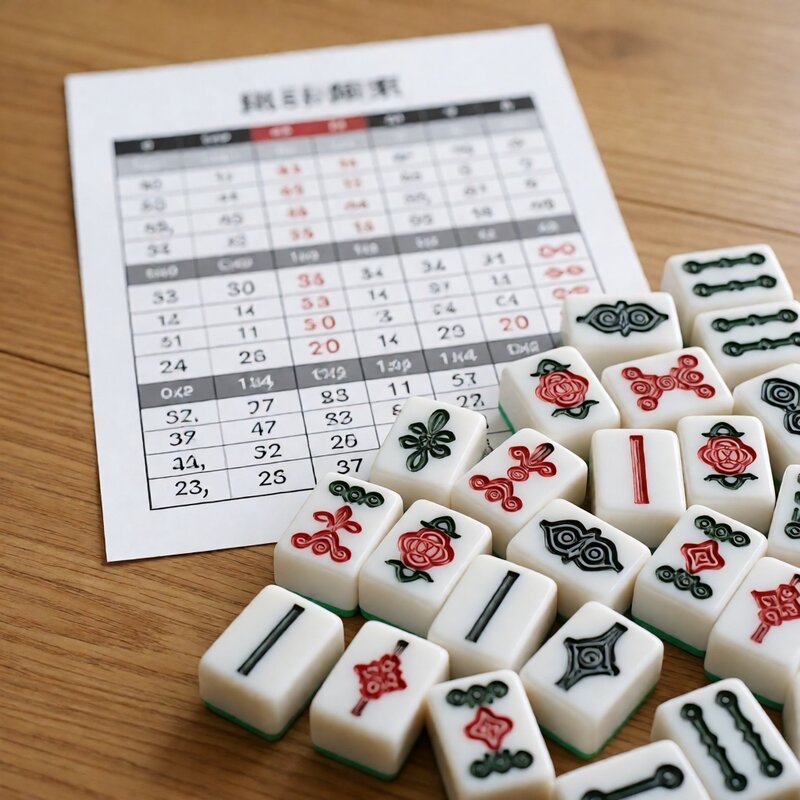
The Charleston is the opening exchange in American mahjong. Before normal draw-and-discard play begins, players pass tiles in a fixed sequence. It looks simple, but it is the first place where a hand can become coherent or fall apart.
What the Charleston does
Each player starts with a dealt hand. During the Charleston, everyone selects three tiles and passes them at the same time. The exchanges give players a chance to shed useless tiles and collect pieces that move toward a hand on the card. The exact sequence depends on the current rules and local house conventions, so confirm the order before the first game.
The first and second Charleston
In the common American format, the first Charleston moves right, across and then left. A second Charleston, when played, reverses that direction. Some groups also allow optional blind passes. Do not assume every table plays every optional pass; the 2026 card and league notes may differ from a home game.
How to choose the first three tiles
Start with the hand you wish you had, not the one you were dealt. Keep the strongest two or three pieces and pass tiles that belong to hands you are not pursuing. A single rare tile is not a hand unless you have a realistic path to complete it. Look at suits, pairs, consecutive numbers and the jokers already in your rack.
Do not pass your only plan
The most common beginner mistake is passing away one of the few tiles that gives the hand direction. Another is keeping a tile simply because it looks unusual. The Charleston is not a test of how much you can remember; it is a short planning exercise. Decide on one or two possible hands and pass what does not support them.
Blind passes
Blind passes are optional at many tables. If your group uses them, agree before the game on whether they are allowed and who may exchange with whom. A blind pass can improve a weak hand, but it can also hand the table information you did not intend to reveal.
What changes after the Charleston
Once the passes are complete, normal play begins with drawing and discarding. The Charleston does not guarantee a winning hand. It only improves the starting point. If the card shows a hand you cannot pursue after the exchange, change direction early instead of forcing a plan that is no longer there.
Practice the pass before the game
Before playing, lay out a random hand and decide which three tiles you would pass to each direction. The goal is not to memorize every card combination. It is to recognize a pair, a run and a dead tile quickly enough that the Charleston does not stall the table.
After the game, look at the tiles you passed and ask whether they supported a clear hand. Reviewing one bad pass is more useful than replaying the whole exchange in your head.
If you are learning the broader sequence, read the first American mahjong game guide and keep the NMJL card guide nearby.
Use the Charleston to describe your hand, not hide it
The first Charleston is an information-gathering stage. Decide which tile groups are central to the card hand you are pursuing, then pass tiles that are less useful without giving away a specific winning pattern. Keep the card visible and follow the group's pass order exactly; a strategic idea is not useful if the sequence is wrong.
New players often try to memorise every pass at once. Learn who receives each pass, complete one pass at a time and pause before the next stage. Ask the table whether the group uses the optional second Charleston or a courtesy pass before the hand begins.
A short review after the hand
Look back at one or two passes and ask whether they improved the hand or simply removed a tile at random. Do not rerun the entire game. A small review builds better habits for the next Charleston without turning a social game into a lecture.
Etiquette around uncertainty
If you are unsure whether a pass is legal or whether a tile can be claimed, ask before moving tiles. Follow the card or ruleset in use rather than a remembered rule from another group. Read Your First American Mahjong Game and Understanding the NMJL Chart.
End the Charleston with a shared check
Before the next phase of play, confirm that every pass is complete and that the card is still visible to all players. A brief pause prevents a missed tile from becoming a disputed hand.
Review the sequence before the next hand
Ask the table to restate the Charleston order used for the evening. Writing the sequence on a small card can help new players without requiring a rule discussion during every pass.