


Your First American Mahjong Game: Setup, the Charleston and the Card
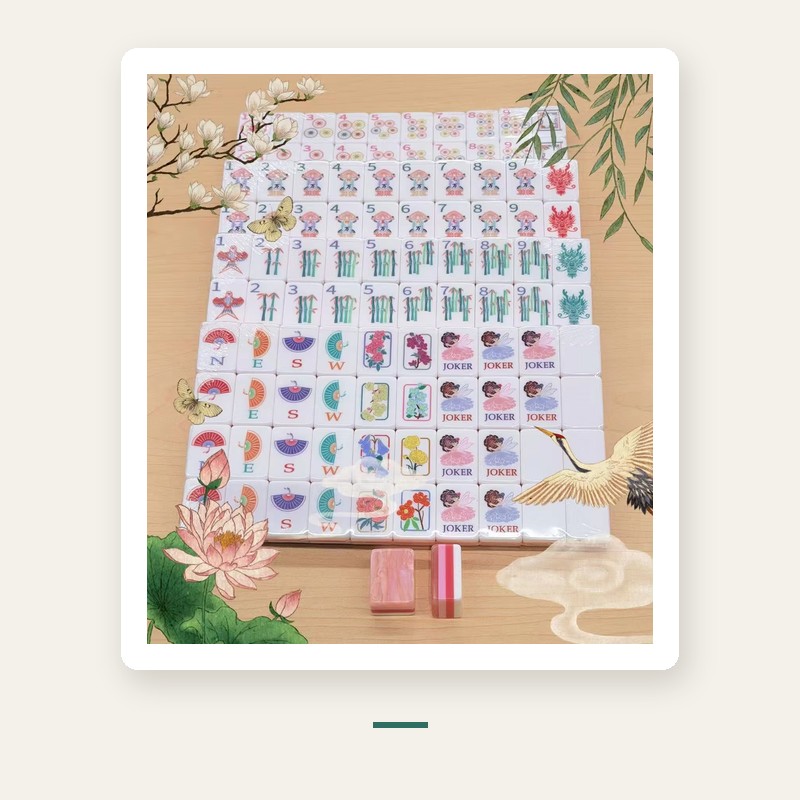
This is one hand, start to finish, without assuming you have played before.
Seat four players and build the wall
Each player takes a seat at a side of the table and mixes the tiles face down. Everyone builds a wall in front of themselves. Racks go up in front of each player, and the tiles you draw will sit there for the rest of the hand, facing you.
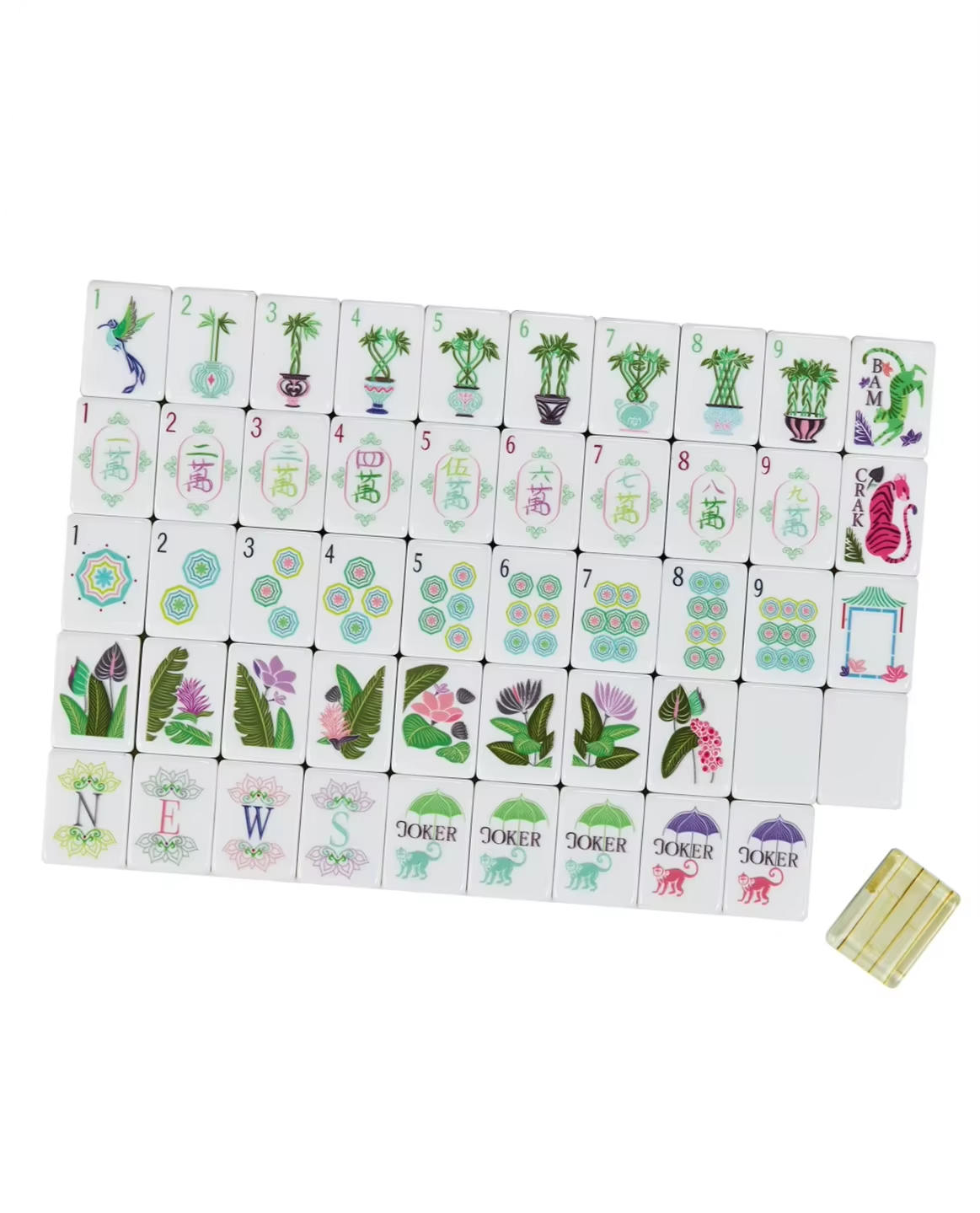
Deal and read the card
Players draw tiles until everyone holds a full rack. From this point the card is the only thing that decides what you are aiming for. Read three or four hands that look reachable with the tiles in front of you, not the ones you wish you had.
A useful habit for a first game: pick one hand and commit to it. Players who keep switching halfway through usually finish with nothing.
The Charleston
Before any discard, everyone passes tiles. Three to the right, three across, three to the left. Then the table decides whether to run a second Charleston, and at the end there is one courtesy pass with the player across from you.
Pass tiles you cannot use and that are unlikely to help the player receiving them in the direction you are passing. Beginners usually pass too generously. Holding back one awkward tile is normal.
Draw, discard, claim
Play moves to the right. On your turn draw one tile. If it does not help, discard one. Discards go face up in the middle and stay there.
You may claim a discard only in two situations: to complete a pung or kong, or to declare mahjong. You cannot claim a discard to complete a run. This is the rule that catches out every player coming from Chinese mahjong.
When you claim for an exposure, place the set face up on your rack and take the tile. Some hands on the card require specific exposures, and the card marks which.
Calling mahjong
You win when your tiles match a hand on the card exactly. Not close, not approximately. If the card calls for a specific exposure, you must have it showing. When you call mahjong, lay the hand out for the table to check against the card, then the next hand begins.
What actually slows beginners down
Not the rules. Reading the card. Most first-time players take longer to find a workable hand than to play one, and that is normal. It gets faster after three or four sessions, and after a year of cards the patterns start to feel familiar.
A calm first-game sequence
A first American mahjong game is easier when the table is set up before anyone starts explaining rules. Put the current card where every player can see it, sort the tile groups, distribute the racks and confirm whether the group uses a supplied set of dice or another table convention. Leave the Charleston and scoring explanations until the first hand has been built.
- Set the table: four racks, the chosen tiles, the card and a clear centre area for the wall and discards.
- Agree on the source: identify the exact card or rules sheet the group will use.
- Build the wall: follow the table's normal wall-building convention rather than inventing a new one mid-game.
- Deal and read the card: show a new player how a hand is described, including suits, numbers and joker restrictions.
- Charleston: walk through the first pass slowly and explain who passes to whom.
- Play one hand: stop after the hand, review what happened and only then introduce more scoring detail.
What a beginner should write down
Keep a small note with the card year, the Charleston order used by the group and any house conventions. Do not rely on remembered rule details from a different club. If a tile can be called, exposed or exchanged in more than one situation, ask the table before acting.
The goal of the first night is not speed. It is learning a repeatable table rhythm: draw, assess the card, discard, pass when required and ask when uncertain. A patient first game produces a better second game than a rushed explanation. Pair this guide with The American Mahjong Charleston and Understanding the NMJL Card.
A better first-night checklist
Choose one experienced player to guide the table rather than letting several people explain different versions at once. Keep the first hand slow, show examples from the card and pause after the Charleston to answer questions. Save advanced scoring for the second hand. A beginner should leave knowing the table rhythm and the names of the tile groups, not memorising every possible hand.
If you are hosting, give each guest a place to set a drink away from the tiles and a clear view of the card. Preparation makes the rules easier to absorb.