


American Mahjong Playing Cards: Understanding the Official NMJL Chart
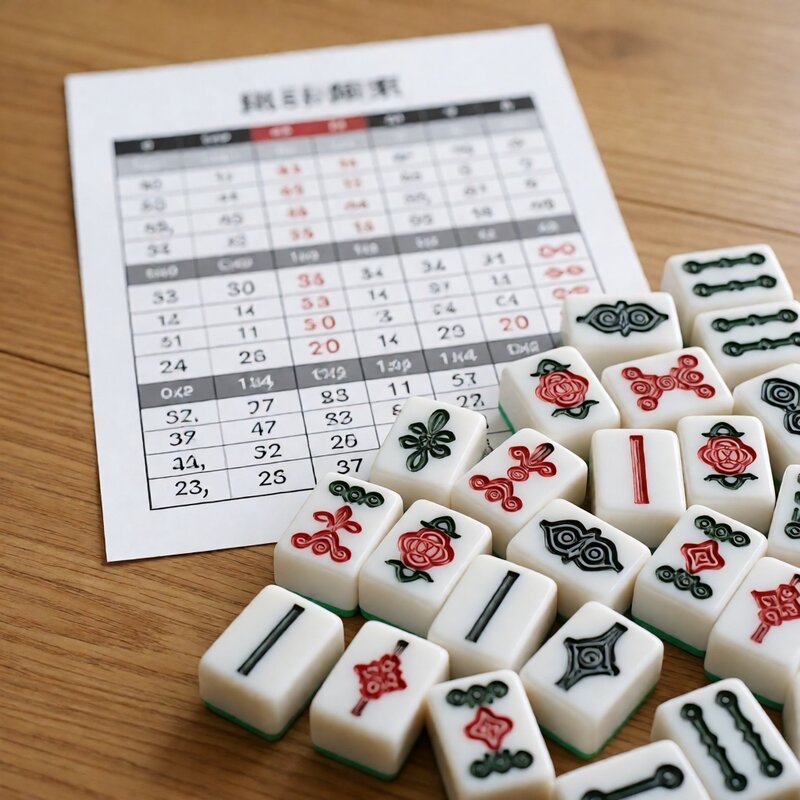
The American mahjong cards — officially the National Mah Jongg League hand charts — are the reference that defines which hand combinations count as winners. In Chinese mahjong, hand values are learned by experience. In the American game, you consult the card, and that changes both how you play and how quickly a new player can join a table.
What is actually printed on it
The card is a dense grid of hands. Each line names a pattern, shows the tiles it needs, prints a point value and states how many jokers it allows. Hands are grouped into sections by structure: hands built on runs, hands built on matching sets, hands using only one suit, and so on.
Because the card is reissued every year, the list changes, and with it the relative value of different strategies. Hands that were easy last year may be worth less or disappear entirely.
How to read a line
- Start with the top line: it tells you the point value.
- Read the tile pattern left to right; the card uses standard shorthand for suits and numbers.
- Check the joker note. If a hand allows no jokers, you cannot substitute, no matter how convenient it would be.
- Check whether the hand must be concealed. Some lines require it, and exposing a meld would make the hand illegal.
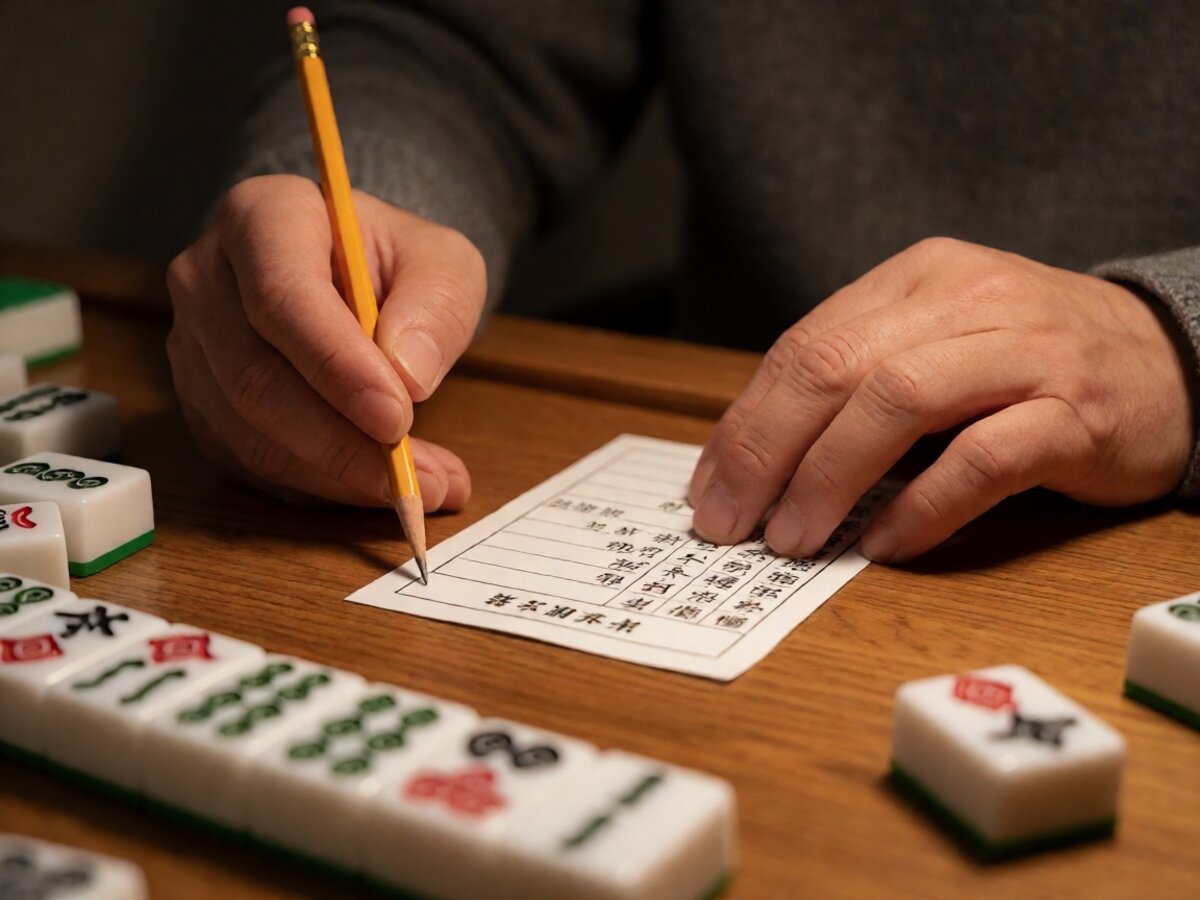
Reading gets faster with repetition. Most players mark hands they intend to chase with a pencil or a plastic sleeve, and it is common to keep the card beside the rack rather than in a pocket.
Using the card during play
The card is not only a rulebook; it is a planning tool. Experienced players scan it before the first discard and pick two or three candidate hands that fit their opening tiles. From then on, the question each turn is whether the current hand is still reachable or whether the tiles suggest switching.
It also shapes defence. If your opponents have exposed melds, the card tells you what those exposures can grow into, which helps you avoid throwing a tile that completes a hand.
Where to get one, and who needs one
The card is published annually by the National Mah Jongg League and is also distributed through many clubs and retailers. Ordering early matters, because the new card usually arrives before the new year and groups update their tables at the start of the season.
If you are buying a set as a gift, the card is the piece people forget. A beautiful set without a current card is not playable in American rules, and a card without a set is not much better. If you are only playing casually, one card per table is enough — but every player having one speeds the game up noticeably.
Read the card before the first hand
The playing card is the reference for the hand patterns used in American mahjong. Begin with the card's organisation: how hands are grouped, how suits and numbers are shown and where the value for each hand appears. Do not assume that a pattern from an older card carries into a newer edition. The edition in use at the table is the one that matters.
Keep the card flat and visible. Some players annotate a personal copy, but a group may prefer a clean reference at the table. Ask before writing on a shared card.
Separate the card from the equipment
A card is not a tile, and a product that includes tiles does not necessarily include the current card. When buying a set or a gift, confirm the card edition separately. Check whether the recipient needs a physical card, a replacement card or a protective sleeve. Browse What Comes in an American Mahjong Set for a buyer's checklist.
Build a repeatable reading routine
Choose one hand, read every condition aloud and check it against the tiles before exposing anything. Practice this sequence in a casual game so it becomes habitual. The goal is not speed at first; it is consistency. Use American Mahjong Scoring and Your First American Mahjong Game for the surrounding rules.
A simple card-reading worksheet
Choose three hands from the current card and write one sentence about what each hand requires. Underline the suit, number pattern, pair and any joker restriction. Then compare the notes at the table before play. This exercise turns a dense printed card into a set of concrete checks.
Keep the worksheet separate from the card itself unless the group agrees to annotations. Store the reference flat with the card and confirm the edition whenever a new game year begins. For a gift, ask which edition the player needs rather than assuming the newest card is the right one.
Keep the card flat
Store the printed card in a sleeve or pocket without heavy objects pressing on it. A flat card is easier to scan during play and less likely to be damaged in a game bag.