


Matching Your Mahjong Rack to Your Tile Size: What Actually Fits
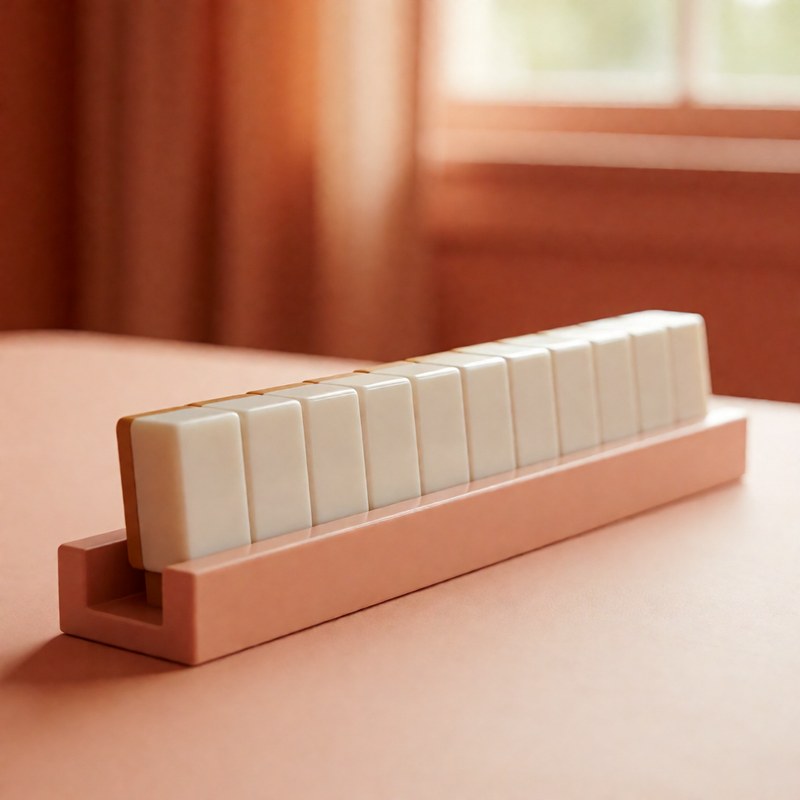
The rack is the piece of the set you touch every single hand, so a rack that does not fit your tiles is the most annoying part of the whole table. Tiles that sit loose in a rack slide forward with each pick, rattle against the tiles behind them, and the constant micro-movement is what scratches the backs of the tiles in front. The fix is simple: the rack slot has to match the tile height almost exactly.
Measure your tiles, not the rack
Take a tile and measure its height, width, and depth with a ruler. For a standard American mahjong tile the height is about two and a quarter centimeters, but that number is not a reliable spec because tile manufacturers vary the height between batches. Measure the tiles you actually own, not the number in the product listing. Then measure the inside slot height of the rack. The slot should be the same as the tile height or a hair under it. A slot that is significantly taller than the tile means the tile will stand at an angle and slide forward with each pick.
Two rack styles that hold tiles firmly
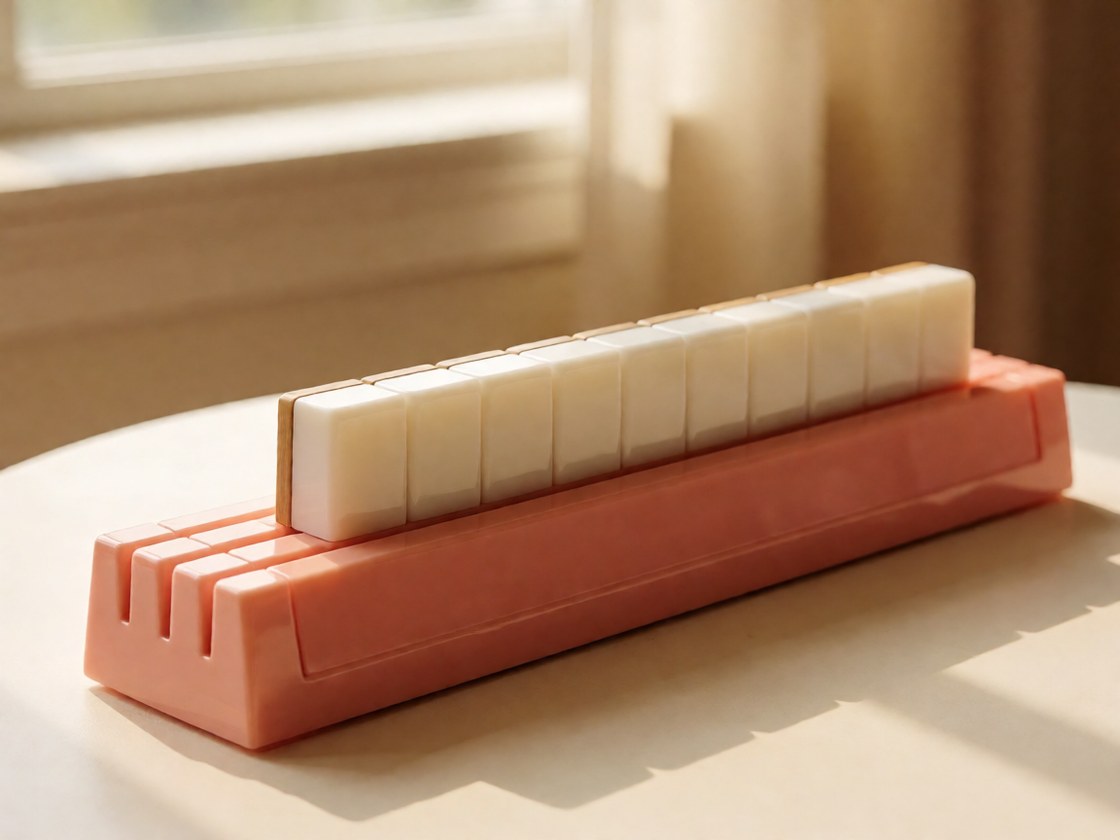
The most common rack is the four-slot style, one slot per hand. These hold tiles firmly when the slot height matches the tile height because the back wall of the slot physically stops the tile from sliding forward. The second style is a five-slot rack with a separate front lip. The front lip is what actually stops the tile; without it the five-slot rack holds tiles less firmly than the four-slot. If you have a set with smaller-than-standard tiles, look for a five-slot rack specifically listed for small tiles. A standard five-slot rack on small tiles will leave a gap at the back that lets them slide.
Width matters too
American mahjong hands are 13 tiles. The rack needs to fit 13 tiles side by side with a little room to spare. Most standard racks fit 14 or 15 tiles, which is fine. But a rack that fits only 12 will force you to hold the 13th tile in your hand, which is where the scratch damage gets worse. Measure the rack width: 13 tiles at 2.1 centimeters each is about 27 centimeters, so the inside width of the rack should be 28 centimeters or more.
The test
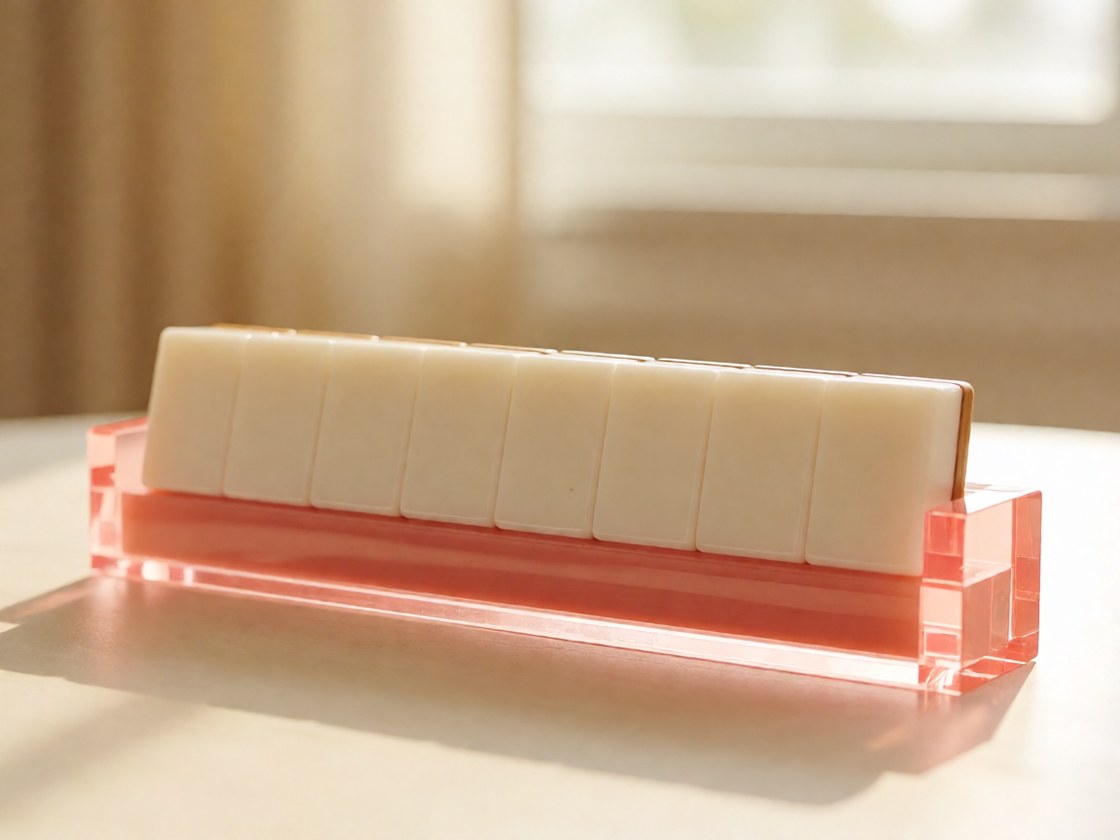
Before you buy, hold a tile in the slot and tilt the rack forward. If the tile slides out, the slot is too loose and the rack will rattle in play. If the tile barely moves, you have the right fit. This is the one check that matters and it takes ten seconds.
Measure the rack and the tile together
Measure the inside length of the rack, the width between the sidewalls and the height of the front lip. Then measure tile height, face width and thickness. A rack can be long enough but still feel wrong if the lip is shallow or the channel is too tight. Put a tile in the rack whenever possible and check the reading angle with a full hand.
Write the measurements down and keep them with the product SKU. “Standard” is not a universal fit, especially when tiles come from different makers.
Four common fit mistakes
- Choosing by price before checking the tile thickness.
- Buying a pair when four players need a full set.
- Ignoring the storage case and the longest rack.
- Assuming a replacement rack will match the original finish.
When the fit is unclear
Ask the seller for a side view and the exact dimensions. If you already own tiles, send a photograph with a ruler beside one tile. Compare the answer with your rack rather than relying on a generic compatibility statement. Use How to Choose a Mahjong Rack and Mahjong Tile Sizes for the complete measurement process.
Keep a rack-fit record
Write down the rack, tile and measurement date in one note. If you later buy a new set, compare against the record before ordering. Include the lip height and channel width, not just the outside length.
Recheck the fit after cleaning
If the rack or tiles have been cleaned or moved, place one tile back in the rack and repeat the lip check. Small changes in storage pressure can affect how pieces sit. Record the result so future replacement shopping starts from measured facts rather than memory.
One last measurement
Before ordering a replacement, measure the rack again with the tile seated in its normal position. Check the front lip and the distance to the storage case. A final measurement takes a minute and protects the fit of the whole set.
Measure once more before ordering.