


Reading American Mahjong Tiles: Suits, Winds, Dragons, Flowers and Jokers
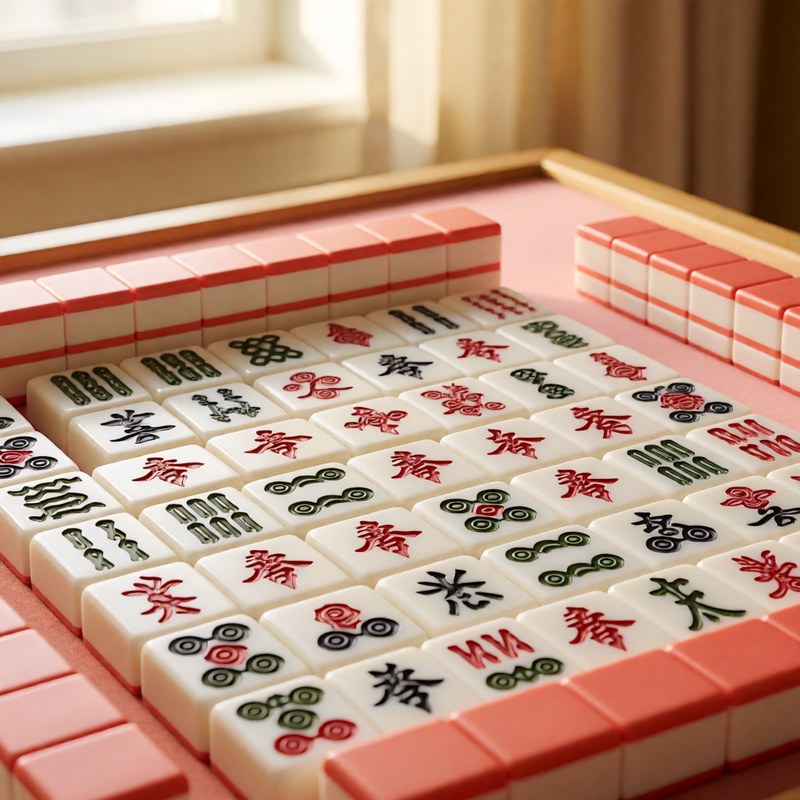
American mahjong looks complicated until you sort the tiles into a few simple jobs. Once you can name each group and what it is for, the rest of the game stops being a wall of unfamiliar symbols and becomes a hand you can actually read.
The three suits
Almost every hand is built from three suits: cracks, bams and dots. Cracks look like rows of thin sticks and are numbered one to nine. Bams are the bamboo-looking suit, also one to nine. Dots are the circles, again one to nine. In many American sets the suits are color-coded and carry a small number in the corner, which is exactly the kind of design choice that makes a set easier to read at a glance.
Winds and dragons
The four winds are East, South, West and North, one tile for each direction. The three dragons are red, green and white. These seven tiles do not follow the numbered suits; they appear in specific hands and pairings, and on a standard card they are usually called for by name.
Flowers and seasons
Flowers sit outside the main suits and are usually drawn or swapped rather than played as part of a run. In American mahjong the flower count and how they score depends on the current NMJL card, so a set needs enough flowers to cover the hands on the card you are playing that year.
Jokers do the heavy lifting
Jokers are the tile that turns an almost-hand into a completed one. An American set carries eight jokers, and they substitute for the tile a hand needs at that moment. Because jokers move and change meaning constantly, a clear, unmistakable joker face matters more than almost any other tile. See the Mahjong Sets & Tiles category for complete American sets with all suits, flowers and jokers included.
Read the tile groups in a fixed order
New players often try to recognise every tile at once. A steadier method is to scan by group: suits first, then winds, dragons, flowers and jokers. Within a suit, compare the number and the visual pattern together. This reduces the chance of confusing a similar-looking character or confusing decorative artwork with a suit symbol.
| Group | What to notice |
|---|---|
| Suits | Identify the suit family, then read the number or rank. |
| Winds | Look for the direction marker and the group's lettering style. |
| Dragons | Check the colour and the specific symbol used by the set. |
| Flowers | Treat them according to the card or ruleset in play. |
| Jokers | Learn the artwork and follow the card's restrictions. |
Use the product photographs to compare how clearly the set distinguishes these groups. A themed design can be beautiful, but the table still needs readable suits and numbers. Read Mahjong Tile Sizes, Materials & Styles and American Mahjong Tile Backs before buying a set you have not seen in person.
A five-minute tile-reading drill
Shuffle a small group of tiles face up. Sort them into suits, winds, dragons, flowers and jokers without looking at the card. Then turn the tiles face down, draw one at a time and name the group before turning it over. This exercise trains recognition without requiring a full game.
Next, compare numbers within one suit. Say the number aloud, then find the same number in another design or set. Notice how colour and illustration can help or distract. A few minutes of deliberate practice is more useful than staring at a large pile of tiles at once.
Finally, review the joker restrictions in the card or ruleset you use. Jokers are not a universal substitute in every situation. The aim is to recognise the tile and understand the rule that applies to it.
Compare tile groups side by side
Spread one example from each group across the table: a suit tile, a wind, a dragon, a flower and a joker. Name the group and the distinguishing feature aloud. Then shuffle only those examples and repeat. This small set makes the differences easier to learn than a full wall of tiles.
Once the groups are familiar, add numbers within one suit. Keep the card or ruleset nearby so the reading exercise does not drift into guessed rules.
Turn tile reading into a two-minute warm-up
Before the first hand, place five tiles face up and ask each player to name the group, then repeat with the tiles face down. Add one joker and review the card restriction together. This short warm-up is useful for new players and for a group returning after a long break.
Stop when the group can name the examples consistently. The aim is a shared vocabulary for the table, not a test.
Use a consistent reading order
Scan suits first, then winds, dragons, flowers and jokers. Naming the group before the specific tile reduces confusion when a themed design uses unusual artwork.