


Neoprene Mahjong Mats: Why the Material Matters
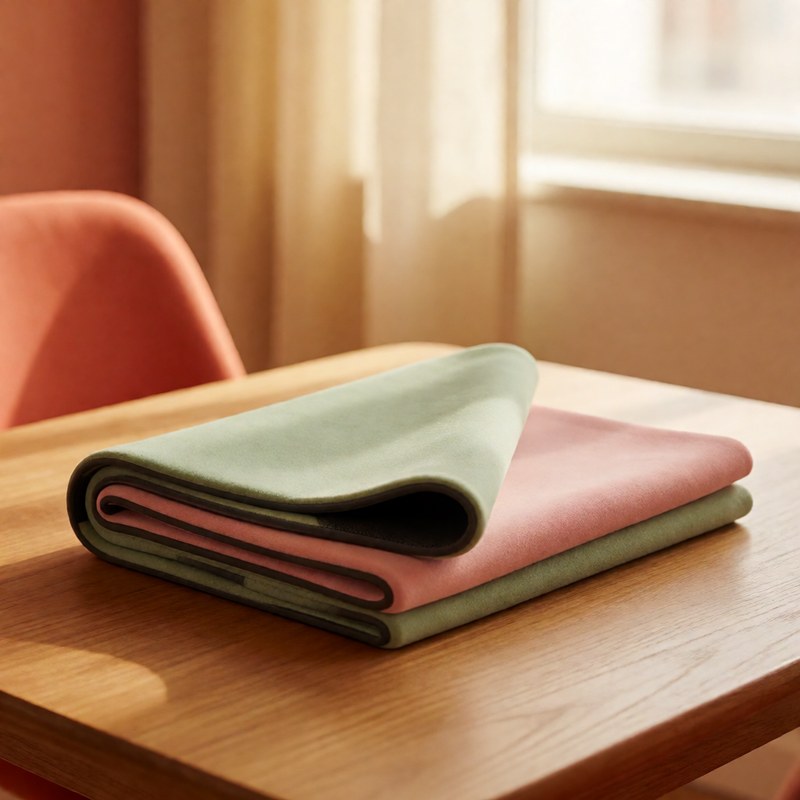
Every mahjong mat promises the same thing, but the material underneath decides whether it delivers. Neoprene has become the default for a reason: it grips tiles, softens the noise, and stays put on a table better than a cloth or a bare surface.
Grip is the whole point
A tile that slides on the table is a tile you have to chase. Neoprene has enough texture to hold tiles in place without being sticky, so the wall stays square and the discard stays where you put it. On a smooth glass or lacquered table, this matters even more. A mat that slides around under your hand is worse than no mat at all.
The rubber backing does the quiet work
Good neoprene mats have a rubber backing that stops the mat itself from drifting. It also cuts the sharp clack of tiles dropping onto a hard surface. The sound does not disappear, but it softens into a dull tap that is easier on a room full of conversation. If you play late or in an apartment, the backing is the feature you will appreciate first.
Size and thickness are simple
Most square game mats run around 31 to 34 inches, which gives four hands room to build without crowding. Thickness is more about feel than function: a thicker mat is slightly more forgiving under the hands, a thinner one rolls and stores more easily. Pick the size that fits your table and the thickness that fits how you store it.
Keeping it flat and clean
Roll a neoprene mat with the printed side out so the edges do not curl inward. If it ships folded, give it a day flat before the first game and it will lie down. Wipe it with a damp cloth and let it dry open; the backing and the fabric both handle mild soap, but avoid soaking the seams. See the Mats & Tablecloths category for the current neoprene mats, with floral, botanical and pattern options.
What neoprene changes at the table
Neoprene is used for play mats because it can combine a softer surface with a backing that helps the mat stay in place. The useful questions are how thick the material is, how firm the surface feels, whether the edges lie flat and how the printed layer should be cleaned. A generic “neoprene” label does not answer those questions by itself.
Compare the mat as a system
Look at the surface, the backing, the finished dimensions and the care instructions together. A soft mat may feel comfortable but can be harder to store; a thinner mat may lie flatter but offer less separation from the table. Measure the area needed for four racks before choosing a size. For a direct comparison, read Choosing a Mahjong Mat, Mat vs Tablecloth and Cleaning a Mahjong Mat.
How to judge a neoprene mat in person
Unroll the mat and let it settle before judging the edges. Place a rack on the surface, then slide it gently to see whether the mat moves with it. Check the backing for dust and confirm that the printed surface is not sticky. If the mat is delivered folded, follow the seller's instructions for relaxing the creases rather than forcing them flat.
Clean a small area first, especially if the mat has a printed design. Keep sharp objects away from the surface and store the mat according to its care note. A neoprene label is only the beginning of the comparison; thickness, size, finish and storage determine whether it works for your table.
Test a neoprene mat before the first game
Unroll the mat early, check the edges and place a rack on the surface. Clean dust from the table before use, then confirm that the mat stays in position during the wall build. Follow the seller's instructions for the printed side and backing rather than assuming that all neoprene mats are washed the same way.
Make a mat care card for the first month
Write the mat's dimensions, surface material, backing and cleaning method on a small card and keep it with the game supplies. After the first session, check whether the edges still lie flat and whether the mat slid against the table. If a crease or mark appears, address it using the seller's guidance before storing the mat again.
Do not assume that every neoprene mat accepts the same cleaner or folding method. Follow the exact product instructions and keep the storage area dry.
Check the mat care card
Keep the neoprene care instructions with the mat. Clean only as directed, dry the surface before storage and check the backing for grit. If the mat is rolled, allow it to settle before placing racks on top.
Note the backing
Record whether the mat is rolled or folded and how the backing should be cleaned. This prevents a future cleaning routine from damaging the surface.