


Mahjong Racks vs Pushers: What Each Piece Actually Does
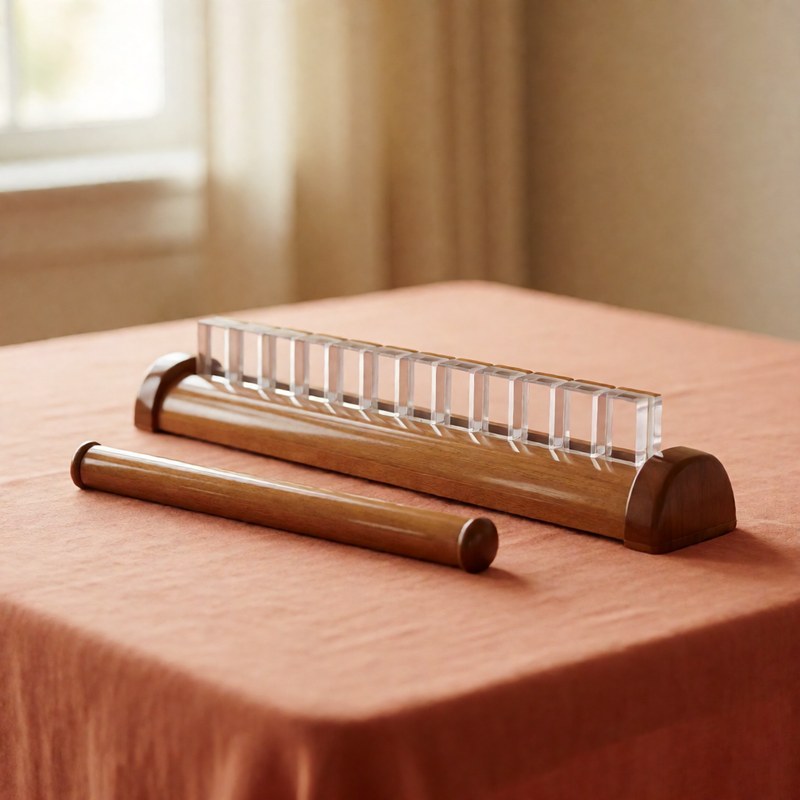
On an American mahjong table you see two long pieces in front of each player. They are often sold as a pair and often confused. A rack holds your tiles. A pusher moves the wall. They do different jobs, and a set that has one but not the other will feel awkward from the first hand.
The rack
The rack is the shelf in front of you. You stand your tiles on it, face toward you, so you can read your hand without showing it to the table.
A rack has a raised lip along the front and a flat ledge behind it. The lip keeps tiles upright; the ledge gives your fingers somewhere to rest and gives you space to lay out a discard before pushing it in.
The pusher
The pusher is a flat bar with a raised back edge. Its only job is to move the wall.
When the wall is built, each player uses the pusher to slide their section forward into the centre. Using a pusher keeps the wall straight and keeps your hand out of the tile line.
Why they are separate pieces
A rack needs to be deep enough to hold a standing tile. A pusher needs to be flat and low so it can slide along the table without catching.
Those requirements conflict. A single piece that tried to do both would either be too tall to push cleanly or too shallow to hold tiles.
How they sit together
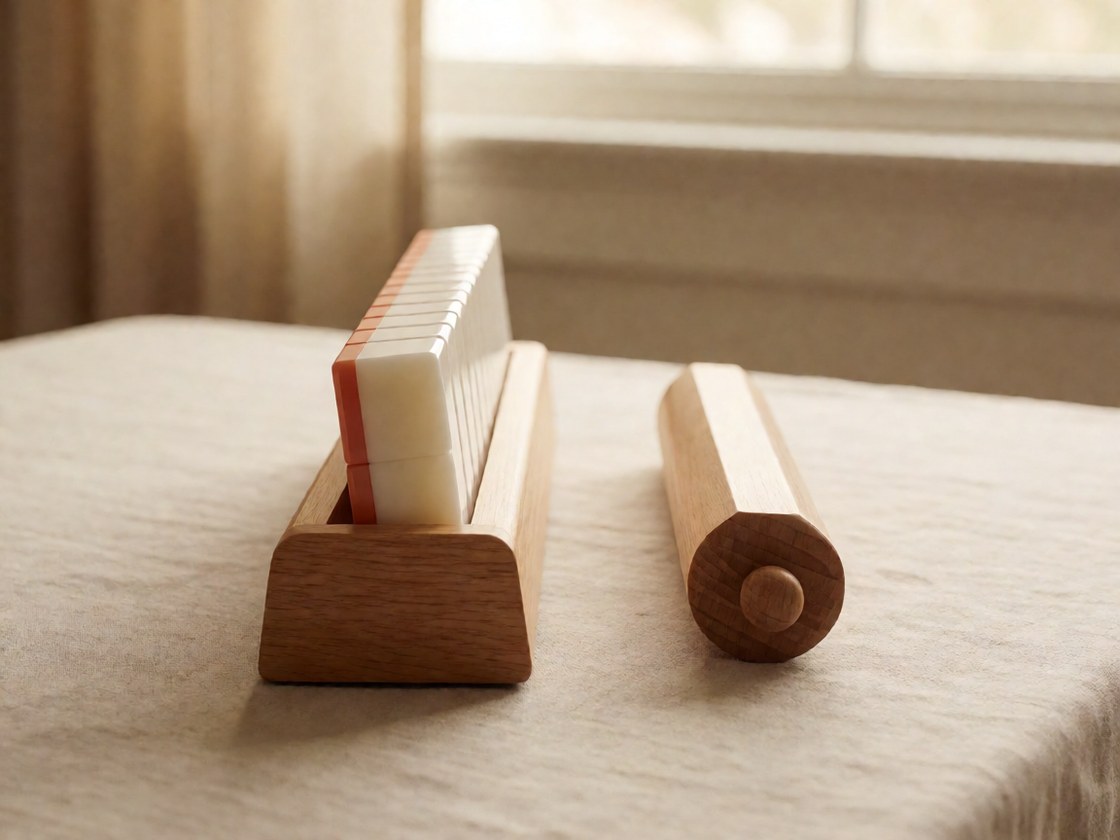
Most sets are designed so the pusher stores flat against the rack, or slots under it. When you set the table, the two pieces line up in front of each player: rack nearest you, pusher just ahead of it.
Some racks have a groove that the pusher clicks into. That keeps the pair together when the set is moved.
Sizes and fit
Rack length should match your tile size and the number of tiles you stand at once. A rack that is too short forces you to stack tiles, which slows the game and hides part of your hand.
Pusher length is usually matched to the rack. A mismatched pair still works, but the ends will not line up.
Materials
Acrylic racks are light, clear and easy to wipe. Melamine racks are heavier and feel more solid on the table. Wood looks warm but moves with humidity and can swell around the joints.
Whatever the material, check that the front lip is smooth. A rough edge will wear the bottom corners of your tiles over years of play.
What to check when buying
Confirm the set includes four racks and four pushers, not four combined pieces. Check that the rack depth fits your tile thickness. Check that the pusher slides without a lip catching the mat.
If you already own tiles and are adding racks, measure a tile first. Tile size is the number that decides whether a rack works.
Two pieces, two different jobs
A mahjong rack holds the standing hand and makes the tiles easier to read. A pusher is used to move tiles around the table during play. They may be sold together, but the words are not interchangeable. When a listing says four racks, check whether four pushers are also included and whether the set is complete for the number of players.
Rack fit depends on tile height, thickness and the front lip. Pusher fit depends on the rack and the way the group handles tile movement. Compare the actual quantities and published dimensions rather than relying on a photograph of a full table.
Build a matching four-player setup
- Confirm the number of players the set will serve.
- Measure existing tiles before adding racks.
- Check whether pushers are included or sold separately.
- Make sure the storage case fits the longest rack.
For more detail, read How to Choose a Mahjong Rack and Matching Your Rack to Your Tile Size.
Build the four-player set deliberately
Confirm how many racks and pushers arrive together, then compare that with the number of players and the storage case. A product described as a set may cover one player, a pair or four players. Check the quantity line and the photographs before ordering.
If you already own racks, measure one before buying additional pushers. The pieces should feel stable together and should fit the same storage plan.
Count the table, not the photograph
A photograph may show four racks while the listing sells a pair. Read the quantity field and included-items section, then check the storage capacity. If the group sometimes has more than four players, decide whether a second set of racks is needed rather than borrowing mismatched pieces.
Confirm the quantity line
Check whether the listing sells one rack, a pair, four racks or a rack-and-pusher set. The quantity matters as much as the finish.