


Loud Mahjong: Why American Sets Are So Noisy (and How to Quiet It)
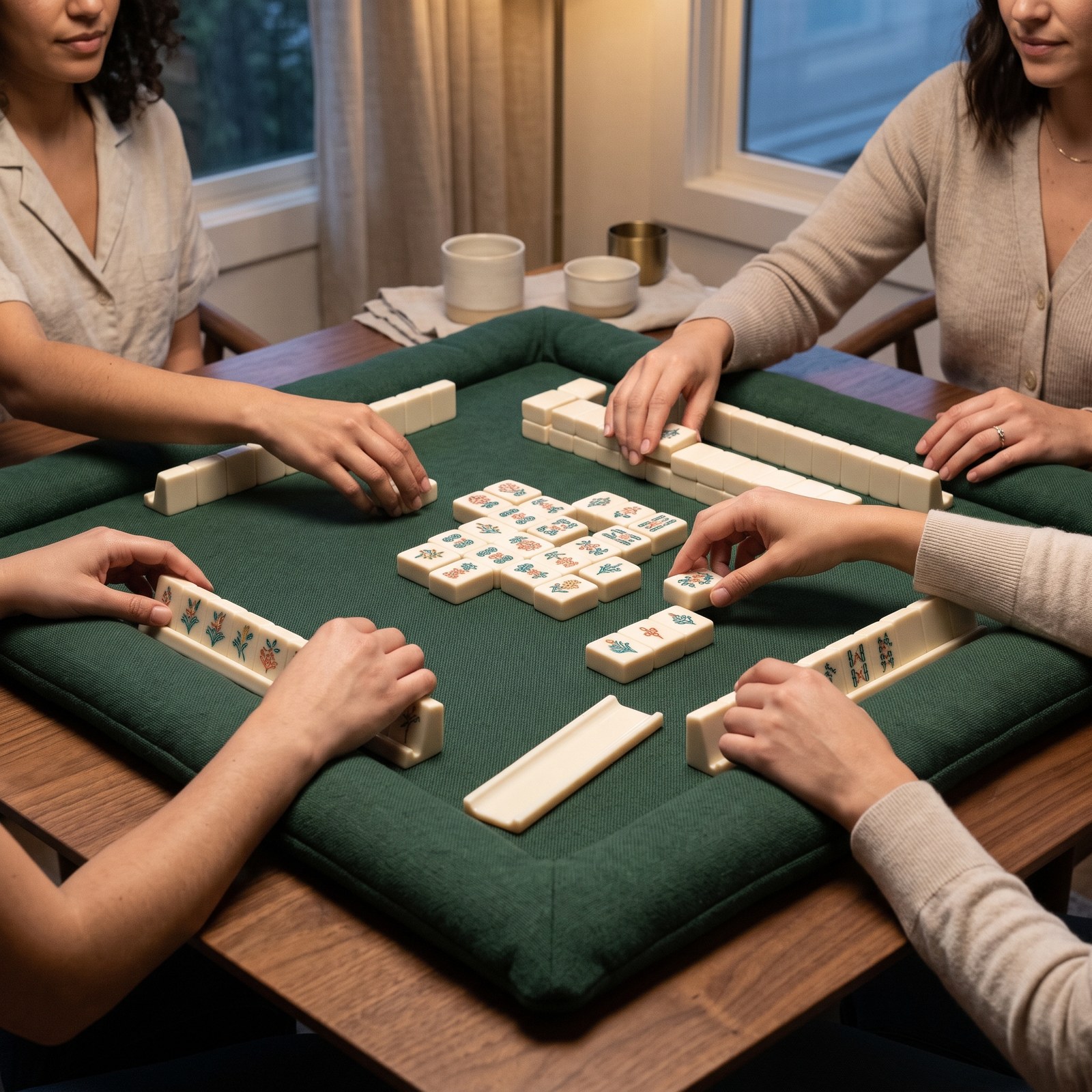
Ask anyone who has played American mahjong and they will name one word, loud. The sound is not a bug. It is the game. Plastic tiles the size of a thumb, stacked high, moved by pushers across a hard table. The clack is how a table feels alive. But when the noise crosses from energising to a headache, three things do most of the work to quiet it without changing how the game is played.
Where the noise actually comes from
Most of it is tile hitting tile and tile hitting table. Bigger tiles make bigger sounds. Harder materials, acrylic and melamine, ring more than anything you can find at a store. The table surface is the final multiplier. A bare wood table makes every move audible in the next room. A carpeted or padded floor and a cloth runner under the table soak up the low end.
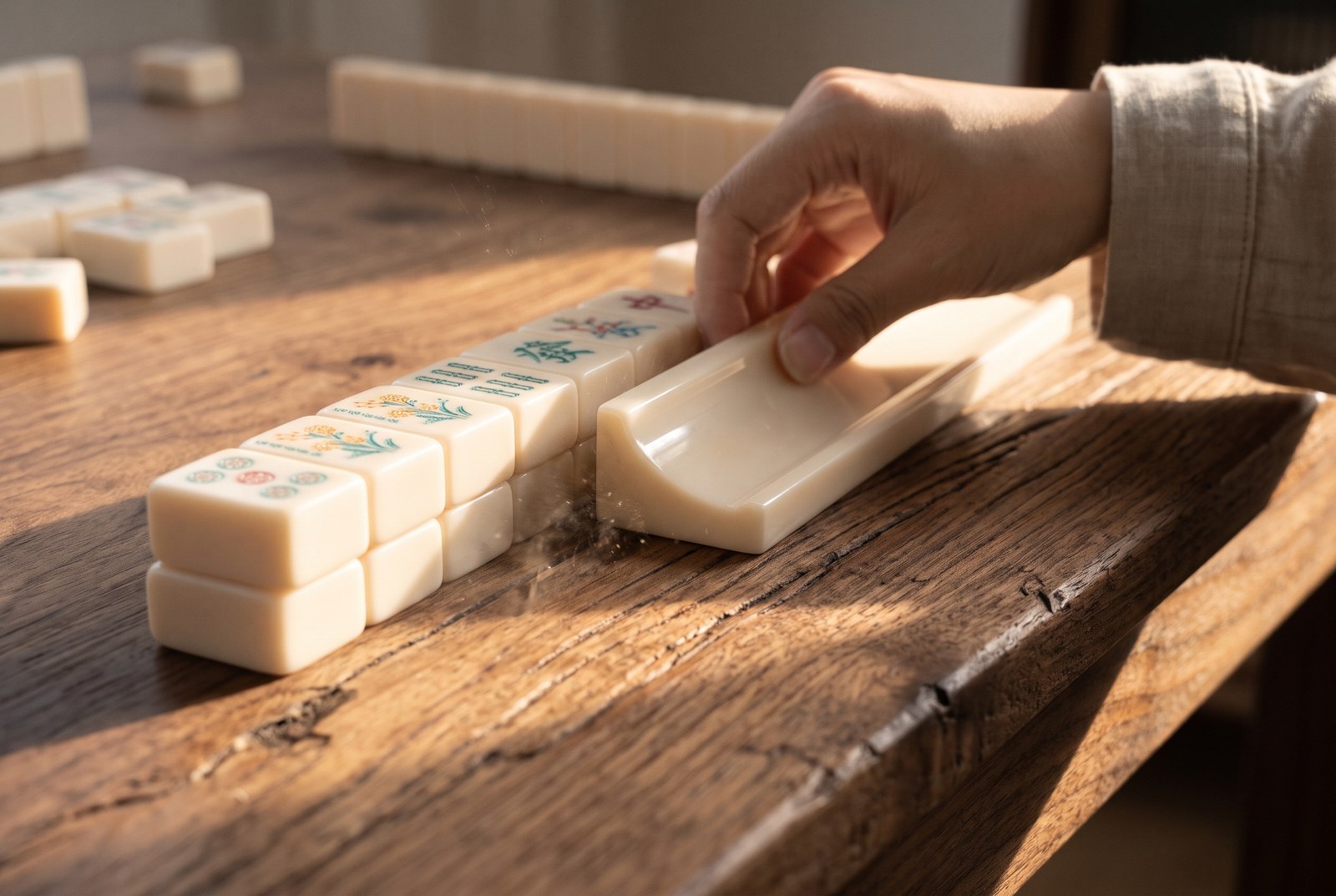
The mat does the heavy lifting
A thick, high-pile mat is the single most effective change. It lifts the tiles off the table and gives the pushers and walls something to land on that does not ring. This is also the place to test grip and noise together, a mat that is too thin to dampen will not hold the table. See the Mahjong Sets & Tiles category for the current depth and backing options.
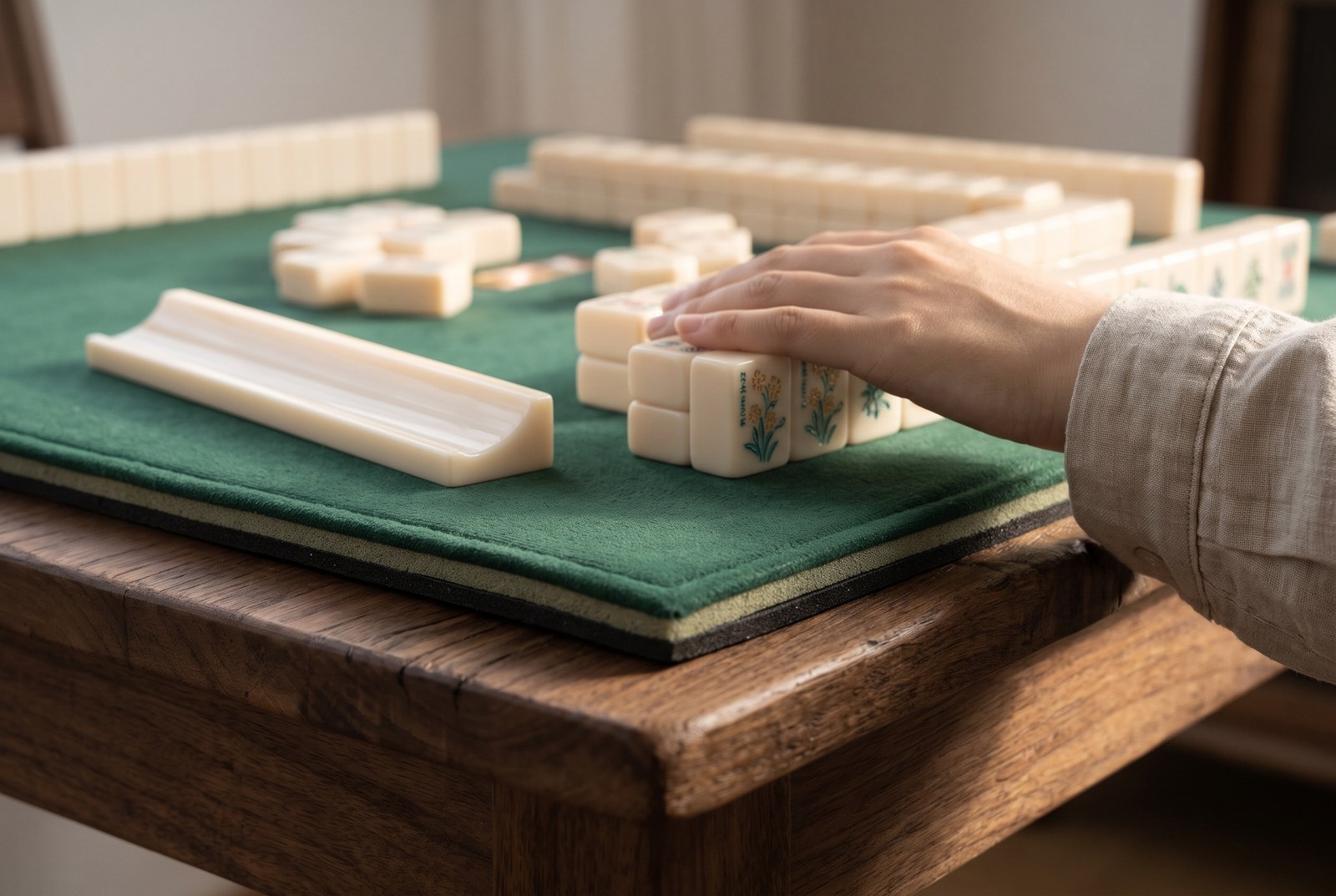
Finish and placement
Matte, slightly soft tile finishes quiet the top layer of the sound. Slightly rounded tile edges make each clack shorter. Placement matters too, the corners of the rack and pusher landing on a hard edge of the table make the worst noise. Keep the play area inside the mat, not on its lip.
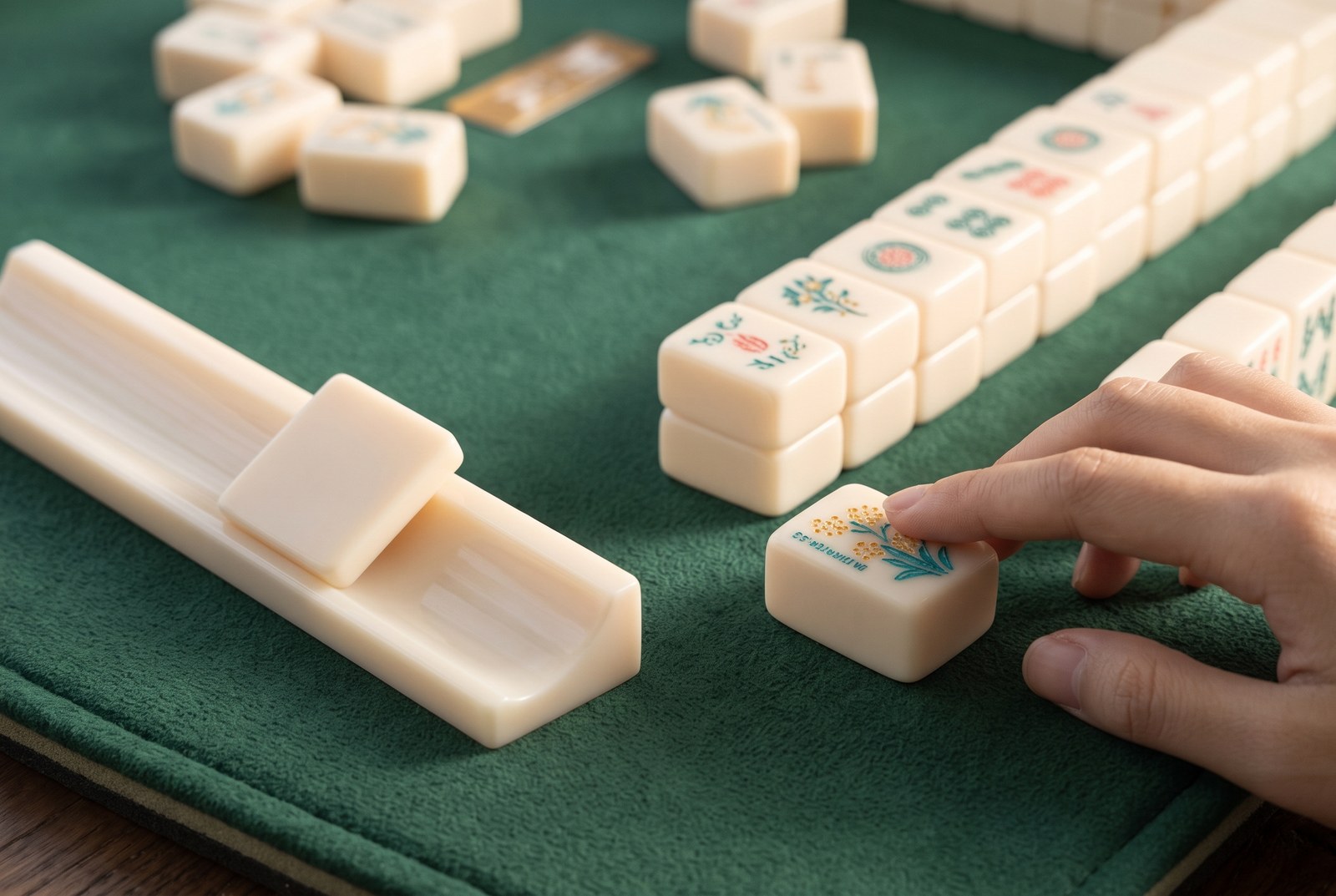
Before you invest in quiet
Order the mat before the tiles if noise is the problem. A good mat on noisy tiles fixes more than a set of quieter tiles on a bare table. If a listing describes a mat, check the thickness and whether it is sold with a play area large enough for four racks.
Find the source of the noise
Mahjong is a tactile game, so some sound is part of the experience. Noise becomes a problem when hard tiles strike a hard table, when the wall collapses heavily or when racks amplify movement. Before buying accessories, identify the dominant sound: tile-to-table contact, tile-to-tile contact, rack vibration or handling during shuffling.
- Place a cloth or mat under the play area and test the same tiles again.
- Check whether the rack is stable and whether the tile lip fits the tiles.
- Use a tray or bowl for loose tiles rather than dropping them directly on the table.
- Keep the table surface clean; grit can make movement harsher and scratch surfaces.
A mat can soften the table contact, but it is not a guarantee of silence. Read Choosing a Mahjong Mat and Mahjong Mat Thickness Guide for surface comparisons.
Listen in the actual room
A set that sounds acceptable in a shop may feel louder in a small dining room with hard walls and a wooden table. Test the table in the room where you normally play. Build a short wall, discard a few tiles and move a rack. If the sound carries into another room, change one variable at a time: add a mat, check the rack fit, then try a different tile-storage tray. Making three changes at once makes it difficult to know which one helped.
Noise is not automatically a defect. Some players enjoy the sound of the game. The goal is to reduce harshness and disturbance without removing the tactile character that makes mahjong feel like mahjong.
Quiet the room before changing the set
Hard floors, bare walls and a wooden table can amplify tile contact. Add a rug or soft furnishing where practical, then test the same set again. A mat may soften tile-to-table sound, while a stable rack reduces vibration. Make one change at a time so you know what helped.
Some sound is part of mahjong. The goal is to reduce harshness and disturbance in your room, not to make the game silent.
Test one change at a time
Add a mat, then test the wall and racks before changing anything else. A single change gives you a clearer answer about what reduced the harshness.
Measure the improvement
Record the change after adding a mat or adjusting the rack. If the room is still too loud, move to the next source instead of stacking several accessories at once.