


How to Host an American Mahjong Night
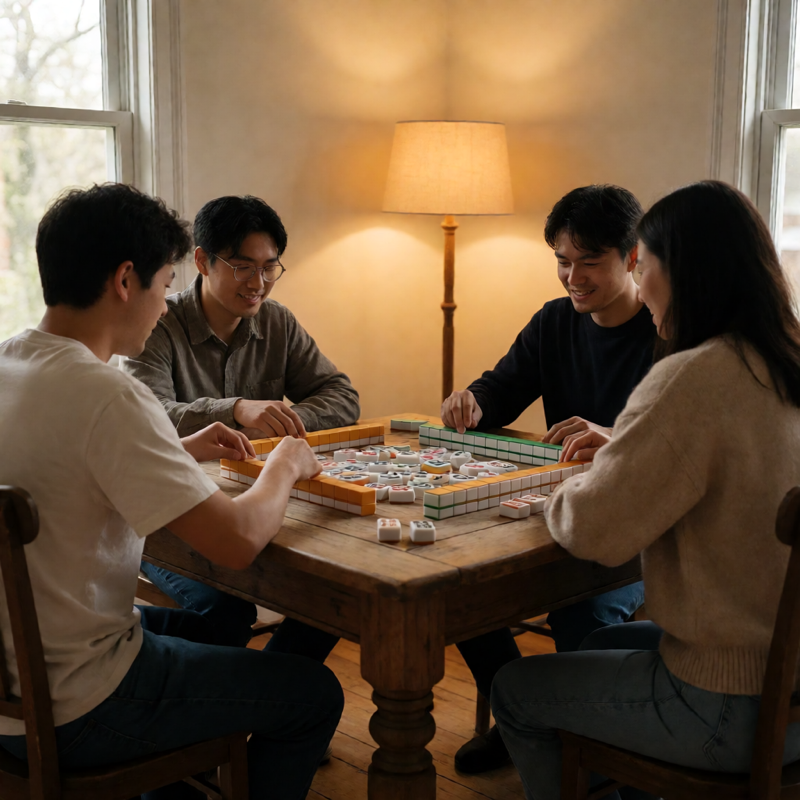
American mahjong is unusually easy to host and unusually easy to host badly. The game itself takes a few minutes to explain, but the evening around it decides whether people come back. Here is what actually matters.
Four players, and what to do about the fifth
A hand needs exactly four. If five people arrive, the usual arrangement is that the odd player keeps score, refills drinks and takes the seat of whoever leaves first. Rotating the extra player in at the end of each hand keeps everyone involved without disrupting the table.
Six people is two tables, which changes the evening from one conversation into two. That is fine, but plan the space for it rather than discovering it at the door.
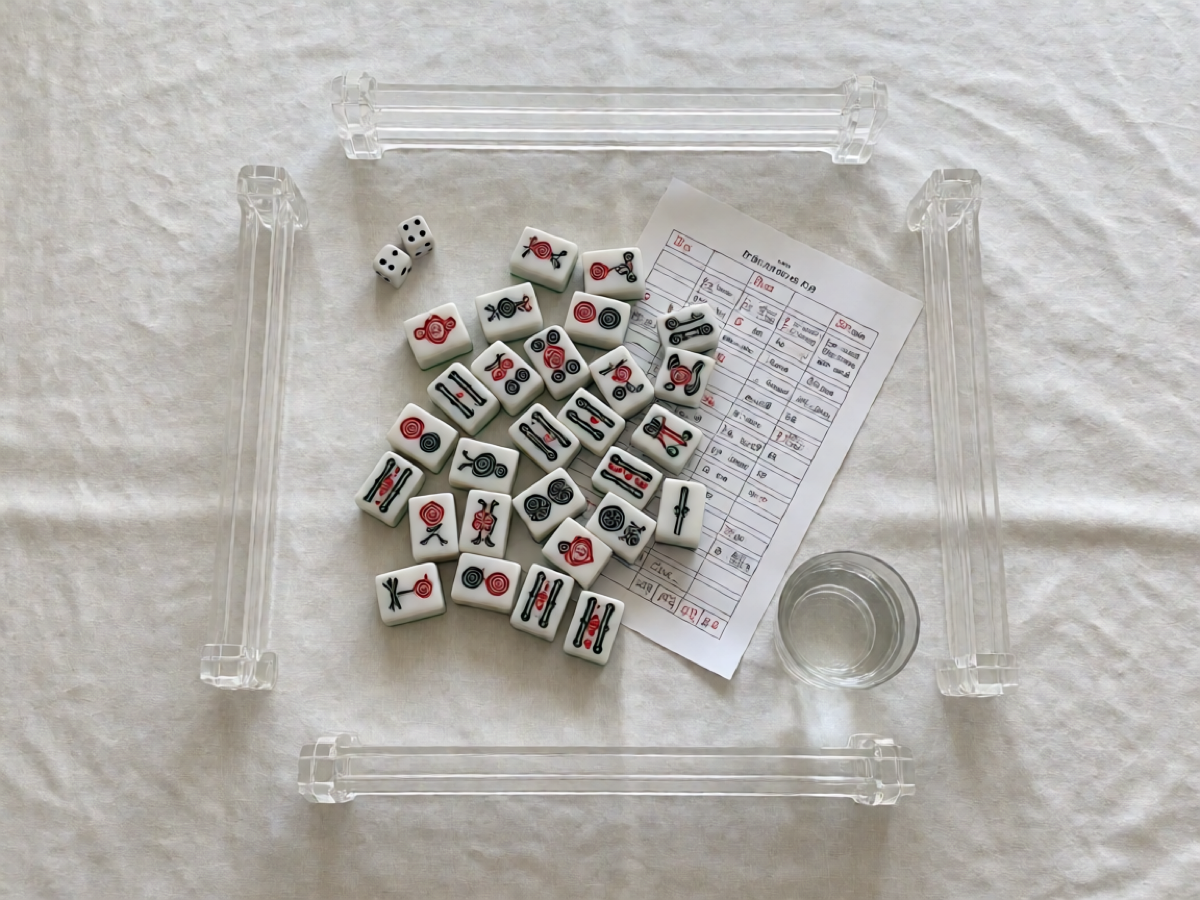
What has to be on the table
- A mat or tablecloth. Tiles on bare wood are loud and slide; a mat is the single biggest upgrade to how the game feels.
- Racks for each player. Four racks, one per seat.
- The card. The current year's card, plus a second copy if anyone is learning.
- Dice and a way to track the wall. Most sets include these.
- A score sheet. Even a sheet of paper is enough for a casual night.
You do not need a dedicated table. A dining table that seats four comfortably works better than a card table that seats four tightly, because each player needs room to lay out a rack and a discard area.
How long a session actually runs
Plan for two to three hours including teaching. A practised table plays a hand in ten to fifteen minutes; a table with two beginners takes closer to twenty-five for the first few hands, and that is normal.
Agree the end point before you start. "We play four rounds" or "we finish at nine" both work; neither is better than the other, but leaving it open means somebody is always about to leave.
What to explain before the first tile
Beginners do not need the whole rulebook. They need four things:
- How a turn works: draw, then discard.
- That the card is the list of hands that count, and they should look at it constantly.
- What the Charleston is, and that it happens once at the start.
- That the goal is to match a hand on the card, not to collect matching tiles in general.
Everything else can be taught mid-hand. Trying to front-load the rules is the most common way to lose a new player's interest before the first discard.
The etiquette worth stating out loud
Mahjong has a handful of habits that experienced players take for granted and newcomers find confusing. Say them once, at the start:
- Do not offer advice on someone's hand unless they ask.
- Call a tile clearly and immediately; hesitation reads as a change of mind.
- Keep your rack visible. Exposed melds stay on the table for everyone.
- Do not comment on what someone else discarded. It is their choice.
Food, drinks and the practicalities
Keep drinks off the table itself. A ring on a mat is survivable; a spill into a rack of tiles is not, and it ends the evening early. Snacks that do not leave grease on fingers are the safe choice.
Sort out lighting before people arrive. Reading a card at arm's length needs decent light, and dim overhead lighting is the most common reason a first session drags.
A short checklist
- Four comfortable seats, with room to lay out racks.
- Mat, four racks, dice, current card, score sheet.
- A set with 152 tiles including jokers.
- The rules explained in four lines, not forty.
- An agreed finishing time.
That is the whole setup. The game is genuinely social once the table is right, and almost all of the friction in a first night comes from the room rather than the rules.
A hosting timeline that prevents chaos
Set the table before guests arrive. Count the racks and pushers, confirm the tiles, put the card in a visible place and clear the centre of the table. Keep food and drinks on a separate surface so a plate does not have to be moved after the wall is built. A host who has already solved these small logistics can spend the first ten minutes helping people settle rather than searching for dice.
Send a short note beforehand with the start time, expected session length and whether newcomers should arrive early. Ask about food restrictions if you are serving a meal. Keep the game itself flexible; a first night rarely follows a minute-by-minute plan.
Explain the table once
Introduce the card, the Charleston and the basic turn rhythm before the first hand. Let one person lead the explanation so guests are not hearing three versions at once. Pause after the Charleston for questions and save advanced scoring examples for the second game.
Close the night well
Count the pieces back into the storage case, keep the card flat and clean up crumbs before they reach the tile faces. Ask what each guest found confusing and use that answer to improve the next invitation. For the rules overview, pair this guide with Your First American Mahjong Game and The Charleston.