


The Origins of American Mahjong: How a Chinese Game Became an American Pastime
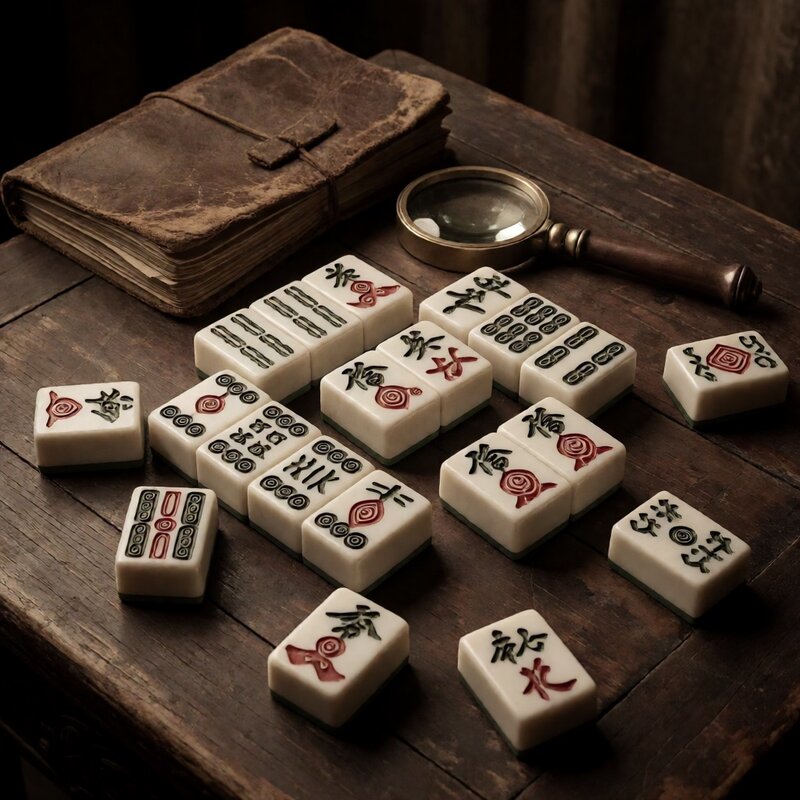
Mahjong travelled a long road to reach the modern American tabletop. What began as a Chinese pastime played with bamboo, bone and paper tiles became, over a few decades and one ocean, something recognisably different: a game with jokers, exposed melds and a card that changes every year.
From China to the United States
The game arrived in America in the early 1920s, carried by traders, travellers and a wave of Western interest in Chinese culture. It spread quickly: within a few years it was being played in living rooms, hotels and department stores, often with imported sets and a thin rulebook translated from Chinese sources.
The enthusiasm was real but the rules were not settled. Different importers shipped different tile counts, and local groups invented local conventions to fill the gaps. That early confusion shaped everything that followed, because it created demand for a single authoritative reference.
How the American version diverged
American players simplified and sped the game up. The most visible change was the joker, which can substitute for certain tiles and lets a hand come together faster. Sets settled at 152 tiles, the Charleston was formalised as a structured exchange, and exposing a meld became ordinary rather than a rare risk.
Another divergence is the card. Instead of learning a fixed family of winning patterns, American players read an annual list of hands with their point values and joker rules. That single choice made the game easier to teach and easier to keep fresh, because every new card reshuffles what is worth chasing.
The league and the card
The National Mah Jongg League, founded in 1937, standardised the rules that had been drifting. Its annual card became the reference point for clubs and tournaments alike, setting how many jokers are allowed in a hand, how points are counted and what counts as a legal win. A copy of the current card is, in practice, mandatory equipment.
What the tiles themselves show
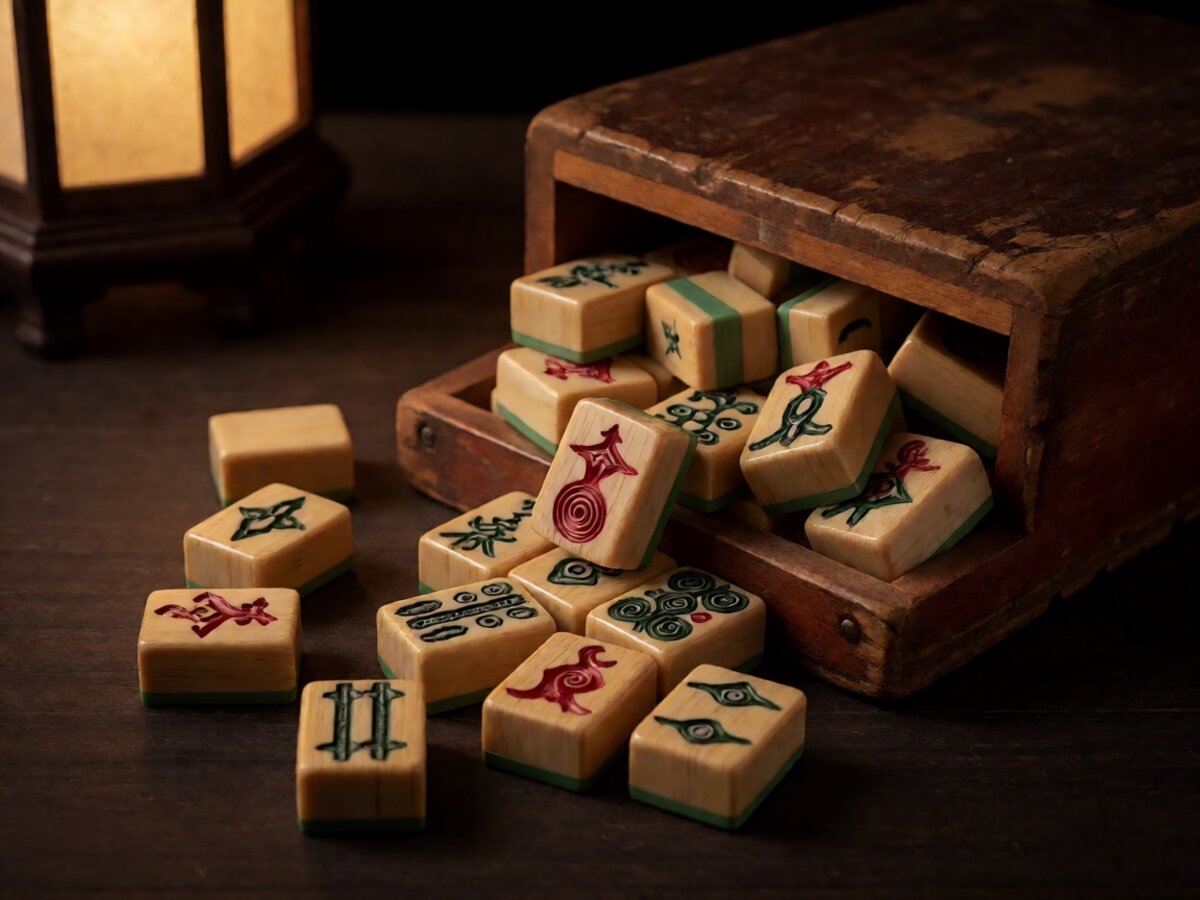
Old sets are a record of changing materials. Early Western sets used bone and bamboo, with hand-carved faces and dovetailed backs. Later came Bakelite-style plastics, then printed acrylic and melamine. A vintage set tells you roughly when it was made by what it is made of.
Tile faces also drifted. Western sets often lettered the winds and dragons, and modern American designs frequently replace traditional suits with illustrated themes, which is why the same game can look completely different from one table to the next.
Why the history still matters
Knowing where the jokers came from, why the card exists and how the Charleston settled in makes the modern game easier to read. The rules are not arbitrary; each one solved a problem for players a hundred years ago, and the game you play tonight is the version that survived those arguments.
From Chinese roots to an American card
Mahjong developed in China and traveled through many social and commercial networks before becoming a popular American pastime. The American version did not emerge as a simple copy of one Chinese regional game. It developed through clubs, publishers and players who adapted rules, promoted tournaments and eventually established organized guides for the hands used at the table.
The annual hand card is a central part of that American history. It is not a tile or a piece of equipment; it is a printed reference to the hands for a particular period. The card format and the role of jokers help explain why American mahjong can feel different to a player who learned a Chinese regional ruleset.
Why the history matters when buying
Historical claims about mahjong are easy to oversimplify. A set described as vintage may use materials, printing methods and construction that differ from a modern acrylic collection. The name of a style does not prove its age or origin. Ask for clear photographs of the face, back, edge and any labels rather than relying on a broad cultural description.
For a modern buyer, the useful lesson is that equipment and rules change together. Confirm the card, tile count, joker group and rack fit for the way you play today. Browse American Mahjong Playing Cards and Mahjong Tile Sizes, Materials & Styles for related context.
Use history as context, not proof
An old-looking box or a familiar design name does not establish the exact age, material or origin of a set. Ask for labels, side views and clear photographs. Historical interest is valuable, but the product page should still confirm what the buyer is receiving today.
Keep the historical question separate from the product fact
Historical research can explain why a game or design became popular, but it cannot prove the age of a particular box. For a purchase, ask for the facts that can be inspected: the tile construction, the printed markings, the condition of the edges and the exact included pieces. Let the object's documented details carry the claim.