


Mahjong Culture
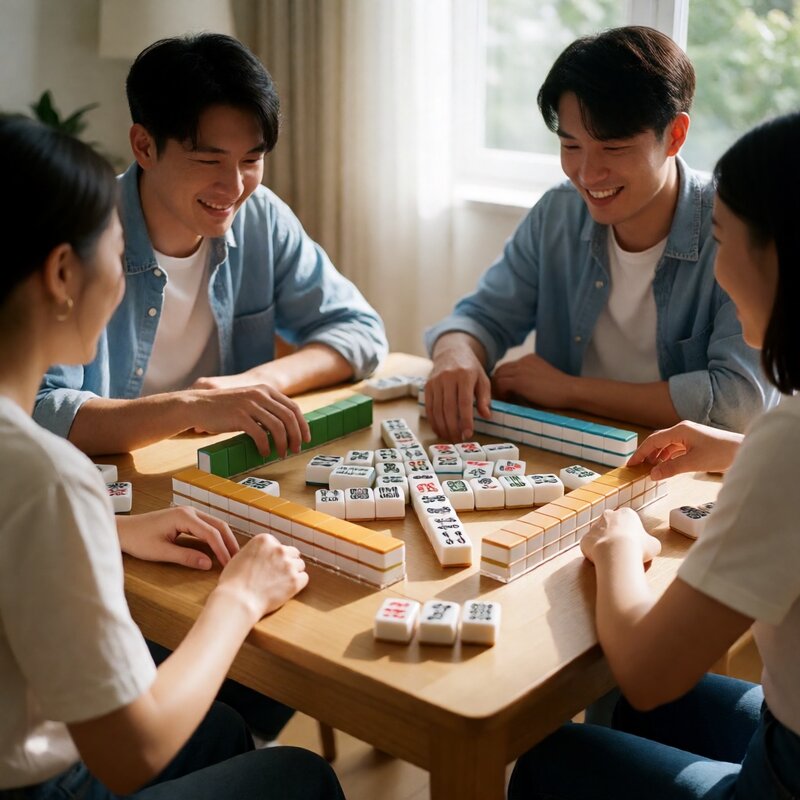
American mahjong is not a quiet game of silent calculation. It is a loud, fast, social ritual built around four players, a card, and a table that people return to every week. That difference is the point, and it explains why the game has held on in the United States for a century while other imported pastimes faded away.
What makes the American game American
The rules diverged early. American play uses 152 tiles, including eight jokers, and it leans on an annual card rather than a memorised list of winning patterns. A hand begins after the Charleston, a structured pass of three tiles, and it is normal to build in the open: once a meld is exposed, it stays on the table for everyone to read.
Traditional Chinese mahjong tends to reward patience and hidden information. The American game rewards recognition and speed. You are scanning the card, tracking what has been thrown, and re-deciding every few turns as new tiles arrive.
What a session actually looks like
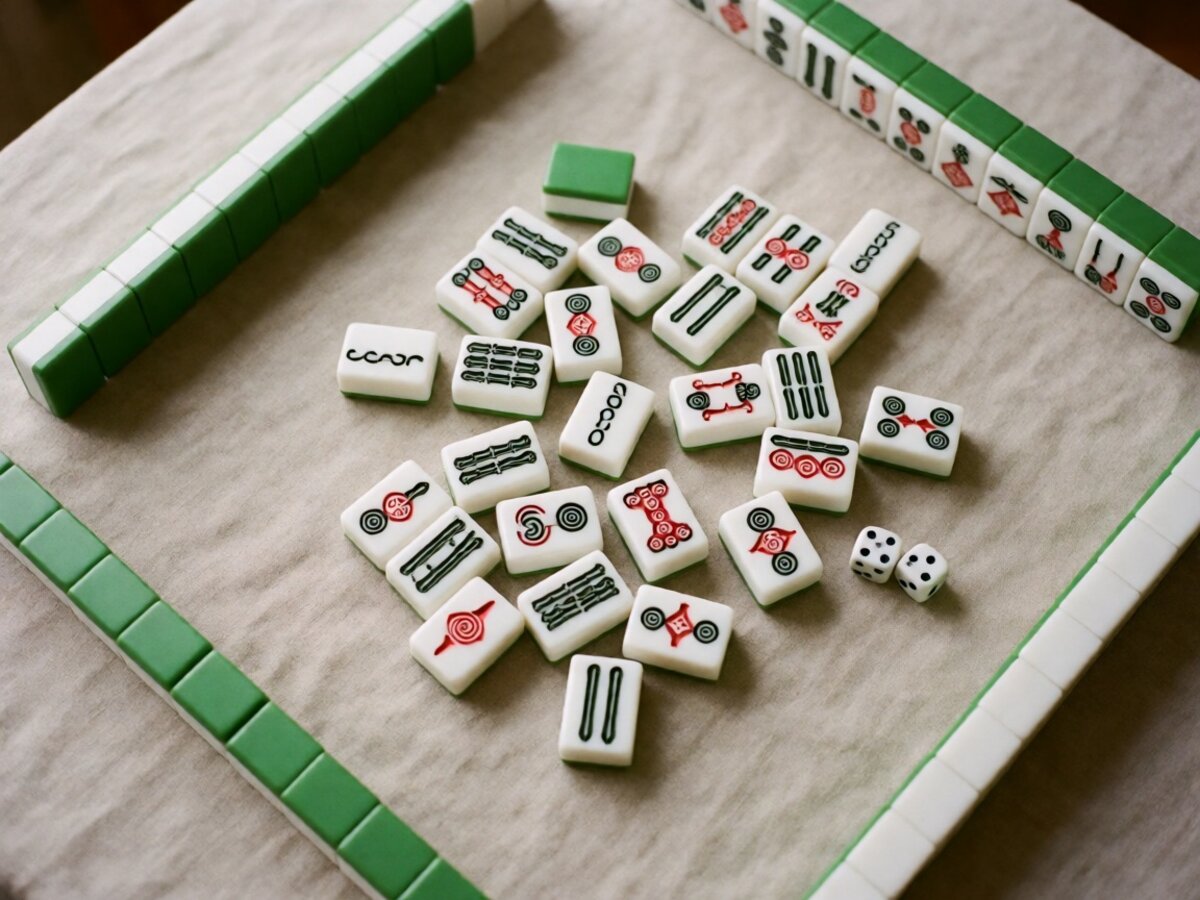
Four players, four racks, and a mat or tablecloth so the tiles do not slide. Someone builds the wall; the dealer breaks it. Each player takes thirteen tiles and the game moves clockwise, with a discard on every turn and the option to call a tile that completes part of a hand.
Pace matters. A practised table can finish a hand in ten or fifteen minutes, and the conversation never really stops. For many players the social rhythm is as much the attraction as the win: the same four people, the same afternoon, the same jokes.
Beginners usually start with an experienced player at the table who can answer questions mid-hand. Learning from the card alone is possible, but slow. Most people learn the flow of a turn long before they learn to read a card fluently.
Clubs, leagues and community
The National Mah Jongg League, founded in 1937, publishes the annual card and effectively anchors the rules for American players. Beyond the league, the game lives in neighbourhood groups, community centres, temple halls and, increasingly, in online communities where people trade tile designs and rule clarifications.
Regional habits exist. House rules about how strictly jokers may be used, or how quickly a hand must be called, vary from group to group, and a new table will usually explain its conventions in the first round.
Why it keeps growing
Two things changed in recent years. First, tile design became a way for people to express taste: bright acrylic sets, engraved patterns, seasonal collections. Second, the game found a younger audience through social media, where a beautiful set photographs well and the rules are easy to explain in a short clip.
The result is a game with two audiences at once: lifelong players who value the ritual, and newcomers drawn in by the objects. Both end up at the same table, which is roughly how the game has always worked.
Culture lives in the weekly table
American mahjong culture is not only about tournament play or a distant history. It is also the weekly group that reserves the same afternoon, the host who knows which chair is most comfortable and the player who keeps the current card in a protective sleeve. Those routines are part of the game's staying power because they give people a recurring reason to gather.
Different groups develop their own etiquette. Some prefer quiet concentration; others treat the table as a social event with food and conversation. Neither style is universal. Ask before changing a group's habits, especially around phones, coaching, late arrivals or how disputes are resolved.
Collecting versus playing
Tile collecting overlaps with play but is not identical. A collector may care about edge construction, artwork, the look of the backs and whether the set represents a particular design era. A frequent player may care more about readability, rack fit and whether the pieces can be handled comfortably for hours. The best purchase depends on which role the set will serve.
That distinction also matters when displaying tiles. A set kept on a shelf needs protection from sun and dust; a set used weekly should be easy to unpack and put away. Read Mahjong Tile Display Ideas for storage and display guidance.
Community and good hosting
New players learn faster when the table has a clear host and a shared rules reference. Make room for questions without changing the rules midway through a hand. A welcoming group explains the card, the Charleston and the tile groups before correcting every mistake. That approach builds confidence and keeps the social side of the game healthy.
For practical hosting steps, see How to Host an American Mahjong Night and Your First American Mahjong Game.
Make the table welcoming
Ask new players what they already know, explain one rule at a time and avoid turning the first game into a test. A shared card, clear seating and a host who pauses for questions do more for the culture than any elaborate table decoration.