


Why American Mahjong Sets Include Jokers
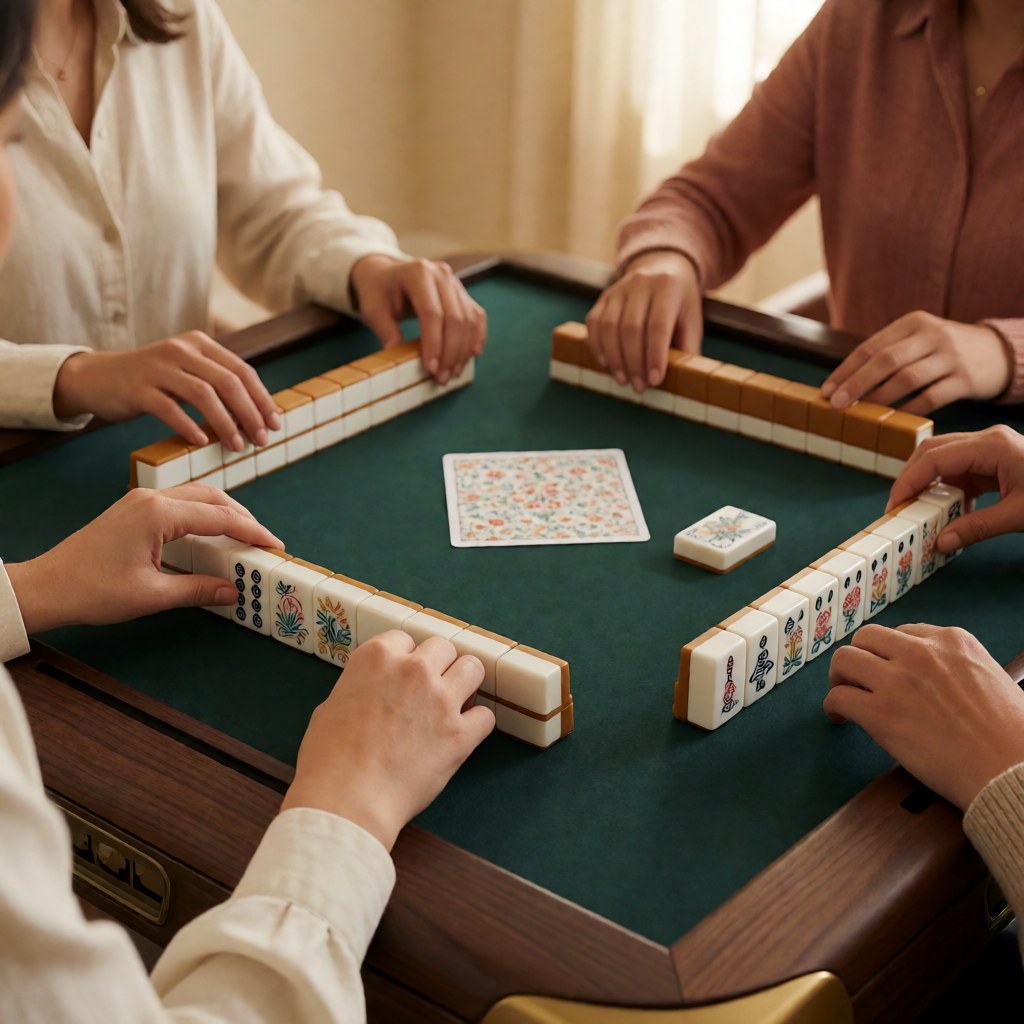
Open an American mahjong set and you will find a small stack of tiles printed with a joker. If you came from Chinese mahjong, that is the first surprise. Chinese sets do not include them, and a Chinese hand has no use for them.
What a joker does
A joker substitutes for a tile you need. If the card calls for a pung of eights and you hold two eights and a joker, you have the pung. The joker stands in for the missing tile.
The substitution is not unlimited. Tournament and league rules restrict how many jokers a hand may use, and certain hands on the card are marked as jokerless, meaning a joker cannot be used in them at all. So a joker is a useful tile, not a free pass.
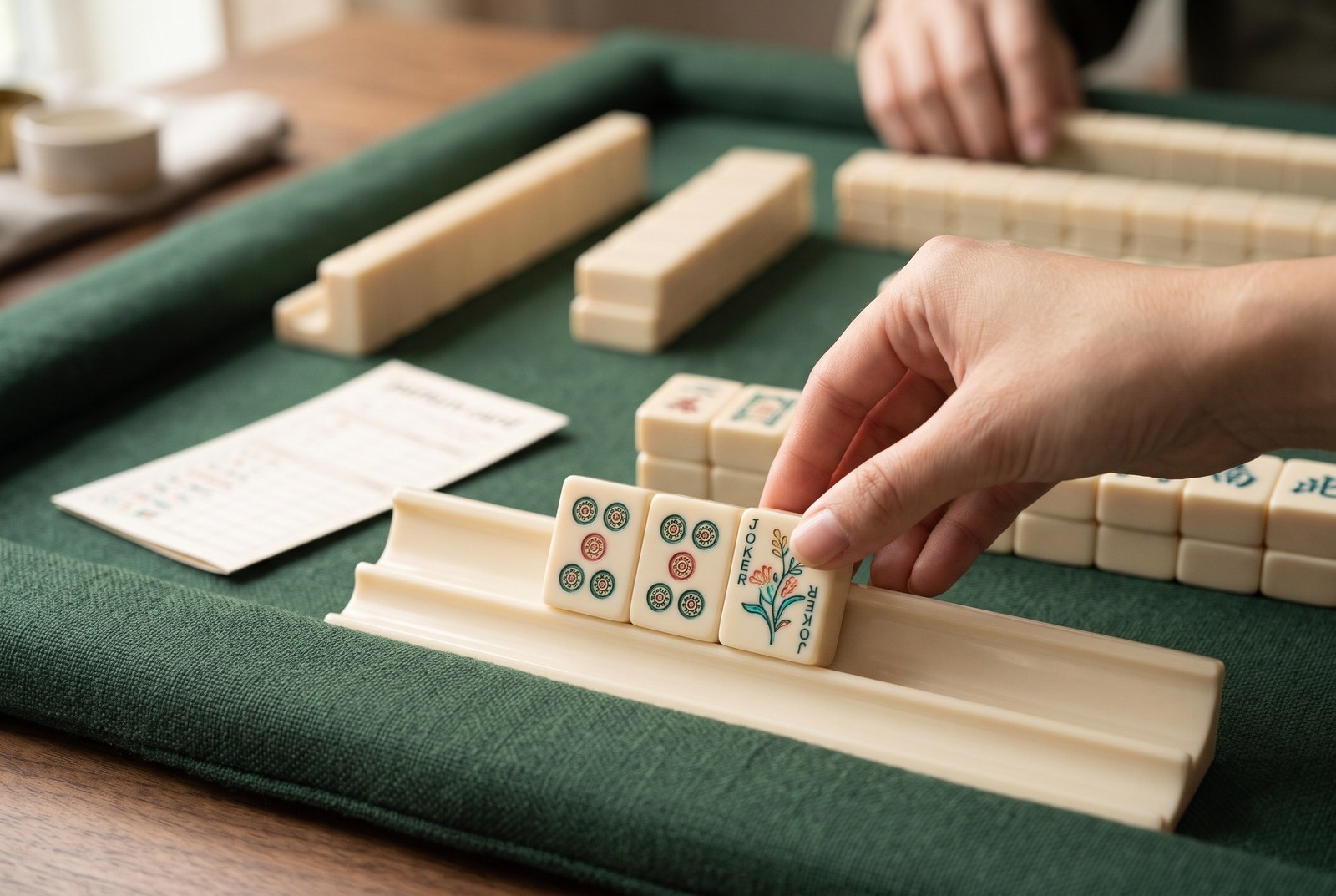
It is not the same as a wild tile
Chinese mahjong sometimes uses a wild tile depending on the regional ruleset, but it is not a fixed part of the set and its behaviour varies by region. In American mahjong the joker is standard, printed, and included in the count. That is why an American set has more tiles than a Chinese one.
Why this matters when you buy a set
Three things are worth checking before you pay for an American set.
- That jokers are included and match the design of the rest of the set. Some sellers list a set as complete and then price the jokers separately.
- That the tile faces are easy to read at a glance. Joker artwork varies a lot between sets, and a busy illustration on a joker makes it harder to spot at speed.
- That the tile backs are uniform. In American play, players build a wall face down and draw without seeing the face. If backs differ, the wall is not concealed.
How many tiles you should have
A standard American set contains 152 tiles, which already accounts for the jokers. If a listing shows a smaller number, ask what has been left out before assuming the set is complete.
Photographs of the actual set are the best check. A picture of the full wall laid out face down tells you more about the back finish than any description will.
Jokers and the annual card
In American mahjong, the card is central to the game. A joker is useful when the current hand calls for it, but the card can change the way tiles are grouped from year to year. That is why the visual identity of a joker matters alongside the number included. A player needs to recognise it quickly and understand how it fits the hand being played.
Do not assume that jokers are interchangeable across every set or every style of play. The physical tile may look similar while the count or artwork differs. When a listing says “with jokers,” look for the actual quantity or a clear image of the complete group. If that information is absent, ask before checkout.
What to inspect in a listing
- Whether the jokers are shown as a complete group with a countable number.
- Whether the artwork is readable at normal table distance.
- Whether the back, edge and size match the rest of the tiles.
- Whether the listing describes a tile-only product or a full set.
Jokers are not a decorative extra to add without thought. They are part of the playing set, so the practical questions are the same ones you would ask about any tile: can I identify it, can I hold it comfortably and does it belong with the rest of the collection?
The annual card is not a tile
The word “card” can cause confusion because American mahjong uses a printed annual card that lists the hands for the year. It is a reference document, not a mahjong tile. Jokers work according to what the current hand and the table rules permit. They are not an unrestricted “anything” tile in every situation, so a buyer should not judge a set only by whether the joker artwork is attractive.
When comparing sets, look for a clear photograph of the complete joker group and read the product title for the stated count. If the quantity is not published, ask. A set that works for one group may not match the expectations of another if the joker count or artwork is different.
Why opaque backs matter with jokers
American play relies on hidden information. A tile back that reveals the face through glare or transparency undermines that principle. Before buying, compare the backs under neutral light and look at the edge construction. This does not prove opacity by itself, but it helps you spot obvious inconsistencies. Read American Mahjong Tile Backs for a longer inspection routine.