


American Mahjong vs Chinese Mahjong: What Actually Changes at the Table
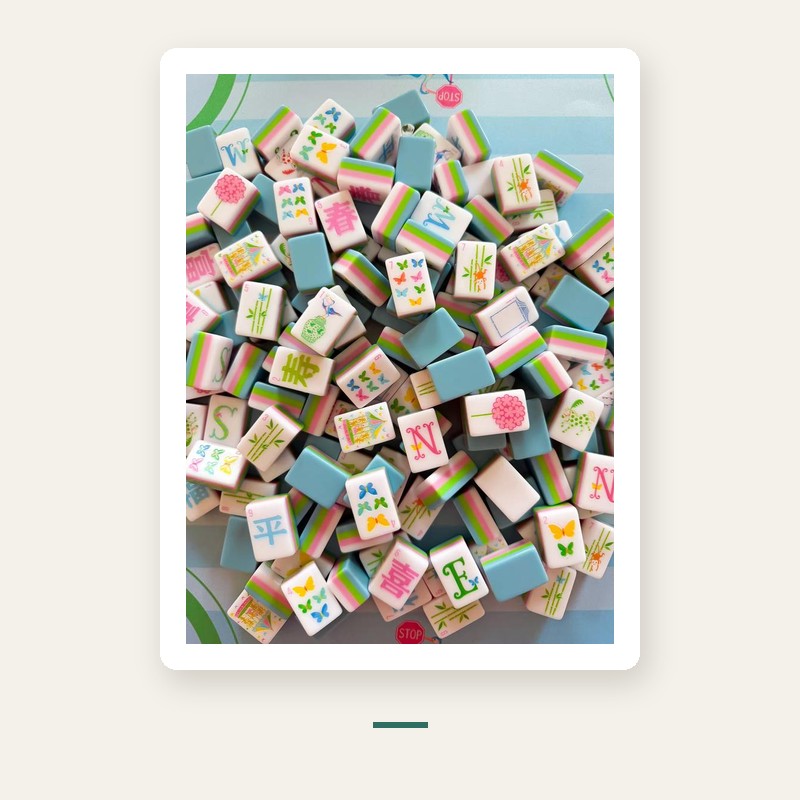
Both games use the same tiles and seat four players, and that is roughly where the overlap stops. If you learned mahjong in Asia and then sat down at an American table, the tiles would look familiar and almost nothing else would.
The tile count is different
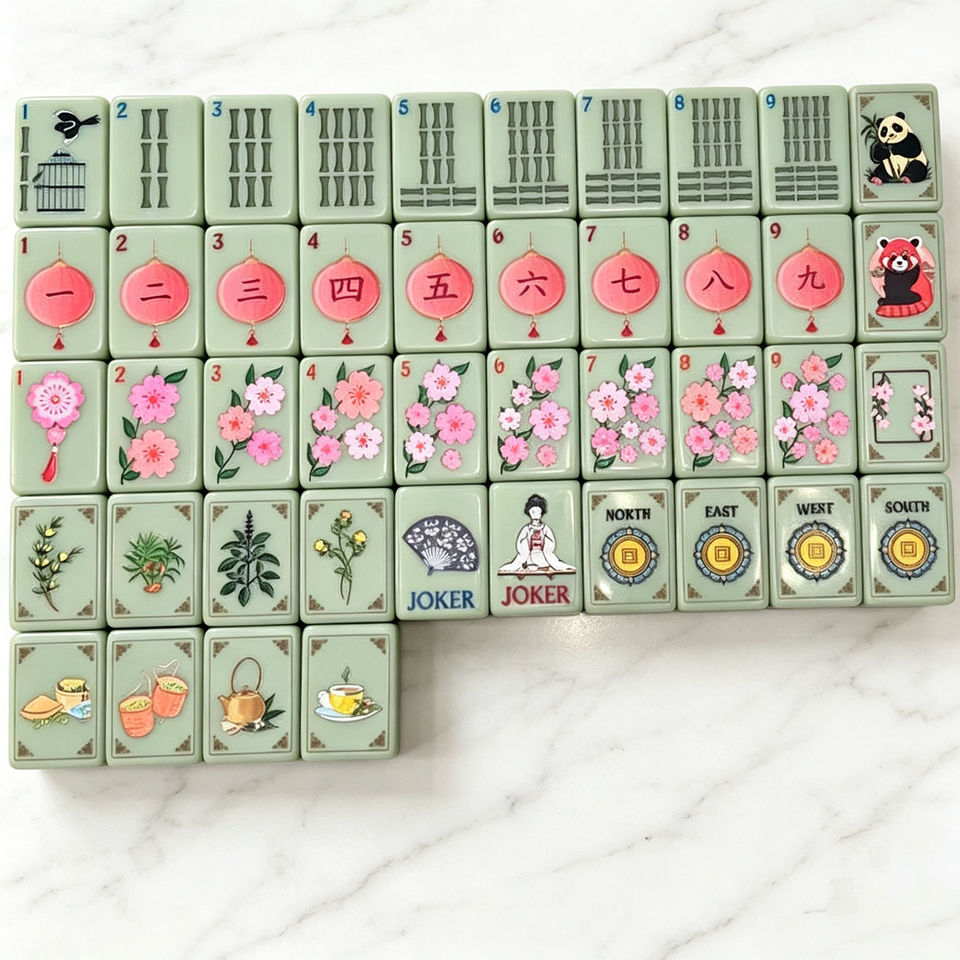
A Chinese set runs to 144 tiles. An American set runs to 152, and the extra tiles are jokers. They are not a bonus thrown in by the manufacturer. They are part of the standard set and part of how hands get built.
You play from a card, not from memory
American mahjong does not use the classic hand patterns. Players work from a card published each year by the National Mah Jongg League, founded in New York in 1937. The card lists the hands that count for that year, and it is redrawn annually.
That single detail shapes the whole game. You cannot memorise a fixed set of hands and coast, because next year's card will not match this year's. Every January, experienced players sit down with a new card and read it like a puzzle.
No chow
In Chinese mahjong you can call a discard to complete a run. American mahjong does not allow that. You can claim a discard for a pung or a kong, or to declare mahjong, and that is the end of it. Runs have to be built from your own draws.
New players usually find this the hardest adjustment, because it removes the easiest way to fill a gap in your hand.
The Charleston
Before the first discard, American players pass tiles in a ritual called the Charleston: three tiles to the right, three across, three to the left, with an optional second round and a final courtesy pass. Chinese mahjong has nothing comparable.
To a newcomer it looks like an elaborate formality. It is really a drafting phase. You are shaping the hand before anyone has discarded, and what you pass tells the other three players something about what you kept.
What a beginner actually needs
A complete American set, racks for all four players, and the current card. Dice and a mat are useful but optional. When you buy a first set, check two things: that the racks have a lip deep enough to hold tiles upright, and that jokers are included rather than sold separately.
The fastest way to learn is still to play one hand with someone who already reads the card. Everything else follows from that.
A side-by-side view of the two games
The clearest way to understand the difference is to separate the equipment from the rules. American mahjong and Chinese mahjong both use mahjong tiles and four-player tables, but the hand goals and the reference material players use are not interchangeable. An American player usually works from the current National Mah Jongg League card or the card specified by the group. A Chinese mahjong player is more likely to work from a regional ruleset with fixed hand patterns.
| At the table | American mahjong | Chinese mahjong |
|---|---|---|
| Hand reference | A printed annual card or the group's declared card | The group's chosen regional ruleset |
| Jokers | Part of many American sets and used as the card permits | Not a universal feature of every regional game |
| Opening exchange | The Charleston is central to many games | The opening procedure depends on the regional rules |
| Chow | Chows are not part of standard American play | Chow is used in many Chinese regional games |
| Scoring | Hand value is read from the card | Scoring depends on the chosen regional system |
This table is a starting point, not a universal rulebook. Families and clubs sometimes play house variations. Before joining a new group, ask which card or regional ruleset is being used and whether the table allows any local changes.
Why equipment shopping feels different
American mahjong buyers often compare joker artwork, card compatibility, tile count, racks and the visual identity of a set. A Chinese mahjong buyer may compare the same physical qualities but with a different hand system in mind. Neither approach is better. The useful question is which game the table will actually play most often.
If you are buying a gift, do not assume that an attractive mahjong set is ready for every tradition. Confirm the recipient's game style, tile count, card and rack preferences. For a first American set, read What Comes in an American Mahjong Set and Your First American Mahjong Game before ordering.
The simplest way to avoid a rules mix-up
Before the first tile is dealt, name the ruleset, the card year and any house variations. Put that information beside the table so every player is answering the same question. A set can be beautiful and still be wrong for the evening if the group has not agreed on how jokers, chows or scoring will work.